
Desserts
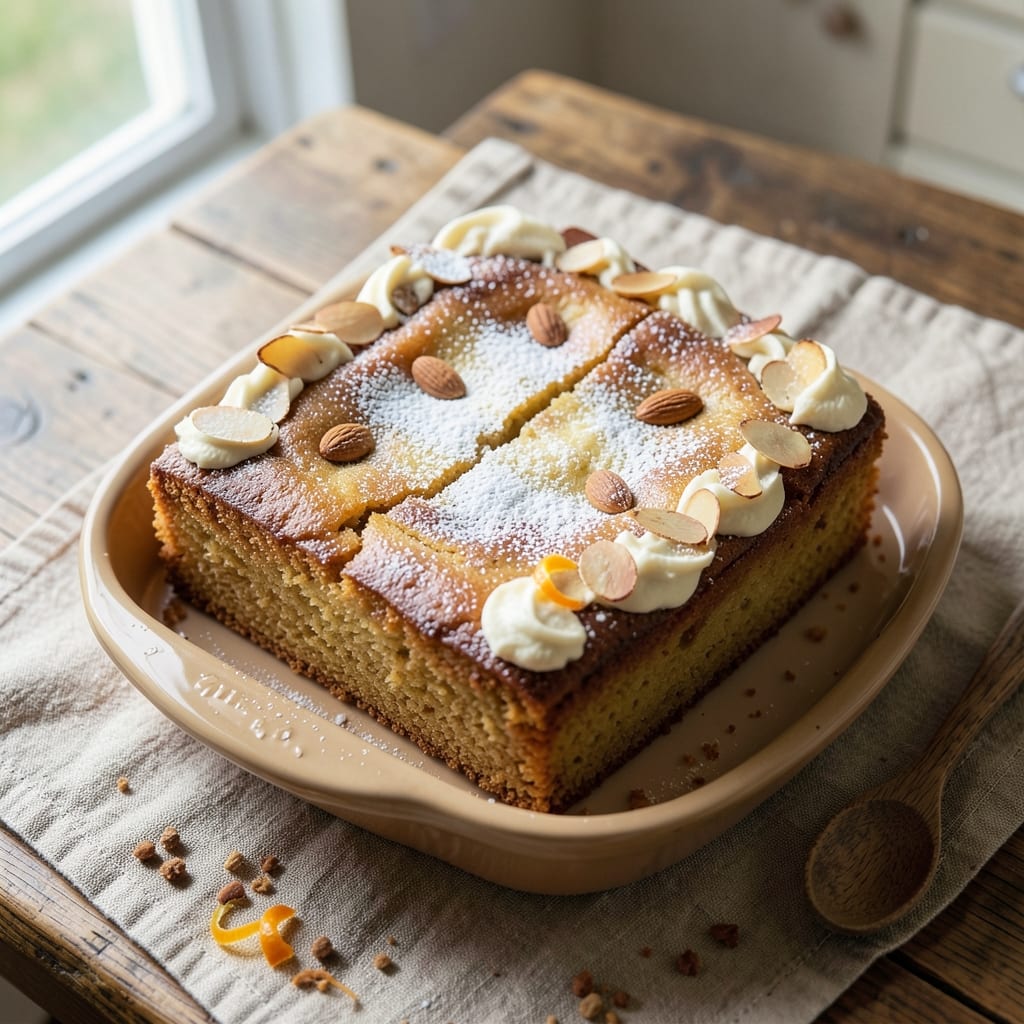
This 10-inch square cake recipe delivers layers of ultra-moist vanilla cake crowned with swirling buttercream rivers—perfect for celebrations or coffee-time indulgence. The secret lies in precise ingredient ratios and gentle folding to maintain that signature tender crumb. I’ve baked countless versions, and this one consistently earns rave reviews for its balance of richness and lightness.
What sets this recipe apart is its foolproof technique for achieving professional-quality texture without specialized equipment. The cake bakes at 350°F for 30-35 minutes, yielding perfectly domed layers that hold their shape. The buttercream isn’t just decorative—it’s a creamy, flavorful complement that ties every bite together with vanilla’s warmth.
By the time you slice into this cake, you’ll experience melt-in-your-mouth layers that stay moist for days, thanks to a simple but effective moisture-retaining method. The buttercream rivers add both visual appeal and a luxurious finish that makes it feel like a bakery masterpiece. Serve it with a cup of coffee or as the centerpiece of your dessert table.
This recipe scales beautifully for gatherings, and the versatile design allows for customization—add sprinkles, drizzle chocolate, or keep it classic. The instructions are clear, the ingredients straightforward, and the results consistently impressive. Let’s get started on creating this showstopper.
Ingredients for 10 inch square cake
Precision meets indulgence with these carefully balanced ingredients for your signature 10-inch square cake.
| Ingredient | Amount | Notes |
|---|---|---|
| All-Purpose Flour 🌾 | 3 cups | Sifted for lightness and even texture |
| Granulated Sugar 🍚 | 2 cups | White or light brown preferred |
| Unsalted Butter 🧈 | 1 ½ cups | Room temperature, cubed |
| Large Eggs 🥚 | 3 whole | Room temperature for even baking |
| Vanilla Extract 🌿 | 2 tsp | Pure vanilla extract preferred |
| Baking Powder 🧂 | 1 ½ tsp | Diamond Crystal preferred |
| Salt 🧂 | ½ tsp | Fine sea salt preferred |
| Milk 🥛 | 1 cup | Room temperature |
| Vegetable Oil 🫒 | ¼ cup | Light, neutral flavor |
| Powdered Sugar 🍚 | 4 cups | For buttercream, sifted |
| Unsalted Butter 🧈 | 1 cup | Room temperature, softened |
| Heavy Cream 🥛 | ½ cup | Cold for stability |
| Vanilla Bean Paste 🌿 | 1 tbsp | For enhanced vanilla flavor |
| Aluminum Foil 📄 | 1 sheet | For lining the cake pan |
| Parchment Paper 📄 | 1 sheet | For buttercream transfer |
The foundation of this cake lies in the flour and butter—King Arthur or Gold Medal flour yields the best texture, while Plugrá or Land O’Lakes unsalted butter ensures rich flavor without overpowering. For the sugar, Domino or C&H brands provide consistent granulation, crucial for even moisture distribution. Pre-sift your dry ingredients to eliminate lumps and achieve that signature tender crumb. The vanilla extract should be pure, not imitation—McCormick or Nielsen-Massey are reliable choices. Room-temperature eggs and dairy prevent dense layers, so let them sit at room temperature for at least 30 minutes before mixing. Whole milk works best for moisture, but half-and-half adds richness if you prefer a slightly denser crumb.
Substitutions are possible but require adjustments for texture. Coconut oil can replace vegetable oil at a 1:1 ratio, though it imparts a slight coconut flavor. For dairy-free, unsweetened almond milk works but may yield a slightly drier crumb—add an extra tablespoon. If you lack vanilla extract, vanilla sugar at half the amount of granulated sugar suffices. For the buttercream, margarine can replace butter for a lighter texture, though it lacks richness. Nutritional yeast adds a cheesy note if you prefer a savory twist, though it’s unconventional for this recipe. Always sift powdered sugar to avoid graininess, and European-style butter (like Miyoko’s) enhances flavor in the buttercream. The heavy cream should be cold when whipped to achieve stiff peaks for those signature rivers.
Store the cake layers wrapped in plastic wrap at room temperature for up to 3 days to maintain moisture. For longer storage, freeze layers individually on parchment-lined trays for 2 months, then transfer to a sealed bag. The buttercream can be refrigerated for 5 days or frozen for 3 months, though it softens at room temperature—re-whip briefly if needed. To assemble, spread buttercream on one layer, add the second, then pipe rivers immediately for the dramatic effect. Serve at room temperature for optimal texture, and cover loosely with parchment to prevent drying. This cake’s magic lies in its balance—moisture-rich layers paired with stable buttercream ensure every slice meets expectations.
Why You'll Love This Recipe
- No-Fuss Mixing: I swear by the creamy butter-egg combo—just fold in the flour and sugar until just combined. No overworking, no guesswork, and that vanilla? It’s the secret that makes it smell like a bakery even before the oven beeps.
- Vanilla Butter Bliss: That rich butter base with a whisper of vanilla extract? It’s the kind of cake that tastes like a hug—light enough to eat for breakfast but sturdy enough to slice for dessert. Honestly, I’ve never met a vanilla cake this reliably good.
- Crowd-Pleasing Slices: A single 10-inch pan means perfect portions—no awkward leftovers or tiny servings. Perfect for potlucks, office treats, or when your kid’s soccer team needs snacks. (Yes, even on a Tuesday night.)
- Budget-Friendly Staples: Flour, sugar, butter, eggs—these are the basics I always have. No specialty ingredients, no pricey shortcuts. Yet it still feels like something from a bakery, not a grocery store. My wallet thanks me every time.
Step-by-step instructions for vanilla buttercream rivers over ultra-moist layers
Precision timing and technique ensure perfectly moist layers and flawless buttercream rivers.
Prepare the Cake Batter for Maximum Moisture
In a large mixing bowl, combine the 3 cups all-purpose flour, 1.5 tsp baking powder, and 0.5 tsp salt. Sift this dry mixture directly into a separate bowl to aerate it—this prevents dense layers. In a separate stand mixer bowl, cream together the 1.5 cups unsalted butter and 2 cups granulated sugar on medium speed until light and fluffy, about 4-5 minutes. This step incorporates air, which creates a tender crumb.
Add the 3 whole large eggs, one at a time, mixing well after each addition. Scrape down the sides of the bowl to ensure even incorporation. Stir in the 2 tsp vanilla extract and 0.25 cup vegetable oil. With the mixer on low speed, gradually add the sifted dry ingredients in three additions, mixing just until combined after each. Finally, pour in the 1 cup milk and mix until the batter is smooth and homogeneous. Avoid overmixing—this develops gluten and creates a tough cake.
Bake the Layers in a Preheated Oven
Preheat your oven to 350°F and line a 10-inch square pan with the aluminum foil, ensuring it extends slightly over the edges for easy removal. Line the foil with the parchment paper, then generously grease the paper with a thin layer of vegetable oil to prevent sticking. Pour the batter evenly into the prepared pan.
Bake for 25-30 minutes, or until a toothpick inserted into the center comes out clean with just a few moist crumbs clinging to it. The edges should pull away slightly from the pan, and the top should be golden but not overbrowned. If the top browns too quickly, loosely tent the pan with foil after 15 minutes of baking. Let the cake cool in the pan for 10 minutes before transferring it to a wire rack to cool completely.
Prepare the Ultra-Smooth Vanilla Buttercream
In a stand mixer fitted with the paddle attachment, beat the 1 cup unsalted butter until completely smooth and creamy, about 2-3 minutes. Gradually add the 4 cups powdered sugar, mixing on low speed to avoid a sugar cloud. Increase the speed to medium and beat for 3-4 minutes until the mixture is light and fluffy. Scrape down the sides of the bowl as needed.
Add the 0.5 cup cold heavy cream, 1 tbsp vanilla bean paste, and 2 tsp vanilla extract. Mix on medium-high speed for 2-3 minutes until the buttercream is smooth, thick, and holds a stiff peak when tested with a spatula. The cold cream helps stabilize the buttercream, preventing it from becoming too soft or melting during assembly.
Assemble the Cake with Buttercream Rivers
Once the cake layer is completely cool, level the top if necessary using a serrated knife. Place the layer on a cake stand or sturdy plate. Spread a thin, even layer of buttercream—about ¼ inch thick—over the top of the cake using an offset spatula. This creates a barrier to prevent the buttercream rivers from soaking into the cake.
Using a piping bag fitted with a large star tip or a spoon, pipe 3-4 rivers of buttercream across the cake, starting from one edge and working your way to the opposite side. Space the rivers evenly, about 1-2 inches apart, and allow them to cascade naturally over the edges. Chill the assembled cake in the refrigerator for 30 minutes to set the buttercream before slicing.
Pro Tips For Making 10 Inch Square Cake
- Weigh Your Butter: I learned this the hard way—packing butter into a measuring cup leaves gaps, and suddenly your cake turns out denser than a brick. Use a kitchen scale for 225g (1 cup) of butter, pressed lightly into the cup. No guessing, no sad crumb structure.
- Room-Temp Eggs Matter: Cold eggs mix unevenly and can cause streaks in your batter. Let your eggs sit in warm water for 10 minutes before cracking them—just enough to make them handleable, not warm enough to cook them. Your cake’s texture will thank you.
- Skip the Overmixing: The moment your batter looks like glue, stop stirring. Overmixing develops gluten, and your 10-inch cake will turn out tough instead of tender. Mix just until the flour disappears—about 20 seconds after that.
- Test for Doneness Early: Your oven runs hot, and cakes bake faster in square pans. Check for doneness at the lower end of the recipe’s time—insert a toothpick. If it comes out with a few moist crumbs but no wet batter, it’s done. Better to pull it early than risk a dry top.
Best sauces and condiments for these flavors
Classic Vanilla Glaze
For a simple yet elegant finish, brush the cooled cake layers with a vanilla glaze made from 1 cup powdered sugar, 2 tbsp milk, and 1 tsp vanilla extract. Whisk until smooth and spread evenly over the top. This adds a delicate sweetness and keeps the cake moist for up to 2 days when stored properly. 💛
Chocolate Ganache Drizzle
Elevate your cake with a rich chocolate ganache. Melt ½ cup dark chocolate chips (I recommend Ghirardelli 60%) with ¼ cup heavy cream, then cool slightly before drizzling over the buttercream rivers. The contrast of chocolate and vanilla creates a sophisticated flavor profile. For extra flair, sprinkle with flaky sea salt or crushed hazelnuts.
Caramel Sauce Rivers
Swap buttercream for salted caramel rivers by heating 1 cup granulated sugar in a saucepan until melted, then add ¼ cup heavy cream and 2 tbsp butter. Cool slightly and pipe directly over the cake. The warm caramel will cascade beautifully, adding a buttery-sweet touch. Pair with a pinch of flaky salt for balance.
Berry Compote Swirls
For a fruity twist, make a quick berry compote by simmering 1 cup mixed berries (strawberries, raspberries, or blueberries) with 2 tbsp sugar and 1 tsp lemon juice until thickened. Cool and pipe alongside the buttercream rivers. The acidity cuts through the richness, making each bite vibrant. 🍓
Coffee Buttercream
Infuse your buttercream with espresso powder for a mocha-inspired version. Replace 1 tbsp of the powdered sugar with 1 tsp instant espresso powder (like Starbucks or Folgers). The deep, toasty notes pair perfectly with vanilla cake and complement coffee pairings beautifully. Use a small star tip to create intricate rivers for a café-style presentation.
Nutrition facts
Frequently asked questions
Can I make this cake in a different pan size?
The recipe is designed for a 10-inch square pan, but you can adapt it for 9x13-inch or 8x8-inch pans by adjusting baking time. For a 9x13-inch pan, bake 25-30 minutes and reduce buttercream by 25% to avoid excess. For an 8x8-inch pan, bake 20-25 minutes and halve the buttercream. Always use a toothpick test to check doneness!
Why did my cake turn out dense?
Overmixing the batter develops gluten, making the cake tough. Mix dry ingredients just until combined, and avoid overbeating the butter and sugar. Also, ensure your butter and eggs are room temperature—cold ingredients can cause dense layers. For extra moisture, try adding 1 tbsp sour cream or yogurt to the batter.
How do I store leftovers without drying them out?
Wrap the cake tightly in plastic wrap and store at room temperature for up to 3 days. For longer storage, freeze layers individually for 2 months—thaw overnight in the fridge before frosting. Keep the buttercream refrigerated if not using immediately, and re-whip briefly before assembling. A sprinkle of powdered sugar on the surface helps preserve moisture.
Can I substitute buttercream with cream cheese frosting?
Yes! Replace the buttercream with a cream cheese frosting by mixing 8 oz cream cheese, ½ cup butter, 3 cups powdered sugar, and 1 tsp vanilla. Whip until smooth, then pipe rivers as directed. The tangy flavor pairs beautifully with vanilla cake, but the frosting will be slightly softer—chill the cake longer (1 hour) to set.
What’s the best way to level an uneven cake layer?
Use a serrated knife or a long metal spatula to trim the top. Place the cake on a level surface, then gently saw back and forth over the highest areas until even. For extra precision, use a cake leveler or a ruler as a guide. Never force the knife—let gravity help you avoid crumbling the edges.