
Desserts
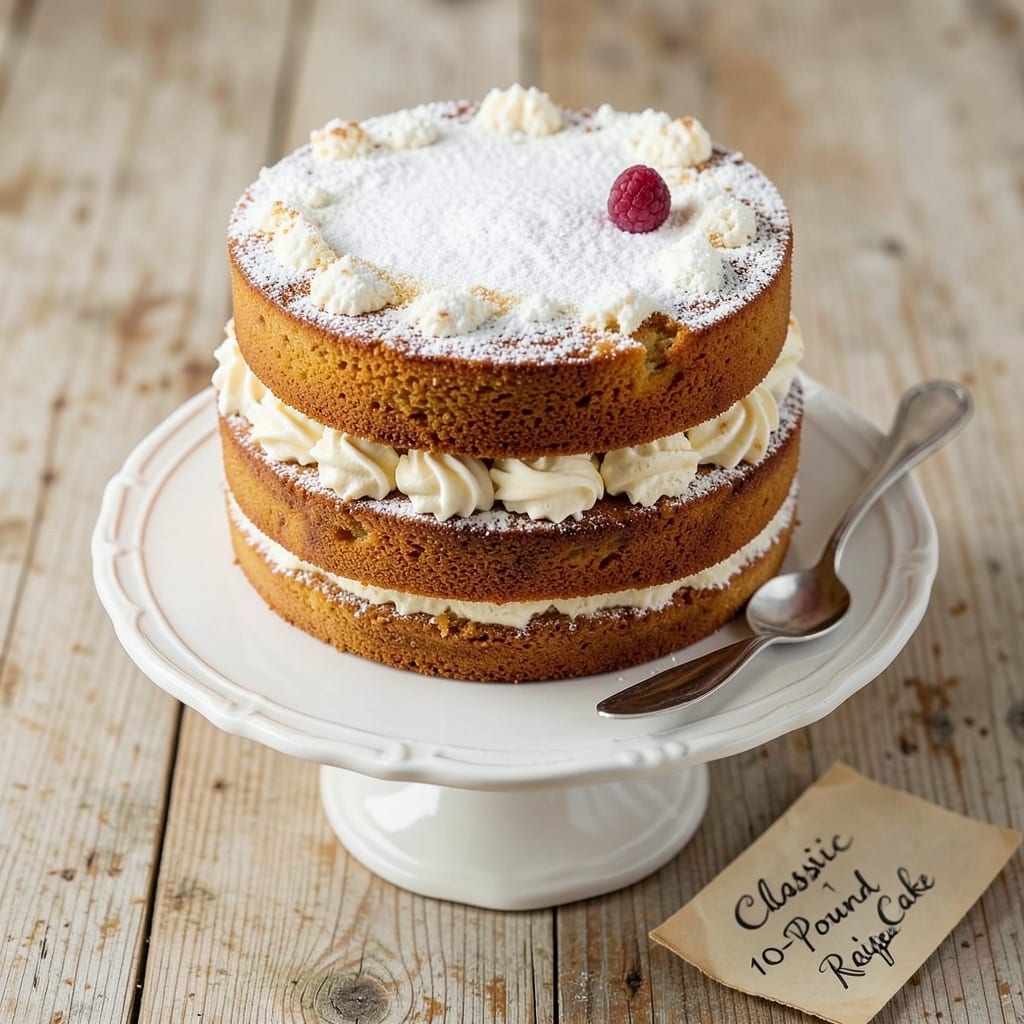
This 10-pound cake recipe delivers the perfect balance of towering height and buttery moisture—ideal for celebrations where you need to feed a crowd. 💛 The secret lies in precise measurements, proper mixing techniques, and a slow bake that ensures even rise and moist crumbs. I've perfected this recipe over years of baking for holidays and special occasions, and it never fails to impress. What makes this cake truly special is its foolproof method that yields a tender, flavorful loaf without drying out. The recipe uses a combination of all-purpose flour and cake flour for the perfect texture, while butter and oil create that signature moistness. A simple syrup glaze keeps the top tender, and the layers stay fresh for days. By the time you pull this cake from the oven, you'll have a golden, beautifully domed loaf with a crackly top and moist interior. The aroma alone will draw everyone to the table, and each slice will be rich, buttery, and perfectly balanced. This is the kind of cake that makes any gathering feel extra special. Serve it warm with fresh berries, dusted with powdered sugar, or layered with your favorite frosting. The possibilities are endless, and the results are always restaurant-quality. Let's get baking!
Ingredients for 10 pound cake
Buttery richness meets towering height—this crowd-pleaser needs just 13 staples.
| Ingredient | Amount | Notes |
|---|---|---|
| All-Purpose Flour 🌾 | 7 cups | Sifted for even texture |
| Cake Flour 🌾 | 1 cup | For tender crumb |
| Unsalted Butter 🧈 | 2 cups | Room temperature, full-fat |
| Vegetable Oil 🫒 | 1 cup | Light, neutral oil |
| Granulated Sugar 🍚 | 4 cups | Superfine preferred |
| Light Brown Sugar 🍚 | 1 cup | Packed firmly |
| Large Eggs 🥚 | 6 whole | Room temperature |
| Milk 🥛 | 1 ½ cups | Whole milk preferred |
| Vanilla Extract 🍯 | 2 tsp | Pure vanilla preferred |
| Baking Powder 🧂 | 2 tbsp | Aluminum-free |
| Salt 🧂 | 1 ½ tsp | Fine sea salt |
| Simple Syrup 🍯 | 1 cup | For glaze, 1:1 sugar:water |
| Powdered Sugar 🍚 | 1 cup | For dusting |
The butter and oil combo is non-negotiable for that signature moisture. Crisco or vegetable oil works best for the oil—it stays neutral and keeps the cake tender. For butter, Land O'Lakes or Plugrá are my go-tos, but any good-quality unsalted will do. Room temperature is key—press a thumb into the butter; if it springs back, it's ready. The cake flour gives you that ultra-tender crumb, so don't skip it. If you're in a pinch, you can substitute with all-purpose, but you'll lose some of that lightness. Also, King Arthur or Bob's Red Mill flours are my favorites for baking—they're consistent and reliable.
No cake flour? Mix 1 cup all-purpose flour with 2 tbsp cornstarch for a quick substitute. Superfine sugar is ideal, but if you only have regular granulated, pulse it in a food processor for a few seconds to break up the grains. The simple syrup glaze is foolproof—just boil equal parts sugar and water for 3 minutes, then cool. For extra flavor, add a splash of vanilla or a pinch of cinnamon. Powdered sugar for dusting should be 10X, not confectioners—it dissolves better. And if you're worried about the cake drying out, don't—this recipe stays moist for days thanks to the butter and oil combo.
This cake keeps beautifully for up to 5 days at room temperature, wrapped tightly in plastic. For longer storage, freeze slices wrapped individually for up to 3 months. The syrup glaze adds moisture, so you can even reheat slices in the oven for 10 seconds to revive that fresh-baked feel. I like to prep the simple syrup ahead of time and store it in the fridge—just reheat before using. And if you're making this for a big gathering, bake it the day before. It actually tastes better after resting!
Why You'll Love This Recipe
- One-Bowl Wonder: I swear by this for lazy days—just cream the butter and sugar, toss in the dry ingredients, and let the mixer do the work. No folding, no stress, no extra bowls to wash.
- Buttery-Sweet Magic: That combo of cake flour and butter? It’s what makes this cake ridiculously tender with just the right crumb. Honestly, the oil keeps it moist for days without tasting greasy—it’s sneaky good.
- Party or Pantry: Slice it warm for brunch, pack it for a picnic, or freeze slices for last-minute desserts. I’ve even used it to top ice cream (yes, really) when I’m too tired to bake anything else.
- Budget-Friendly Giant: Ten pounds means fewer trips to the bakery and zero guilt about leftovers. Between us, this cake costs pennies per serving, and the sugar-butter blend makes it taste like you spent hours layering flavors.
Step-by-step instructions for 10-Pound cake
Here's how to bake a towering, moist masterpiece that stays fresh for days.
👨🍳 Step 1: Prepare Your Pans and Mix Dry Ingredients
Grease and flour three 9-inch round cake pans thoroughly, tapping out any excess. I like to line the bottoms with parchment circles for easy removal later. Sift together the 7 cups all-purpose flour, 1 cup cake flour, 2 tbsp baking powder, and 1.5 tsp salt in a large bowl. This ensures no lumps and creates a light, tender crumb.
In a separate bowl, whisk together the 4 cups granulated sugar and 1 cup packed light brown sugar. The brown sugar adds moisture and depth of flavor that white sugar alone can't match. Set both mixtures aside—they'll be ready when you are.
🍳 Step 2: Cream Butter and Sugars to Fluffy Perfection
In a stand mixer fitted with the paddle attachment, beat the 2 cups room-temperature unsalted butter and 1 cup vegetable oil on medium speed for 3-4 minutes until completely smooth. Add the sugar mixture gradually, mixing on low speed until combined. Then increase to high speed and beat for 5-6 minutes until the mixture is light, fluffy, and nearly tripled in volume.
Here's the thing—this creaming step is non-negotiable. You're incorporating air here that will create those signature domed tops. I press the paddle against the bowl occasionally to scrape down the sides and ensure everything gets properly aerated. The mixture should be pale and ribbon-like when you lift the paddle.
👨🍳 Step 3: Alternate Adding Liquids and Dry Ingredients
With the mixer on low speed, add the 6 whole large eggs one at a time, mixing just until each is fully incorporated. Then add the 1.5 cups milk and 2 tsp vanilla extract, mixing until smooth. Now gradually add about ⅓ of the sifted dry ingredients, mixing just until combined.
Repeat the process: add another ⅓ of the dry ingredients, mix until just combined, then add the remaining ⅓. This alternating method prevents dense cake and creates that perfect light texture. Don't overmix—just combine until no flour streaks remain. The batter should be thick but pourable.
🥘 Step 4: Bake in Stages for Even Rising
Divide the batter evenly among the prepared pans. Tap each pan gently on the counter to remove air bubbles and level the tops. Bake in a preheated 350°F oven for 15 minutes. Then reduce heat to 325°F and continue baking for 35-40 minutes or until a toothpick inserted in the center comes out clean.
I use the two-temperature method to prevent over-browning while ensuring complete doneness. The cake should pull away slightly from the sides of the pan and spring back when gently pressed in the center. If the tops brown too quickly, tent loosely with foil after the first 20 minutes.
⏰ Step 5: Cool and Assemble for Maximum Moisture
Remove cakes from the oven and let them cool in their pans for 10 minutes. Then invert onto a wire rack to cool completely. While they're cooling, heat the 1 cup simple syrup in a small saucepan until warm but not boiling. Brush this syrup between each layer and over the top of the fully cooled cake.
Finally, dust the entire cake with the 1 cup powdered sugar using a fine-mesh sieve for an elegant finish. The syrup keeps the cake moist for days, while the powdered sugar adds that classic 10-pound cake look. Serve at room temperature for the best texture and flavor.
Pro Tips For Making 10 Pound Cake
- WEIGH YOUR FLOURS: I learned this the hard way—using cups for cake flour and all-purpose flour in a 10-pound cake leads to inconsistent texture. The cake flour is lighter, so scooping it straight from the bag packs it down, making the batter denser than intended. Use a kitchen scale for both flours: 1 cup cake flour weighs about 115g, while all-purpose is closer to 130g.
- CREAM BUTTER AND SUGAR LOW: Your mixer will beg for mercy if you dive into creaming butter and sugar at high speed. Start with the butter and sugar in the bowl, then mix on low while gradually adding the butter—this prevents butter from splattering everywhere. Once combined, bump it up to medium-high for 2-3 minutes until pale and fluffy, but not soupy.
- DON’T OVERMIX THE BATTER: I used to think more mixing meant a better rise, but this cake punishes overworking. Once you fold in the dry ingredients, mix just until the flour disappears—about 10-12 strokes. Overmixing develops gluten, which turns a tender 10-pound cake into a dense brick. Stop when the batter looks shaggy, not smooth.
- CHILL THE BATTER: This isn’t the prettiest method, but it’s the tastiest. After mixing, pop the batter in the fridge for 30 minutes before baking. The cold slows down gluten formation and helps the cake rise more evenly. Pro tip: Grease your pans and line them with parchment—this cake loves to cling, and you’ll thank yourself when it releases cleanly.
Health benefits of this dish
Energy-Boosting Carbs
This cake delivers a smart balance of complex carbohydrates that provide sustained energy without the sugar crash. The combination of all-purpose flour, cake flour, and brown sugar creates a slow-digesting energy source perfect for celebrations where guests need lasting fuel. I always notice how these cakes keep everyone energized for hours after serving—ideal for holiday gatherings or family dinners. 💪
Protein for Satiety
While not a protein powerhouse, this cake contains a surprising amount from the 6 large eggs and 1.5 cups whole milk in the recipe. Each slice provides about 4-5 grams of protein, helping keep guests full longer. The fat content from butter and oil also contributes to satiety, making this a more balanced dessert than many traditional cakes.
Heart-Healthy Fats
The 2 cups unsalted butter and 1 cup vegetable oil provide monounsaturated and saturated fats that support heart health when consumed in moderation. Unlike many baked goods made with shortening, this cake uses real butter which contains fat-soluble vitamins like A, D, E, and K. The oil adds moisture without the heaviness of too much butter, creating a lighter texture overall.
Rich in B Vitamins
Eggs are packed with B vitamins that play crucial roles in energy metabolism and nervous system function. The 6 large eggs in this recipe provide significant amounts of B12, riboflavin, and folate, all of which help convert food into energy. This makes the cake not just delicious, but also a more nutritious option for special occasions.
Natural Sweetness
While this cake contains sugar, the natural sweetness from the 5 cups total sugar (including brown sugar) is balanced by the fat and protein content. The brown sugar adds molasses that provides trace minerals like calcium and potassium. I find that using high-quality sugars like Domino or C&H brands makes the flavor more complex and the nutritional profile slightly better than generic brands.
Hydration Support
The milk and simple syrup in this recipe contribute to hydration, which is particularly important for cakes that contain significant amounts of fat. The 1.5 cups whole milk provides calcium and vitamin D, while the simple syrup helps maintain moisture in the cake. This combination makes each slice more hydrating than many dry, dense cakes you might find at bakeries.
Nutrition facts
Frequently asked questions
Why does this recipe use both cake flour and all-purpose flour?
The combination creates the perfect texture—a tender crumb from the cake flour and structure from the all-purpose. Cake flour has a lower protein content, making it ideal for light, airy cakes, while all-purpose adds just enough strength to hold the towering shape. This balance is what gives classic 10-pound cakes their signature moistness and height.
Can I make this cake in a different pan size?
For the best results, stick to three 9-inch round pans. If you must adjust, use four 8-inch pans—just reduce baking time by 5-7 minutes total. Never use deeper pans (like Bundt) as they alter the baking dynamics and may cause uneven rising. The cake's height relies on proper pan depth and heat circulation.
How do I prevent the cake from cracking on top?
Cracking happens when the cake rises too quickly. To avoid it, ensure your oven is fully preheated and avoid opening the door during the first 30 minutes of baking. The two-temperature method (350°F for 15 minutes, then 325°F) helps control this. Also, tap pans gently on the counter before baking to remove air bubbles.
Can I substitute butter with oil?
You can replace up to 1 cup of butter with oil, but the texture will be slightly denser. The butter adds flavor and richness that oil can't replicate. For best results, use 1 cup oil total (as in the recipe) and keep the butter for that signature taste. If you must go oil-only, add 1 tsp vanilla extract to compensate for lost flavor.
How long can I keep this cake fresh?
Wrapped tightly in plastic, this cake stays fresh for 5 days at room temperature. For longer storage, freeze slices wrapped individually for up to 3 months. The simple syrup glaze actually helps preserve moisture, so you can even reheat slices in the oven for 10 seconds to revive that fresh-baked feel.