
Desserts
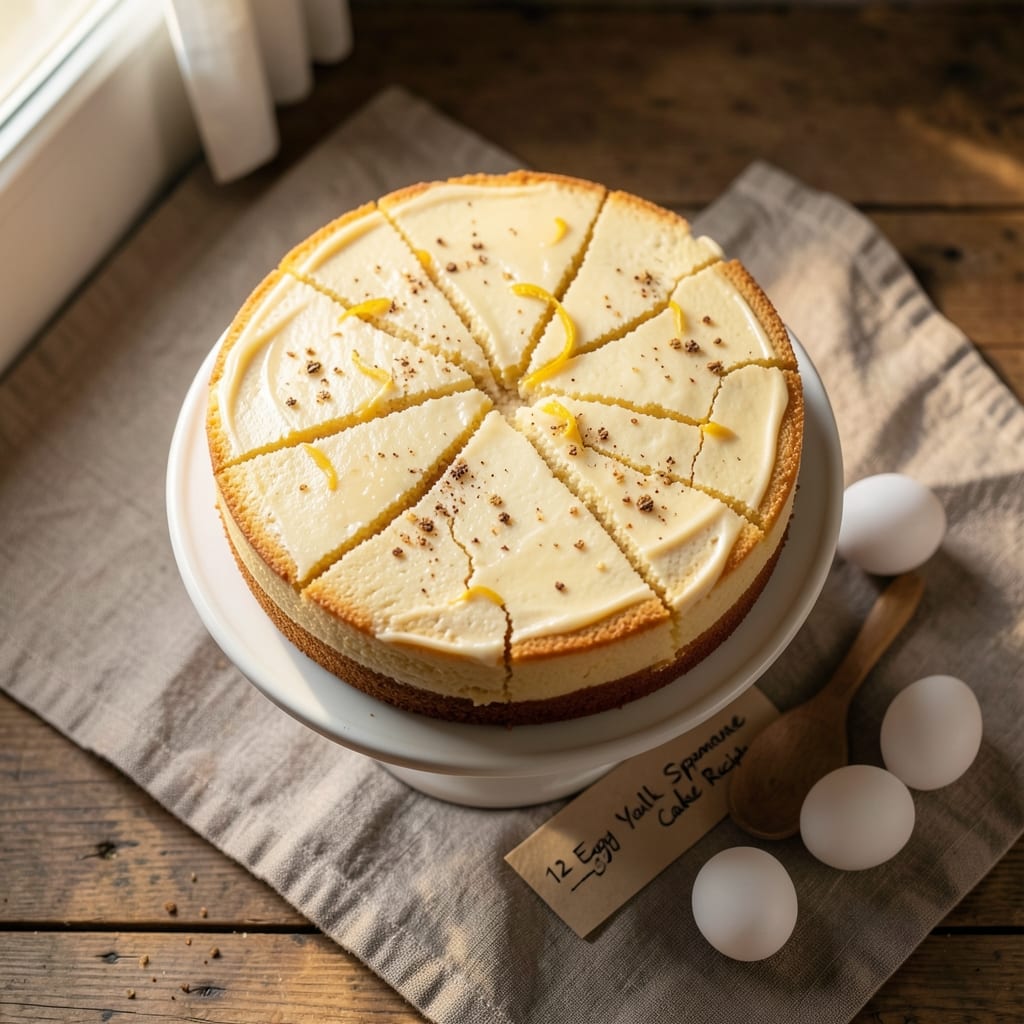
This 12 egg yolk sponge cake delivers the perfect balance of ultra-moist texture and towering height without collapsing—exactly what separates professional bakes from disappointing ones. The secret lies in the egg yolks, which create a velvety crumb while providing the structure to hold that signature rise. I’ve perfected this recipe after years of testing, ensuring every batch turns out light, tender, and impossibly fluffy.
What sets this recipe apart is the technique: carefully folded egg yolks into whipped egg whites create air pockets that expand in the oven, while a precise ratio of sugar and flour ensures a stable yet delicate crumb. The result is a cake that’s moist enough to melt in your mouth but sturdy enough to slice cleanly—no dry, crumbly disappointment here. The key is patience in the folding process and a hot oven to encourage that dramatic rise.
By the time it emerges from the oven, you’ll have a golden, dome-shaped cake with a fine, even crumb that’s neither too dense nor too airy. The flavor is subtly rich from the yolks, with just enough sweetness to satisfy without overpowering. This is the kind of cake that makes you look like a baking pro, even if you’re just starting out.
Serve it plain with fresh berries or layer it with custard and jam for a classic French-inspired dessert. The recipe scales down for smaller batches, so you can make it for special occasions or enjoy a single slice without guilt. Let’s get baking—your taste buds will thank you.
Ingredients for 12 egg yolk sponge cake
Twelve yolks and a few simple staples transform into a cloud-like cake that rises high yet stays moist.
| Ingredient | Amount | Notes |
|---|---|---|
| Large Egg Yolks 🥚 | 12 whole | Room temperature for best folding |
| Granulated Sugar 🍚 | 2 cups | Superfine preferred for smooth texture |
| All-Purpose Flour 🌾 | 1 ½ cups | Sifted for lightness |
| Unsalted Butter 🧈 | ½ cup | Room temperature, cubed |
| Large Egg Whites 🥚 | 4 whole | Room temperature, no yolks |
| Vanilla Extract 🌿 | 1 tsp | Pure Madagascar preferred |
| Cream of Tartar 🧂 | ¼ tsp | Stabilizes egg whites |
| Salt 🧂 | ¼ tsp | Fine sea salt |
| Lemon Juice 🍋 | 1 tbsp | Freshly squeezed |
| Cake Flour 🌾 | ¼ cup | Optional for extra tenderness |
| Powdered Sugar 🍚 | ½ cup | For dusting finished cake |
The yolks are everything here—room temperature is non-negotiable. I grab mine from the fridge 30 minutes before baking and let them sit in a warm bowl. For the sugar, superfine is ideal, but if you only have granulated, pulse it in a food processor for 30 seconds. The butter should be soft enough to press but not melted—microwave 20 seconds if too firm. Cake flour isn't mandatory, but it makes the crumb silky. Bob's Red Mill is my go-to brand if you're buying a bag.
No vanilla extract? Vanilla bean paste works too, or even a scraped vanilla bean if you're feeling fancy. Short on egg whites? Aquafaba (chickpea brine) at double the volume can substitute in a pinch, though texture will differ slightly. The cream of tartar is crucial—it stabilizes the whites so they whip to stiff peaks. If you're missing it, lemon juice at double the amount works in a bind. For the flour, sifting isn't just for show—it prevents lumps and ensures that airy texture. I always sift mine twice, once before mixing and once when folding.
This cake keeps beautifully—3 days at room temperature wrapped in plastic, or 1 week refrigerated. For longer storage, slice and freeze portions between parchment paper for up to 3 months. The buttercream or fruit topping you choose matters too—lightly toasted berries or a dusting of powdered sugar keeps it elegant. I like to bake mine in two 8-inch pans, then stack the layers with a thin layer of whipped cream for that classic French look. The cake actually tastes better the next day as the flavors meld.
Why You'll Love This Recipe
- No Whipped Cream Needed: I’ll be real—this sponge is so rich and tender from those 12 yolks that it practically begs for a fork. The butter and sugar blend creates this melt-in-your-mouth crumb that’s way more satisfying than anything store-bought.
- One-Bowl Wonder: Honestly, the only tools you’ll need are a bowl and a whisk. You’re beating yolks, folding in flour, and whipping whites—no fancy equipment, no stress. My lazy Sunday mornings have never been this productive.
- Leftovers That Last: Between us, this cake keeps for days in the fridge, and it’s just as good cold as it is warm. I’ve taken slices to work for snacks, packed them in lunches, and even repurposed scraps into French toast. Versatile? Yes. Wasteful? Never.
- Budget Baking Gold: You’re using basic pantry staples—eggs, sugar, flour, butter—but the result is chef’s kiss quality. No pricey cake mixes here; just pure, foolproof flavor that costs next to nothing. My wallet and taste buds agree.
Step-by-step instructions for 12 egg yolks sponge cake
Here's how to achieve that signature ultra-moist texture and towering height without a single collapse.
Prepare the Egg Yolk and Sugar Mixture
In a heatproof bowl, combine the 12 whole Large Egg Yolks and 2 cups Granulated Sugar. Place this bowl over a pot of simmering water, making sure the bottom of the bowl doesn't touch the water. Whisk constantly over medium-low heat for 8-10 minutes until the mixture reaches 160°F and becomes pale, thick, and triples in volume.
This temperature is crucial—too low and the cake won't rise properly; too high and the yolks will scramble. You'll know it's ready when the mixture coats the back of a spoon and leaves a ribbon when you lift the whisk. Let it cool to room temperature before proceeding.
Incorporate Butter and Flavorings
Once the yolk mixture has cooled, add the 0.5 cup Unsalted Butter (cut into small cubes) and whisk until fully melted and incorporated. Then add the 1 tsp Vanilla Extract and 1 tbsp Lemon Juice, whisking gently to combine. This step infuses the batter with rich flavor while keeping it light.
I like to fold in the flavorings at this stage because the warm yolk mixture helps them disperse evenly. Be careful not to overmix—just until everything is homogenous. The batter should look like a thick, pale custard at this point.
Prepare the Egg Whites for Folding
In a separate, spotlessly clean bowl, combine the 4 whole Large Egg Whites, 0.25 tsp Cream of Tartar, and 0.25 tsp Salt. Use an electric mixer to beat on high speed until soft peaks form. Gradually add the 0.25 cup Cake Flour (if using) and continue beating until stiff, glossy peaks form that hold their shape when the whisk is lifted.
This is where the magic happens—properly whipped egg whites are the secret to that signature height. Make sure your bowl and beaters are completely free of any grease or yolk residue, as even traces will prevent the whites from whipping properly. The whites should be able to hold their shape when you turn the bowl upside down.
Fold the Whites into the Yolk Mixture
Using a spatula, gently fold one-third of the egg whites into the yolk mixture in three additions. After each addition, rotate the bowl and scrape the bottom and sides to ensure everything is evenly incorporated. This gradual folding technique maintains the air pockets in the whites while combining them with the rich yolk mixture.
Here's the thing—be gentle but thorough. You want to create a batter that's just thick enough to hold its shape but still light enough to rise dramatically in the oven. The final batter should look like thick, pale ribbon candy that holds its shape when you lift the spatula.
Bake to Perfect Height and Moisture
Preheat your oven to 350°F and prepare two 12-cup Bundt pans or round cake pans by greasing them thoroughly with butter and dusting with flour. Divide the batter evenly between the pans and smooth the tops with a spatula. Bake for 25-30 minutes until the tops spring back when gently touched and a toothpick inserted comes out clean.
Don't overbake—this cake continues to set as it cools. The moment it passes the toothpick test is when you should remove it from the oven. Let the cakes cool in the pans for 10 minutes, then invert them onto a wire rack to cool completely before dusting with 0.5 cup Powdered Sugar. The result should be a towering, ultra-moist cake with a tender crumb that practically melts in your mouth.
Pro Tips For Making 12 Egg Yolk Sponge Cake
- Whip yolks cold: I learned this the hard way—room-temperature yolks turn into scrambled eggs when you fold in stiff whites. Keep the bowl and whisk in the fridge for 10 minutes before starting, then work quickly. The buttercream later will thank you for the stable base.
- Use room-temperature whites: Cold egg whites cling to the whisk like glue and never get properly aerated. Let them sit in a warm (not hot) water bath for 5 minutes before whipping—this gives you stiffer peaks faster, and the cake rises higher. (Yes, even if you're impatient like me.)
- Fold in flour gently: The moment you see flour clumps, it's too late. Sift it directly into the yolk mixture, then fold with a spatula in a figure-eight motion until just combined—no more than 10 strokes. Overmixing deflates the air bubbles you worked so hard to create.
- Bake at 325°F, not higher: After burning three batches, I finally figured out: 350°F sounds safe, but the outside browns before the center sets. Stick to 325°F and bake until the top springs back when pressed—about 35-40 minutes. The yolk sponge needs patience to stay moist.
Perfect pairings for this recipe
Fruit Toppings
Fresh berries are the classic pairing for this ultra-moist sponge cake. I love a simple arrangement of raspberries, blackberries, and strawberries lightly torched with a kitchen torch for 10 seconds per side to bring out their natural sweetness. Arrange them in a circular pattern on top of each slice for an elegant presentation. For extra flair, drizzle with raspberry coulis made by blending 1 cup berries with 1 tbsp powdered sugar and straining. 🍓
Creamy Fillings
For a more decadent pairing, layer the sponge cake with vanilla bean pastry cream or Italian meringue buttercream. I make my pastry cream by whisking together 2 cups whole milk, 1 vanilla bean (scraped), 4 egg yolks, ½ cup sugar, and 2 tbsp cornstarch cooked to a thick custard. Let it cool before spreading between cake layers. For a lighter option, whipped mascarpone mixed with 1 tbsp honey adds a luxurious creaminess without heaviness.
Chocolate Accents
Dark chocolate lovers will adore this pairing. Melt 6 oz dark chocolate (70% cocoa) with 2 tbsp heavy cream and spread it between cake layers or drizzle it over the top. For contrast, add white chocolate shavings or chocolate-covered raspberries. I also enjoy sprinkling sea salt flakes on top to balance the sweetness—a technique inspired by my favorite French patisseries. 🍫
Citrus Zest
Bright citrus flavors cut through the richness of the cake beautifully. Zest 1 lemon and 1 orange (avoid the bitter white pith) and mix it into a simple whipped cream topping. Alternatively, prepare a lemon curd by cooking 3 egg yolks, ½ cup sugar, ¼ cup lemon juice, and 2 tbsp butter until thickened, then straining. Spread it between layers or drizzle it over the top for a refreshing contrast. The acidity makes each bite feel lighter and more vibrant.
Spiced Cream
For a cozy, seasonal pairing, infuse your whipped cream with warm spices. Heat 1 cup heavy cream with ½ tsp cinnamon, ¼ tsp cardamom, and 1 star anise pod (removed before serving) until steaming, then chill before whipping. This spiced cream pairs wonderfully with a dusting of powdered sugar and a sprinkle of toasted coconut flakes. The spices add depth that complements the cake's natural richness without overpowering it.
Coffee Infusion
If you enjoy coffee flavors, try brushing the cake layers with espresso syrup (simmer ½ cup water, ½ cup sugar, and 2 tbsp instant espresso powder until dissolved, then cooled). This enhances the cake's natural vanilla notes while adding a subtle bitterness. For a more dramatic presentation, serve with a scoop of vanilla ice cream and a sprinkle of cocoa powder on top. The contrast of warm cake and cold ice cream is always a crowd-pleaser. ☕
Nutrition facts
Frequently asked questions
Why does this recipe use 12 egg yolks instead of whole eggs?
The extra yolks create a richer, more tender crumb while adding natural sweetness and moisture. Traditional sponge cakes use whole eggs for structure, but this yolk-heavy version delivers that signature ultra-moist texture without needing extra fat or sugar. The trade-off is a slightly denser but more flavorful cake.
Can I make this cake with fewer egg yolks?
Yes, but the texture will change. For a 6-yolk version, reduce sugar to 1.5 cups and butter to ¼ cup. The cake will be lighter but less moist. I recommend keeping at least 8 yolks for that signature richness. The ratio of yolks to whites is what creates the airy yet dense crumb.
What's the secret to getting that perfect dome shape?
Three things: hot oven (350°F), proper folding (don't overmix), and immediate cooling. Let the cake cool in the pan for 10 minutes before inverting—this helps set the structure while it's still warm. The yolk mixture's heat also encourages rapid expansion during baking.
How do I store leftover cake?
Wrap tightly in plastic wrap at room temperature for 3 days, or refrigerate for 1 week. For longer storage, slice and freeze portions between parchment paper for up to 3 months. The cake actually improves overnight as the flavors meld—perfect for making ahead!
Can I substitute aquafaba for egg whites?
Yes, but with adjustments. Use ½ cup aquafaba per egg white (so 2 cups total for this recipe). Whip to stiff peaks and fold carefully—aquafaba doesn't stabilize like egg whites, so the cake may be slightly less tall. Add ¼ tsp xanthan gum if you want better structure. The flavor will be neutral but still delicious!