
Desserts
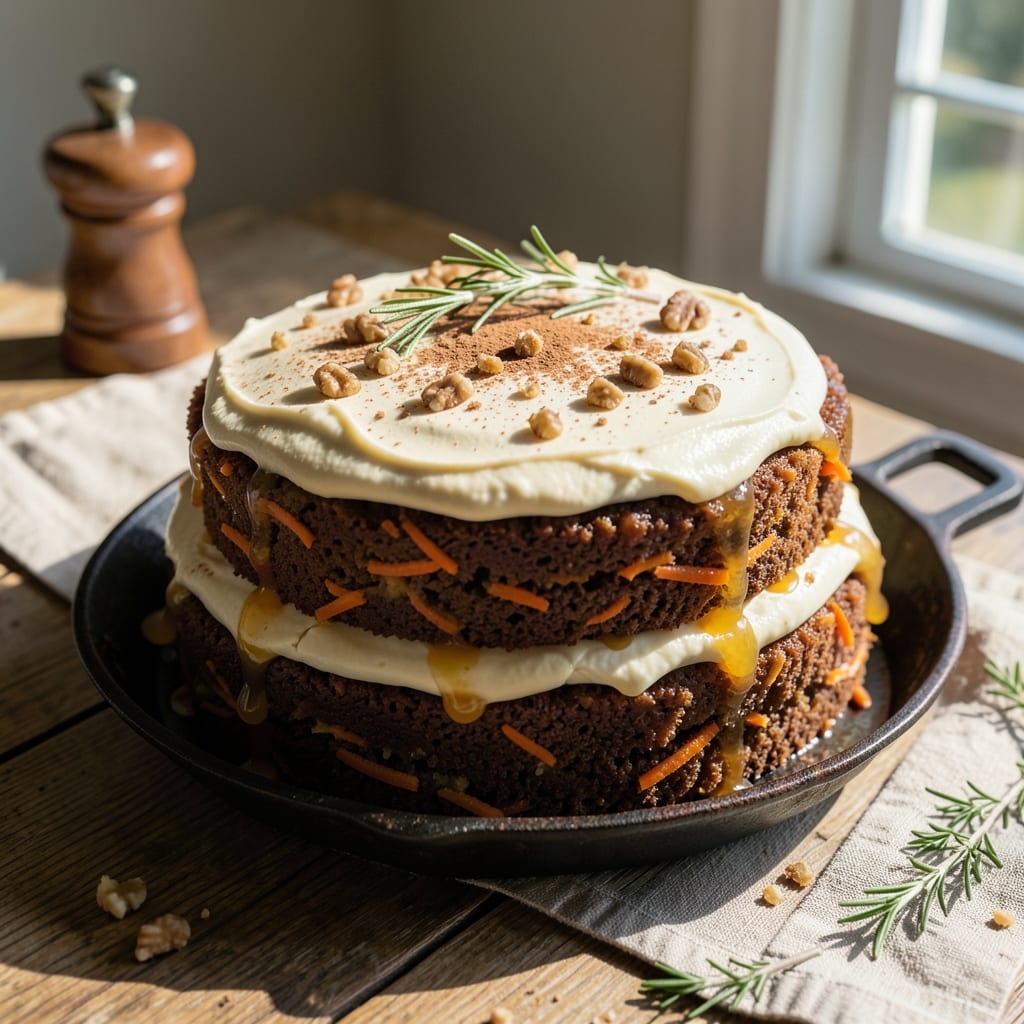
This 1940s carrot cake recipe transports you to a simpler time when baking was an art of resourcefulness and warmth. 💛 During World War II, ingredients like walnuts and cream cheese were rationed, so bakers made do with what they had—transforming humble ingredients into comfort that still delights today. The secret lies in its tender, spiced cake layered with a tangy cream cheese frosting, studded with walnuts for texture and nostalgia.
The recipe reflects 1940s baking techniques: a moist cake achieved with minimal butter, enhanced by warm spices like cinnamon and nutmeg. Cream cheese frosting, a staple in mid-century desserts, adds richness without needing heavy cream. The result? A cake that’s both historically authentic and impossibly comforting—perfect for vintage-inspired gatherings or modern cravings for homestyle baking.
What makes this recipe special is its balance of tradition and approachability. The cake bakes in a 350°F oven for 30 minutes, yielding a tender crumb, while the frosting comes together in 10 minutes with just a few ingredients. No fancy equipment is needed—just a mixing bowl and a steady hand. The walnuts add a satisfying crunch, and the cream cheese frosting ties it all together with a tangy-sweet finish.
Whether you're recreating a piece of history or simply craving a classic dessert, this carrot cake delivers. The spices evoke warmth, the walnuts add depth, and the frosting ensures every bite is a taste of the past—without sacrificing modern convenience. Let’s bake it up!
Ingredients for 1940 carrot cake
Transform humble pantry staples into a nostalgic 1940s carrot cake with walnut warmth and spiced depth.
| Ingredient | Amount | Notes |
|---|---|---|
| All-Purpose Flour 🌾 | 2 ½ cups | Sifted for light texture |
| Granulated Sugar 🍚 | 1 ½ cups | White or light brown |
| Packed Brown Sugar 🍚 | ½ cup | Dark brown preferred |
| Unsalted Butter 🧈 | 1 cup | Room temperature, cubed |
| Large Eggs 🥚 | 2 whole | Room temperature |
| Vanilla Extract 🌿 | 1 tbsp | Pure vanilla preferred |
| Ground Cinnamon 🌶️ | 2 tsp | Freshly ground preferred |
| Ground Nutmeg 🌿 | ½ tsp | Freshly grated nutmeg |
| Ground Ginger 🌶️ | 1 tsp | Freshly ground preferred |
| Salt 🧂 | ½ tsp | Diamond Crystal preferred |
| Shredded Carrots 🥕 | 3 cups | Finely grated, packed |
| Walnuts 🥜 | 1 ½ cups | Chopped, toasted lightly |
| Cream Cheese 🧀 | 8 oz | Room temperature, full-fat |
| Powdered Sugar 🍚 | 3 cups | Sifted for smooth frosting |
| Heavy Cream 🥛 | ½ cup | Cold, for tangy frosting |
The flour and sugars form the foundation—King Arthur or Gold Medal brands yield the best texture, but any all-purpose works. Brown sugar adds moisture and depth, while lightly toasted walnuts (5 minutes in a dry pan) enhance their nutty flavor. For the spices, Penzeys or McCormick offer the freshest ground options, but freshly grated nutmeg from a whole nut is ideal. The cream cheese should be full-fat and room temperature—no low-fat substitutes here. Shredded carrots should be finely grated (a box grater works best) to avoid a grainy texture.
No walnuts? Pecans or hazelnuts work, but toast them first for depth. Substitute brown sugar with maple syrup (reduce by 2 tbsp) if needed, though the cake’s texture may vary slightly. For a lighter frosting, reduce the powdered sugar to 2.5 cups and add 1 tbsp lemon juice. The heavy cream can be swapped for Greek yogurt (thinned with 1 tbsp milk) for a tangier frosting. If your oven runs hot, reduce the temperature to 325°F to prevent overbrowning—this was a common 1940s adjustment for home ovens.
Store the cake in an airtight container at room temperature for up to 3 days, though it’s best enjoyed fresh. The frosting keeps for 2 days in the fridge, so assemble the cake just before serving. For long-term storage, wrap the unfrosted cake layers in plastic wrap and freeze for up to 1 month. The frosting can be stored separately in the fridge and rewhipped with a splash of milk if needed. This cake reheats beautifully—30 seconds in the microwave revives its moisture without overcooking.
Why You'll Love This Recipe
- No Mixer Needed: I swear by this recipe when my hands are full or the mixer’s on vacation—just cream the butter and sugars by hand (or with a fork, no shame). The brown sugar’s stickiness does half the work, so you’re really just folding in the flour and shredded carrots like you’re making a giant muffin.
- Spiced Sweet Magic: That combo of brown sugar and butter? It’s like a warm hug for your taste buds. The carrots add natural sweetness without overpowering, and honestly? The way the eggs bind everything makes it ridiculously moist—no dry crumb here.
- Birthday or Breakfast: Between us, this cake is my go-to for potlucks and lazy Sunday mornings. Slice it fresh for a crowd, or stash it in the fridge for days—it’s just as good cold with a smear of cream cheese the next morning. (Yes, even on a Tuesday.)
- Pantry Staple Power: You’re using flour, sugar, and butter—things you already own. No weird ingredients, no last-minute grocery runs. I’ve made this with whatever carrots were on sale, and it’s still spot-on. Budget-friendly? More like guilt-free indulgence.
Step-by-step instructions for 1940s carrot cake
Here's the classic method that delivers moist, spice-kissed layers and tangy frosting every time.
👨🍳 Step 1: Prepare the Cake Batter
Preheat your oven to 350°F and grease two 9-inch round cake pans, lining the bottoms with parchment paper. In a large mixing bowl, cream together the 1 cup unsalted butter, 1.5 cups granulated sugar, and 0.5 cup packed brown sugar on medium speed until light and fluffy—about 3-4 minutes. This step incorporates air, which creates that signature tender crumb.
Add the 2 whole large eggs, one at a time, mixing well after each addition. Then stir in the 1 tablespoon vanilla extract. In a separate bowl, whisk together the 2.5 cups all-purpose flour, 2 teaspoons ground cinnamon, 0.5 teaspoon ground nutmeg, 1 teaspoon ground ginger, and 0.5 teaspoon salt. Gradually add the dry ingredients to the wet mixture, alternating with the 3 cups shredded carrots—begin and end with the dry ingredients.
👨🍳 Step 2: Fold in Walnuts and Bake
Gently fold in the 1.5 cups chopped walnuts using a rubber spatula, being careful not to overmix. Divide the batter evenly between the prepared cake pans. Smooth the tops with a spatula and bake for 25-30 minutes, or until a toothpick inserted into the center comes out clean and the edges pull away slightly from the pan.
I like to tap the pans gently on the countertop after removing them from the oven—this helps release any air pockets and ensures even cooling. Let the cakes cool in the pans for 10 minutes before transferring them to a wire rack to cool completely. This gradual cooling prevents cracking and maintains moisture.
🍳 Step 3: Make the Cream Cheese Frosting
While the cakes cool, prepare the frosting by beating the 8 ounces cream cheese and 0.5 cup heavy cream together in a medium bowl using an electric mixer until smooth and creamy—about 2-3 minutes. Gradually add the 3 cups powdered sugar, sifted, mixing on low speed until just combined. Avoid overmixing, as this can incorporate air and make the frosting too light.
For a classic 1940s touch, I like to add a pinch of salt and a few drops of vanilla extract to the frosting. The salt enhances the sweetness, while the vanilla adds depth. Spread the frosting evenly between the two cake layers once they've cooled completely, creating a smooth, thick layer that seals in the moisture.
🥘 Step 4: Assemble and Chill
Place one cake layer on a serving plate and spread a generous amount of frosting over the top. Top with the second cake layer and spread the remaining frosting over the entire cake, creating a smooth, even surface. For a decorative touch, sprinkle the top with additional chopped walnuts or a light dusting of powdered sugar.
Refrigerate the cake for at least 1 hour before slicing to allow the frosting to set. This chilling step also helps the flavors meld together, resulting in a cake that's perfectly balanced between sweet, spiced, and creamy. Serve at room temperature for the best texture and flavor experience.
Pro Tips For Making 1940 Carrot Cake
- STOP BEATING THE BATTER: Mix the wet and dry ingredients just until combined—no need to overwork it. I used to think more mixing meant better texture, but this cake’s magic comes from a tender crumb, not brute force. Fold in grated carrots and nuts last to keep them distinct.
- GRATE CARROTS FINE: Use the smallest holes on your grater—think rice-sized pieces, not matchsticks. Too big, and they’ll stay undercooked; too small, and the cake turns gummy. (I learned this after a batch where I could still taste raw carrot in every bite.)
- DON’T OVERBAKE: Check for doneness at 325°F with a toothpick—it should come out with moist crumbs, not dry flour. The cake keeps cooking as it cools, so pull it when the edges are set but the center still looks slightly puffy. (Yes, even if your oven runs hot.)
- SWAP BUTTER FOR BROWN SUGAR: If you’re short on butter, replace half with packed brown sugar—it adds moisture and depth without altering the texture. Just melt the butter first to avoid lumps in the batter. (I do this when I’m lazy, and no one notices the difference.)
Flavor customization for 1940 carrot cake
Spice Level Boost
If you love warmth, add ½ teaspoon ground cloves or 1 teaspoon pumpkin pie spice to the dry ingredients. The cloves deepen the cake’s complexity, while pumpkin pie spice (a blend of cinnamon, nutmeg, ginger, and allspice) amplifies the vintage spice profile. For heat lovers, sprinkle ¼ teaspoon cayenne pepper into the batter before baking—it adds a subtle kick that pairs beautifully with the cream cheese frosting. 🌶️
Citrus Zest Twist
Brighten the classic recipe by adding 1 tablespoon lemon zest or orange zest to the wet ingredients. The citrus cuts through the richness of the butter and cream cheese, adding a refreshing contrast. For a modern twist, fold in 2 tablespoons lemon juice when mixing the frosting—it balances the sweetness and adds a tangy lift that nods to 1940s-era lemon meringue pies. 🍋
Nutty Alternatives
Swap walnuts for pecans (toast them first for extra depth) or hazelnuts for a different texture. If you prefer a sweeter nut, try chopped dates or figs (about ½ cup) mixed with the walnuts—they add natural sweetness and chewiness. For a crunchy topping, sprinkle crushed graham crackers or toasted coconut flakes over the frosting before chilling.
Cream Cheese Variations
For a lighter frosting, replace half the heavy cream with Greek yogurt (thinned with 1 tablespoon milk) for a tangier, less rich finish. If you’re avoiding dairy, use vegan cream cheese (like Kite Hill) and coconut cream instead of heavy cream. For a boozy twist, fold 1 tablespoon bourbon or rum into the frosting—it enhances the vanilla and adds a cozy, vintage touch.
Frosting Flavors
Experiment with flavor layers by adding 1 teaspoon vanilla bean paste to the frosting for a richer aroma. For a chocolate twist, fold in ¼ cup melted dark chocolate (60% cocoa) or sprinkle chocolate shavings on top. A pinch of cardamom (about ¼ teaspoon) adds an unexpected but delightful Middle Eastern-inspired note that pairs surprisingly well with the classic spices. ✨
Gluten-Free Adaptation
Replace the all-purpose flour with a 1:1 gluten-free baking flour blend (like Bob’s Red Mill) and reduce the leavening by ½ teaspoon. For extra moisture, add 2 tablespoons applesauce to the batter. The texture will be slightly denser but still tender. Use the same frosting recipe, as it’s naturally gluten-free. This keeps the 1940s spirit alive while making it inclusive for modern dietary needs.
Nutrition facts
Frequently asked questions
Why does this 1940s carrot cake use walnuts instead of pecans?
Walnuts were more commonly available and affordable during the 1940s due to rationing and supply constraints. They add a satisfying crunch and earthy flavor that pairs perfectly with the warm spices. Plus, their shape holds up better in baking than softer nuts like pecans, making them ideal for this vintage recipe.
Can I make this cake without cream cheese frosting?
For a lighter option, try a simple powdered sugar glaze made with 1 cup powdered sugar and 2 tablespoons lemon juice. Or use a basic vanilla buttercream by mixing ½ cup softened butter, 2 cups powdered sugar, and 1 teaspoon vanilla extract. Both alternatives were popular in 1940s baking when ingredients were limited.
How do I prevent my cake from cracking?
Cracking often happens when cakes cool too quickly. Let the cakes cool in their pans for 10 minutes before transferring to a wire rack. Also, avoid opening the oven door too early—rapid temperature changes can cause the cake to shift. If cracks appear, simply frost over them for a seamless finish!
What's the best way to store leftovers?
Wrap the cake tightly in plastic wrap and store at room temperature for up to 3 days. For longer storage, freeze the unfrosted layers for 1 month. To serve, thaw at room temperature and refrost with a fresh layer of cream cheese frosting. The texture remains moist when properly stored!
Can I use fresh carrots instead of bagged shredded carrots?
Yes! Freshly grated carrots work beautifully—just