
Desserts
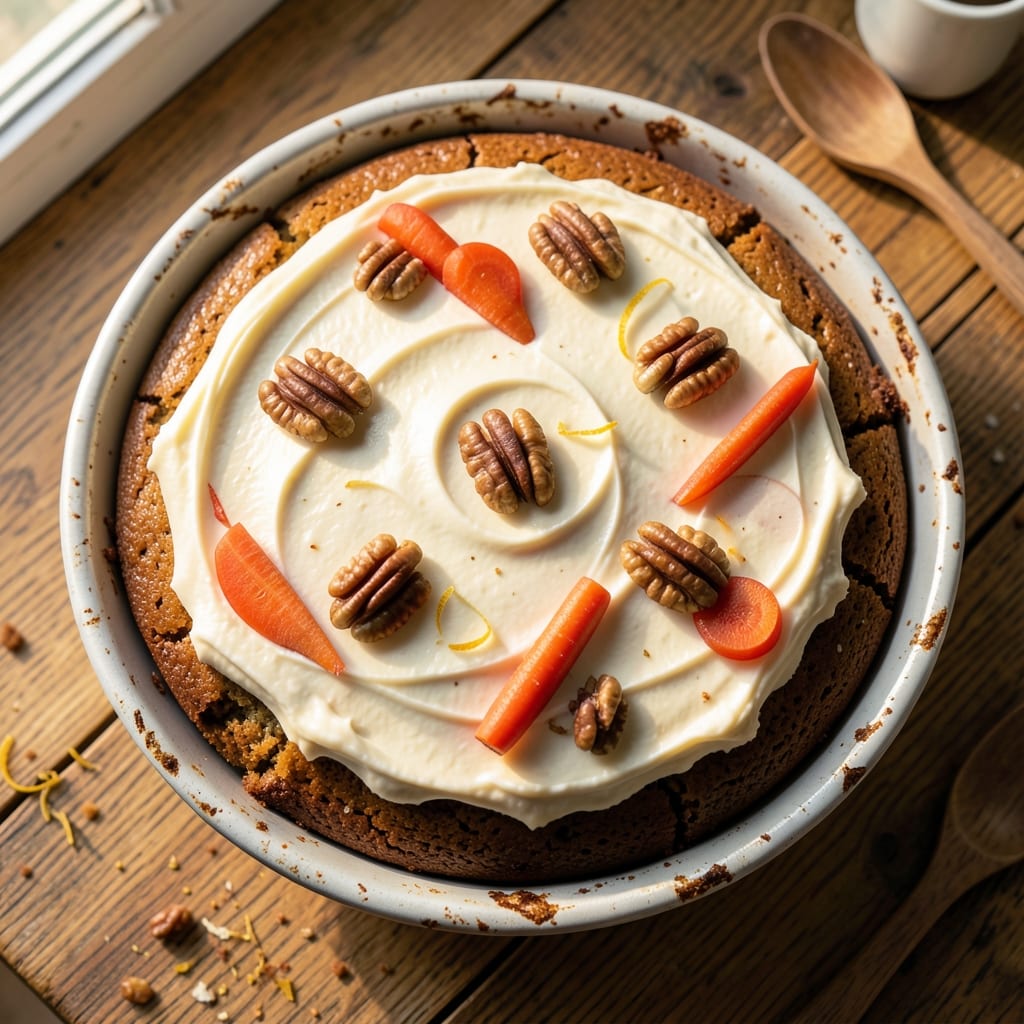
This 1970s carrot cake recipe brings back the cozy nostalgia of home baking when carrot cakes were oil-based, spice-forward, and generously studded with walnuts. The era’s love for warm spices—cinnamon, nutmeg, and ginger—shines through in every moist, tender bite, while the classic cream cheese frosting delivers that signature tangy-sweet contrast. I’ve recreated this recipe exactly as it would have been made in the '70s, with no modern shortcuts, because some desserts deserve the full retro experience.
The secret to this cake’s legendary texture lies in the oil-based batter (no butter here!) and a precise balance of wet and dry ingredients that creates a tender yet sturdy crumb. Walnuts add a satisfying crunch, while the spices infuse every layer with that familiar, comforting warmth. The cream cheese frosting, whipped to just the right consistency, is the perfect finishing touch—smooth, slightly tangy, and impossible to resist.
What makes this recipe special is how it transports you back to a time when home baking was an art, not a chore. The cake bakes up with a golden dome, the frosting swirls beautifully, and the aroma alone will have everyone asking for seconds. It’s the kind of dessert that feels like a hug—perfect for family gatherings, potlucks, or simply treating yourself to a slice of nostalgia.
Serve it with a cup of strong coffee or a glass of milk for the full retro experience. The combination of warm spices, creamy frosting, and that classic carrot cake flavor makes this a timeless dessert that never goes out of style. Let’s get baking!
Ingredients for 1970 carrot cake
These nostalgic ingredients bring back the cozy warmth of 1970s baking—spiced, moist, and studded with walnuts.
| Ingredient | Amount | Notes |
|---|---|---|
| All-Purpose Flour 🌾 | 2 ½ cups | Sifted for light texture |
| Granulated Sugar 🍚 | 1 ½ cups | White or light brown |
| Vegetable Oil 🫒 | 1 cup | Light or canola preferred |
| Unsweetened Applesauce 🍎 | ½ cup | For moisture without butter |
| Large Eggs 🥚 | 4 whole | Room temperature for best mixing |
| Walnuts 🥜 | 2 cups | Chopped, toasted for crunch |
| Grated Carrots 🥕 | 3 cups | Packed, fine shredded |
| Ground Cinnamon 🌿 | 2 tsp | Freshly ground preferred |
| Ground Nutmeg 🌿 | ½ tsp | Freshly grated nutmeg |
| Ground Ginger 🌶️ | 1 tsp | For authentic warmth |
| Baking Soda 🧂 | 1 tsp | For lift and tenderness |
| Salt 🧂 | ½ tsp | Kosher or sea salt |
| Cream Cheese 🧀 | 16 oz | Room temperature, full-fat |
| Powdered Sugar 🍚 | 4 cups | For smooth frosting |
| Vanilla Extract 🌸 | 1 tbsp | Pure vanilla preferred |
The walnuts are key here—toast them first in a dry skillet until fragrant for that authentic '70s crunch. Trader Joe's sells pre-toasted walnuts if you're short on time, but fresh is always better. For the spices, Penzeys or bulk bins at natural markets have the freshest ground cinnamon and nutmeg—these spices lose potency fast once opened. The vegetable oil should be light, not extra-virgin, to avoid overpowering the delicate carrot flavor. If you can't find vegetable oil, canola or safflower oil works just as well.
No walnuts? Pecans or macadamia nuts add a similar crunch, though the flavor will differ slightly. Short on applesauce? Unsweetened applesauce from a jar works fine, but fresh is moister. The frosting can be made ahead—just whip it up when ready to use. For a tangier frosting, add 1 tsp lemon juice. If your cream cheese is too soft, chill it for 15 minutes before whipping. The carrots should be finely grated—a box grater works best, but a food processor will do in a pinch.
This cake keeps beautifully for 4 days in an airtight container at room temperature, though it's best enjoyed fresh. The frosting can be made 2 days ahead and stored in the fridge—just rewhip before serving. For a retro touch, serve with a cup of strong coffee or a glass of milk. The walnuts and spices keep for months in the pantry, so you can prep ahead without worry. If you're making this for a crowd, double the frosting—it disappears fast!
Why You'll Love This Recipe
- No Mixer Needed: I’ll be real—this recipe doesn’t require a stand mixer. The applesauce keeps things light and fluffy without overworking the batter, and the oil adds richness without the fuss of melted butter. Just stir, pour, bake.
- Spiced Sweetness: That combo of sugar, applesauce, and eggs creates a moist, tender crumb, while the carrots add natural sweetness without needing extra frosting. Honestly? It’s got a nostalgic warmth that tastes like a hug from the ‘70s.
- Budget-Friendly Staples: Flour, sugar, and eggs are pantry basics, and applesauce stretches the recipe further than cream cheese. I’ve made this for birthdays, holidays, and even just because—it’s my go-to for when I need something special without breaking the bank.
Step-by-step instructions for 1970s carrot cake
Here's the classic method that delivers moist, spiced cake with perfect walnut crunch and tangy frosting.
Prep Ingredients and Preheat Oven
Preheat your oven to 350°F and prepare three 9-inch round cake pans by greasing them thoroughly with vegetable oil, then dusting with all-purpose flour. Tap out any excess flour so it doesn't interfere with baking. This ensures easy release and clean sides.
While the oven heats, prepare your ingredients by measuring out all components. Toast the 2 cups walnuts in a dry skillet over medium heat for 3-4 minutes until fragrant and lightly golden. Let them cool completely before chopping roughly—this enhances their flavor and prevents soggy cake. Grate the 3 cups carrots using a box grater or food processor for fine, even shreds. The finer the shreds, the more evenly they'll distribute throughout the batter.
Mix Dry Ingredients
In a large mixing bowl, whisk together the 2.5 cups all-purpose flour, 2 teaspoons ground cinnamon, 0.5 teaspoon ground nutmeg, 1 teaspoon ground ginger, 1 teaspoon baking soda, and 0.5 teaspoon salt. Sift the flour mixture through a fine-mesh sieve directly into the bowl to aerate it—this creates a lighter texture in the final cake. Use a whisk to break up any lumps and ensure even distribution of the spices.
Set the dry ingredients aside while you prepare the wet mixture. The reason for keeping them separate is to prevent the baking soda from activating prematurely, which could make the cake dense. This step is crucial for achieving that classic 1970s carrot cake texture.
Combine Wet Ingredients
In a separate large bowl, combine the 1.5 cups granulated sugar, 1 cup vegetable oil, and 0.5 cup unsweetened applesauce. Whisk until the mixture is smooth and homogenous. Add the 4 whole large eggs, one at a time, whisking vigorously after each addition to fully incorporate them. The applesauce replaces butter here, keeping the cake moist without adding excess fat.
Add the 1 tablespoon vanilla extract and mix well. The mixture should be slightly thick but pourable. If it appears too thick, add 1-2 tablespoons of water to adjust the consistency. This step ensures the cake will bake evenly without being too dense.
Incorporate Dry Ingredients and Fold in Add-Ins
Gradually add the dry ingredients to the wet mixture, mixing on low speed with an electric mixer or using a spatula to fold gently. Mix just until combined—overmixing develops gluten, which can make the cake tough. Once the flour is incorporated, fold in the 3 cups grated carrots and the 2 cups toasted, chopped walnuts by hand using a rubber spatula.
Be careful not to overmix at this stage. The batter should be thick but still able to be spooned into the prepared pans. The walnuts and carrots should be evenly distributed throughout. If the batter is too thick to spread easily, add 1-2 tablespoons of water to loosen it slightly.
Bake the Cake Layers
Divide the batter evenly among the three prepared cake pans, filling each about two-thirds full. Tap the pans gently on the counter to remove any air bubbles and ensure the batter settles evenly. Bake in the preheated oven for 25-30 minutes, or until a toothpick inserted into the center comes out clean. Rotate the pans halfway through baking for even browning.
Watch for the edges to pull away slightly from the pan and the tops to develop a golden hue. The cake should spring back gently when pressed in the center. Remove from the oven and let the cakes cool in their pans for 10 minutes, then transfer to a wire rack to cool completely. This gradual cooling prevents cracking and ensures even slicing.
Prepare the Cream Cheese Frosting
While the cakes cool, prepare the frosting by beating the 16 oz cream cheese and 4 cups powdered sugar together in a large mixing bowl using an electric mixer. Start on low speed to avoid a mess, then increase to medium-high speed and beat for 3-5 minutes until smooth and fluffy. Add the 1 tablespoon vanilla extract and mix until fully incorporated.
The frosting should be light and airy, with no lumps. If it's too thick, add 1-2 tablespoons of milk to achieve a spreadable consistency. This step is essential for achieving that classic cream cheese frosting texture that pairs perfectly with the spiced carrot cake.
Assemble and Serve
Once the cakes are completely cool, level the tops if necessary using a serrated knife. Place one cake layer on a serving plate and spread a generous layer of frosting on top. Repeat with the remaining two layers, creating a three-layer cake. Frost the sides of the cake with the remaining frosting, creating a smooth, even surface.
Chill the cake in the refrigerator for at least 1 hour before serving to allow the frosting to set. This classic 1970s carrot cake is best enjoyed at room temperature, with each slice offering a perfect balance of moist, spiced cake, crunchy walnuts, and tangy cream cheese frosting. Serve with a glass of milk for the full retro experience.
Pro Tips For Making 1970 Carrot Cake
- Mix the Dry Ingredients First: I learned this the hard way—adding applesauce and oil to flour without pre-mixing creates clumps that ruin texture. Use a whisk to combine flour, baking soda, and salt before anything wet touches it. Trust me, your cake will thank you later.
- Bake at 325°F, Not Higher: This isn’t a race. At 350°F, the outside burns while the center stays dense. Stick to 325°F and check for doneness at 45 minutes—insert a toothpick near the center. If it comes out clean (or with a few moist crumbs), you’re golden.
- Use Room-Temperature Eggs: Cold eggs from the fridge mix unevenly and can cause sinkage. Let them sit in warm water for 10 minutes before cracking them. Your cake will rise better and stay moist longer—no one wants a dense, sad carrot cake.
- Skip the Extra Sugar in Frosting: The 1970s recipe might call for a ton of sugar in the cream cheese frosting, but it’s overkill. Halve the sugar and add 1-2 tablespoons of powdered milk for tang. It’s lighter, less cloying, and still sweet enough to make the carrots shine.
Essential equipment for perfect results
Retro Cake Pans
For that authentic 1970s look and texture, use three 9-inch round cake pans with removable bottoms—I recommend Wilton Perfect Results pans. These create the classic dome shape while ensuring even baking. Grease them thoroughly with vegetable oil (no butter here!) and dust with flour for easy release. If you don’t have round pans, 9x13-inch baking dishes work in a pinch for a sheet cake version. 🥧
Essential Mixing Tools
A stand mixer with the paddle attachment is ideal for creaming the frosting—it whips the cream cheese to light and fluffy perfection. For the batter, a hand mixer works fine, but avoid overmixing. A fine-mesh sieve is crucial for sifting dry ingredients to aerate the flour and spices. For walnut chopping, a sharp chef’s knife or food processor ensures even texture. 🔄
Spice Freshness Matters
Invest in freshly ground spices—Penzeys or bulk bins at natural markets have the best quality. Pre-ground spices lose potency quickly, and that dulls the warm cinnamon, nutmeg, and ginger flavors that define this cake. Store them in airtight containers away from light and heat. A mortar and pestle works too if you prefer whole spices, but grinding them fresh adds an extra layer of depth. 🌿
Oven Thermometer
Your oven’s temperature gauge can be off by 25°F or more, and that affects baking time. A Thermoworks Oven Thermometer ensures your 350°F setting is accurate. Place it near the cake pans while preheating—this small tool prevents under- or overbaked layers. For even browning, rotate pans halfway through baking. ⏰
Frosting Whisk Attachment
If you don’t have a stand mixer, a hand mixer with a whisk attachment works for the frosting. Beat the cream cheese and powdered sugar on medium-high speed for 3-5 minutes until smooth. For extra fluffiness, add 1 tbsp milk if needed. A spatula helps smooth the frosting between layers—press gently to avoid tearing the cake. 🧀
Cooling Racks & Knives
Let cakes cool 10 minutes in pans, then transfer to a wire cooling rack to prevent sogginess. A serrated knife levels the tops neatly for even frosting. For serving, a long, thin spatula helps slice cleanly through the layers. Store leftovers in an airtight container for up to 4 days—the frosting stays fresh if sealed properly. 🍴
Nutrition facts
Frequently asked questions
Why does this recipe use vegetable oil instead of butter?
This 1970s-style carrot cake relies on vegetable oil to capture the authentic texture of the era. Oil keeps the cake moist and tender without adding butter's richness, which was less common in '70s baking. The oil also creates a lighter crumb that holds up perfectly with the walnuts and spices. For the same effect today, use light canola or safflower oil.
Can I make this cake in a single layer instead of three?
For a single-layer version, use a 9x13-inch baking dish and reduce the batter by one-third. Bake for 35-40 minutes at 350°F until a toothpick comes out clean. The frosting quantity remains the same—just spread it over the top and sides. This works perfectly for potlucks or when you need a simpler presentation.
How do I store leftovers to keep the frosting fresh?
Wrap the cake tightly in plastic wrap, then place it in an airtight container at room temperature for up to 4 days. For longer storage, refrigerate for up to 1 week. To refresh the frosting, let it sit at room temperature for 10 minutes before serving. The cake itself stays moist even when refrigerated—just bring it to room temperature before slicing.
What if my cake turns out dense instead of tender?
Overmixing the batter is the most common cause of dense cake. Mix just until combined—stop as soon as the flour disappears. Also, ensure your baking soda is fresh (older baking soda loses potency). For extra tenderness, don't overbake—remove the cake when a toothpick comes out with a few moist crumbs. The cake will continue cooking slightly after removal from the oven.
Can I substitute pecans for walnuts?
Yes, but the flavor will differ slightly. Pecans add a sweeter, buttery note compared to walnuts' earthy crunch. Use the same 2 cups measurement, toasted and chopped. For a closer match, try macadamia nuts, which have a similar texture. If you omit nuts entirely, reduce the batter by 1/4 cup to maintain proper structure.