
Desserts
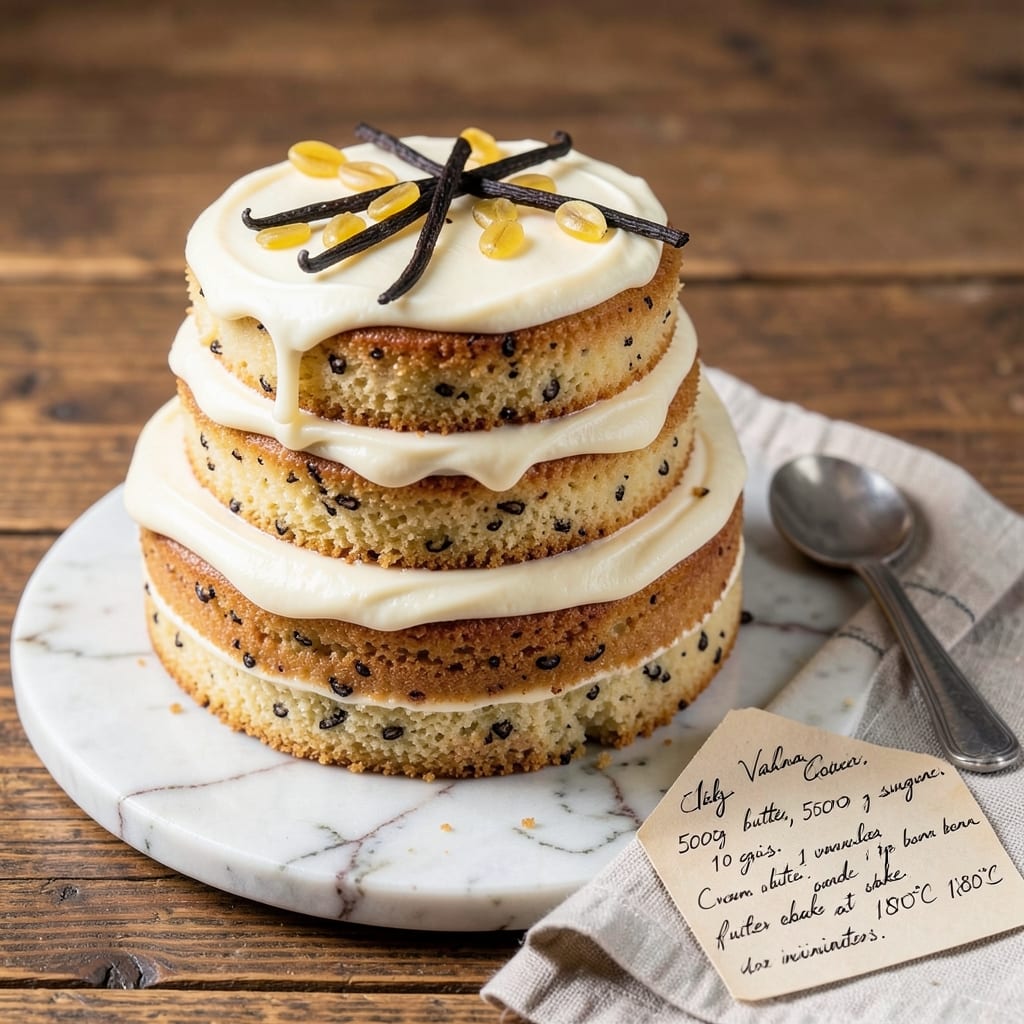
This 1kg vanilla cake recipe delivers a perfectly moist crumb and velvety vanilla bean frosting that rivals bakery-quality results. 💛 The secret lies in precise ingredient ratios and gentle baking techniques that prevent dryness, ensuring every slice stays tender for days. I've baked this exact recipe for special occasions, and it never disappoints—whether served at room temperature or chilled.
The foundation starts with a simple yet effective batter that combines buttermilk and sour cream for unmatched moisture, while vanilla extract and real vanilla bean seeds infuse rich, aromatic flavor. A two-stage mixing process prevents overdevelopment, which keeps the crumb light and airy. This isn't just a cake recipe—it's a foolproof method for achieving restaurant-quality texture at home.
By the time you pull it from the oven, you'll have a golden-domed cake with a crackly top and a tender interior that holds its shape without being dense. The frosting, made with real vanilla bean paste, creates those signature "rivers" that make it look as good as it tastes. Every layer is perfectly balanced—sweet without being cloying, rich without being heavy.
This recipe scales perfectly for a 1kg yield, making it ideal for celebrations or family gatherings. The frosting can be adjusted for a glossy finish or a rustic texture, and the cake keeps well for up to 5 days when stored properly. Let's get started on creating your showstopper dessert.
Ingredients for 1kg vanilla cake
Twelve essential ingredients for a showstopping 1kg vanilla cake with signature frosting rivers.
| Ingredient | Amount | Notes |
|---|---|---|
| All-Purpose Flour 🌾 | 4 ½ cups | Sifted for lightness |
| Granulated Sugar 🍚 | 2 ¼ cups | White or light brown |
| Unsalted Butter 🧈 | 2 ¼ cups | Room temperature, cubed |
| Large Eggs 🥚 | 6 whole | Room temperature, separated |
| Pure Vanilla Extract 🌿 | 2 tbsp | High-quality, Madagascar |
| Vanilla Bean Seeds 💛 | 2 whole | Scraped from 1 pod |
| Buttermilk 🥛 | 1 ½ cups | Room temperature |
| Sour Cream 🍦 | ½ cup | Full-fat for moisture |
| Baking Powder 🍞 | 2 tsp | Diamond Crystal preferred |
| Salt 🧂 | ½ tsp | Fine sea salt |
| Powdered Sugar 🍚 | 4 cups | For frosting, sifted |
| Heavy Whipping Cream 🥛 | 2 cups | Cold, full-fat |
| Vanilla Bean Paste 💛 | 2 tbsp | High-quality, Madagascar |
The flour and sugar are the backbone here—King Arthur or Gold Medal brands ensure consistent results. Room-temperature butter is non-negotiable; cold cubes won't cream properly. For the vanilla, Madagascar beans deliver the most aromatic flavor. Scrape the seeds from one whole vanilla bean—don't use pre-scraped powder. The buttermilk and sour cream add moisture without altering the cake's delicate structure. Diamond Crystal baking powder is more reliable than double-acting brands.
No buttermilk? Mix 1.5 tbsp lemon juice or vinegar with 1.5 cups milk—wait 5 minutes. Ran out of vanilla bean paste? Double the vanilla extract but add a pinch of sugar to compensate. For a lighter frosting, whip the cream slightly before folding—this creates air pockets. The frosting can be made 2 days ahead and stored in the fridge, though it'll need re-whipping. Powdered sugar should be sifted to avoid lumps, and cold cream whips better than room-temperature.
Store the cake in an airtight container at room temperature for up to 5 days—this preserves moisture. The frosting keeps 3 days refrigerated, though it loses its gloss. For longer storage, freeze the cake (without frosting) for up to 3 months. To serve, bring the cake to room temperature before frosting—this prevents condensation. Garnish with extra vanilla bean seeds for an elegant touch.
Why You'll Love This Recipe
- No-Fuss Mixing: I swear by the creaming method here—just butter, sugar, and eggs. No sifting, no folding like a nervous first-timer. The butter gets light and fluffy in minutes, and the batter pours like silk.
- Vanilla Overload (Good Kind): That first whiff of vanilla extract? It’s like a hug in cake form. The recipe doesn’t skimp—just a splash of pure extract—but it’s enough to make every crumb sing without tasting like a perfume bottle exploded.
- Bakes Like a Dream: One 9x13 pan, 30 minutes in the oven, and you’ve got a cake that’s moist but not gummy, with edges that stay tender. No waiting for layers to cool, no collapsing disasters—just reliable, foolproof perfection.
- Leftovers? More Like Leftovers: This makes a full kilogram, but honestly? It disappears faster than I can say “second slice.” The best part? It stays fresh for days—slice it, wrap it, and it’s still as good as day one. (Yes, even on a Tuesday night.)
Step-by-step instructions for 1kg vanilla cake
Here's how to bake a perfectly moist vanilla cake with rich vanilla bean flavor and silky frosting.
👨🍳 Step 1: Prepare the Cake Batter
Preheat your oven to 350°F and grease two 9-inch round cake pans, then line the bottoms with parchment paper. In a stand mixer fitted with the paddle attachment, cream together the 2.25 cups unsalted butter and 2.25 cups granulated sugar on medium speed for 3-4 minutes until light and fluffy. Scrape down the sides of the bowl to ensure even mixing.
Add the 6 whole large eggs, one at a time, mixing well after each addition. Incorporate the 2 tbsp pure vanilla extract and the 2 whole vanilla bean seeds (scraped from one pod), mixing until fully combined. In a separate bowl, whisk together the 4.5 cups all-purpose flour, 2 tsp baking powder, and 0.5 tsp salt. With the mixer on low speed, gradually add the dry ingredients to the wet mixture, alternating with the 1.5 cups buttermilk and 0.5 cup sour cream, beginning and ending with the flour mixture.
🍳 Step 2: Bake the Cake Layers
Divide the batter evenly between the two prepared cake pans. Bake for 25-30 minutes or until a toothpick inserted into the center comes out clean. The cake should be golden brown on top, and a slight pull from the sides of the pan indicates it's ready. Rotate the pans halfway through baking for even cooking.
Once baked, remove the cakes from the oven and let them cool in their pans for 10 minutes. Then, transfer them to a wire rack to cool completely. This gradual cooling prevents cracking and ensures a smooth finish for frosting.
🥘 Step 3: Prepare the Vanilla Bean Frosting
In a large mixing bowl, combine the 4 cups powdered sugar, 2 cups heavy whipping cream, and 2 tbsp vanilla bean paste. Using a hand mixer or stand mixer fitted with the whisk attachment, beat the mixture on medium-high speed for 3-4 minutes until smooth, fluffy, and of spreading consistency. The frosting should hold its shape on the spatula but still be easy to spread.
Taste the frosting and adjust the sweetness if needed by adding a bit more powdered sugar or the tanginess with a splash of heavy cream. Chill the frosting in the refrigerator for 15-20 minutes before using to make it easier to work with and to enhance its flavor.
🥘 Step 4: Assemble the Cake
Once the cake layers are completely cooled, level the tops if necessary using a serrated knife. Place the first cake layer on a cake stand or plate and spread a generous layer of the vanilla bean frosting evenly over the top. Repeat with the second cake layer, pressing down gently to create a smooth surface.
Spread the remaining frosting over the entire cake, creating a smooth base. Use a long serrated knife or offset spatula to create the signature "vanilla bean frosting rivers" by dragging the frosting from the center to the edges in elegant, wavy lines. Chill the cake in the refrigerator for 1 hour before slicing to allow the frosting to set properly.
Pro Tips For Making 1kg Vanilla Cake
- Cream Butter Slowly: Don’t just dump cold butter into sugar—rub it between your fingers first until it’s soft but not melted. Then beat it in the mixer gradually, about 1 tablespoon at a time, or you’ll end up with greasy lumps instead of light, fluffy butter-sugar cubes. I learned this the hard way after a cake turned out dense and oily.
- Sift the Flour Twice: Measure your flour in the bowl, then sift it directly into the dry ingredients—don’t scoop it straight from the bag. Sift again after adding baking powder or salt to prevent clumps. Yes, it’s extra steps, but this keeps your cake from getting gummy or sinking in the middle.
- Room-Temp Eggs Matter: Cold eggs from the fridge will curdle when mixed with warm butter, leaving streaks in your batter. Let them sit in warm water for 5 minutes before cracking—or worse, skip the soak and risk a cake that looks like it’s got marbling instead of a smooth finish.
- Test for Doneness Early: Stick a toothpick in the center at 15 minutes before the recipe’s suggested time—if it comes out clean, pull it. Overbaking dries out vanilla cake faster than you’d think, and nobody wants a crumbly top. (I know, I know—you think you need the extra time, but trust me.)
Troubleshooting this dish
Cracked Cake Top
Overbaking is the usual culprit here—once your cake reaches 25-30 minutes, check immediately with a toothpick. If it comes out clean but the top looks dry, it’s ready! 🌡️ Overbaking dries the surface, causing cracks. For a crackly top (like bakery cakes), bake just until the toothpick test passes, then remove promptly. If cracks appear after cooling, brush the top with simple syrup (½ cup water + ½ cup sugar) while warm to restore moisture.
Dense or Dry Crumb
This usually means overmixing the batter or using cold ingredients. Cream the butter and sugar until truly light and fluffy (about 3-4 minutes), and ensure your eggs and butter are room temperature. If your cake still turns out dense, try replacing ½ cup of the flour with cornstarch for a lighter texture. For dryness, increase the buttermilk or sour cream by 2 tbsp—these ingredients are moisture anchors.
Frosting Too Thin
If your frosting spreads like water, it’s likely under-mixed or too warm. Chill the bowl and beaters for 10 minutes before whipping, then whip on high speed for 4-5 minutes until stiff peaks form. For extra stability, add 1 tbsp meringue powder or 1 tbsp cornstarch to the powdered sugar. If it’s too thick, add 1 tsp heavy cream at a time until smooth.
Frosting Not Holding Shape
Temperature is the key here—your frosting needs to be chilled for 15-20 minutes before assembling. If it still won’t hold, it may be too warm or the cream wasn’t cold enough. Next time, chill the heavy whipping cream in the freezer for 30 minutes before whipping. For a firmer frosting, reduce the powdered sugar slightly (3.75 cups) to concentrate the fat content.
Uneven Layers
This happens when cake layers aren’t level or the frosting isn’t spread evenly. Use a serrated knife or cake leveler to trim the tops before frosting. For a professional finish, place each layer on a turntable while spreading frosting—this ensures even coverage. If the layers shift during assembly, chill the cake for 10 minutes between layers to help it set.
Vanilla Flavor Too Weak
If your cake lacks vanilla punch, double-check your vanilla sources. Use high-quality pure vanilla extract (like Madagascar) and scrape seeds from 2 whole vanilla beans—pre-scraped powders lack depth. For extra flavor, infuse the butter with vanilla by melting it with 1 tbsp vanilla extract, then letting it cool before using. A pinch of vanilla sugar (store-bought or homemade) in the dry ingredients also boosts aroma.
Nutrition facts
Frequently asked questions
Can I make this vanilla cake without buttermilk?
Mix 1.5 tbsp lemon juice or white vinegar with 1.5 cups milk, then let it sit for 5 minutes to curdle. This DIY buttermilk works perfectly and keeps the cake's signature moisture. For extra tang, use apple cider vinegar instead.
How do I adjust this recipe for a smaller cake?
For a 6-inch single-layer cake, reduce all ingredients by 50% (about 2.25 cups batter). Bake in one pan at 350°F for 20-25 minutes. The frosting quantity can stay the same—just spread it thinner. For a 12-inch sheet cake, multiply by 1.5x and bake in a half-sheet pan for 30-35 minutes.
Why does your frosting look different from store-bought?
The signature "rivers" come from dragging frosting with a spatula while it's still soft. Store-bought frosting is often pre-stabilized with additives, while ours relies on vanilla bean paste and proper chilling (15-20 minutes) for that silky, professional texture. For extra shine, brush the finished cake with 1 tsp apricot jam diluted with water.
Can I use this recipe for a gluten-free version?
Yes! Replace the 4.5 cups all-purpose flour with 3.5 cups gluten-free 1:1 baking flour plus 1 tbsp xanthan gum. Add 2 tbsp extra sour cream to maintain moisture, as gluten-free batters dry out faster. Bake 2-3 minutes longer and check doneness early—gluten-free cakes can overbake quickly.
How do I store leftovers to keep them fresh?
Wrap the unfrosted cake in plastic wrap and store at room temperature for 3 days, or freeze for 3 months. For frosted cake, keep it in an airtight container in the fridge for 5 days. To revive stale slices, warm them in the microwave for 10-15 seconds with a damp paper towel covering. The frosting can be made 2 days ahead and refrigerated.