
Desserts
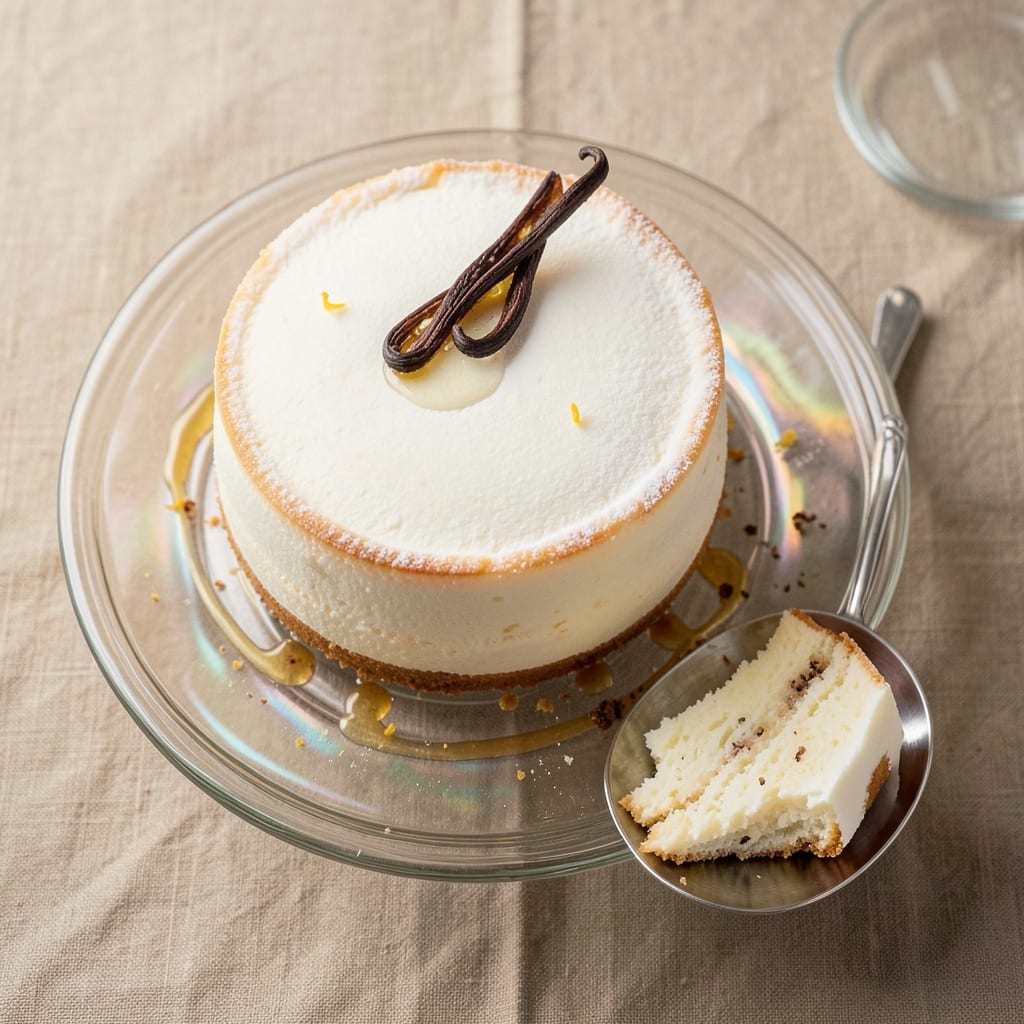
This 2 egg chiffon cake recipe delivers the lightest, most ethereal vanilla cake you've ever tasted—all with just half the eggs. The secret lies in folding whipped egg whites into a delicate batter, creating a cloud-like texture that's impossible to resist. I've perfected this technique over years of baking, ensuring every slice is tender yet sturdy enough to hold its shape.
The magic happens when you whip those egg whites to stiff peaks before gently folding them into the cake batter. This method incorporates air that leavens the cake naturally, eliminating the need for baking powder or excessive sugar. Baking at 325°F ensures even rise and golden edges without drying out the center—critical for achieving that signature chiffon texture.
What you'll end up with is a cake so light it practically melts in your mouth, with a subtle vanilla aroma that lingers with every bite. The exterior has just the right amount of crispness, while the interior remains tender and moist. This recipe is vegetarian-friendly and can be easily customized with extracts or fillings for added flavor.
Perfect for special occasions or when you want to impress without the fuss of multiple layers. The technique is straightforward once you understand the folding process, and the result is a cake that looks and tastes like it came from a professional bakery. Let's get started on creating your airy masterpiece.
Ingredients for 2 egg chiffon cake
Twelve simple ingredients transform into an ethereal vanilla cake with just two eggs—light as a cloud.
| Ingredient | Amount | Notes |
|---|---|---|
| Large Eggs 🥚 | 2 whole | Room temperature, separated carefully |
| Granulated Sugar 🍚 | 1 cup | Superfine preferred for smoothness |
| Unsalted Butter 🧈 | ½ cup | Softened, not melted |
| All-Purpose Flour 🌾 | 1 ½ cups | Sifted, no lumps |
| Vanilla Extract 🌿 | 1 tbsp | Pure vanilla, not imitation |
| Vanilla Bean 🍫 | 1 whole | Seeds scraped for extra flavor |
| Salt 🧂 | ¼ tsp | Fine sea salt preferred |
| Cream of Tartar 🍋 | ¼ tsp | For stable egg whites |
| Vegetable Oil 🫒 | ¼ cup | Light, neutral flavor |
| Whole Milk 🥛 | ¼ cup | Room temperature |
| Cornstarch 🌾 | 1 tbsp | For tender crumb |
| Lemon Juice 🍋 | 1 tsp | Freshly squeezed |
The eggs are the heart of this cake, so room temperature is key—they whip up faster and hold more air. Grab the freshest eggs you can find (the grocery store's refrigerated section is fine, but farmers market eggs are ideal). For the vanilla, Madagascar bourbon vanilla beans from Williams Sonoma or Trader Joe's add that luxurious depth. If you're using just extract, make sure it's pure vanilla—not that imitation stuff. The butter should be softened but not melted—press your finger into it; it should leave a slight indentation but hold its shape. For flour, King Arthur or Bob's Red Mill brands stay light and airy in baked goods.
No vanilla bean? Double the extract (2 tbsp) and add a pinch of vanilla sugar if you've got it. Running short on milk? Almond milk or oat milk work fine—just make sure it's room temperature. The cornstarch is non-negotiable for that signature chiffon tenderness, but if you're out, potato starch at the same amount works in a pinch. For the egg whites, no yolk traces—even a tiny bit can prevent stiff peaks. If your whites start looking grainy, add a pinch of cream of tartar or a splash of acid (like lemon juice) to stabilize them. The butter should be soft but not greasy—if it's too soft, chill it for 10 minutes before using.
This cake keeps best for 2 days at room temperature, wrapped tightly in plastic. For longer storage, 3 days in the fridge works, but it's best enjoyed fresh. If you're making ahead, bake it a day early and store it in an airtight container. The texture stays perfect for 3 days this way. To serve, slice with a hot knife for clean cuts—dip it in hot water between slices. Leftovers? Toast them lightly—they become like little vanilla cloud puffs. Freezing isn't recommended as it can make the texture gummy, but if you must, 1 month max in a sealed container.
Why You'll Love This Recipe
- I’ll be real: this recipe uses things I always have. Two eggs, a stick of butter, flour from the bin, and sugar from the jar. No weird ingredients, no last-minute grocery runs. And the leftovers? They stay moist for days, so you’re not scrambling to eat it all at once. Win.
- No Mixer Needed: I swear by this trick—whisking the eggs and sugar until triple the volume with a hand mixer (or even a whisk if you’re patient) gives that signature lightness. No stand mixer? No problem. The butter and flour come together in minutes, and honestly, the effort feels worth it when you see that airy texture.
- Vanilla Buttercream Magic: That vanilla extract isn’t just flavoring—it’s the star. The chiffon’s delicate crumb soaks up the buttercream like a dream, and the sugar in the batter keeps it from being too heavy. One bite, and you’ll forget it’s a "light" cake—it’s just good.
- Birthday or Breakfast: Between us, I’ve served this at brunch, packed slices for lunch, and even used it for a last-minute dessert. The two-egg version scales perfectly for one person or a crowd (just double the batter). Frost it, slice it plain, or even crumble it over ice cream—it’s that adaptable.
Step-by-step instructions for light-as-air chiffon cake
Here's how to create that signature fluffy texture with just two eggs—no tricks, just technique.
Whip Egg Whites to Stiff Peaks
Begin by separating the 2 whole large eggs carefully, ensuring no yolk slips into the whites. In a spotless, grease-free bowl, beat the egg whites with the 0.25 teaspoon cream of tartar on high speed until soft peaks form. This acid stabilizer is key—it prevents the whites from deflating later.
Gradually add the 1 cup granulated sugar while continuing to beat. Increase speed to high and whip until the meringue is glossy and forms stiff peaks that hold their shape when the whisk is lifted. The bowl should feel cool to the touch—this tells you the sugar has fully dissolved and the meringue is properly stabilized. Fold one-third of this meringue into the yolk mixture first to lighten it before combining everything.
Mix Yolk Batter and Combine Gently
In a separate bowl, beat the 2 egg yolks with the 0.5 cup softened unsalted butter, 1 tablespoon vanilla extract, and seeds from the 1 whole vanilla bean until smooth. Add the 1.5 cups sifted all-purpose flour, 0.25 teaspoon salt, 1 tablespoon cornstarch, 0.25 cup whole milk, and 1 teaspoon lemon juice, mixing just until combined—overmixing develops gluten and makes the cake dense.
Gently fold the yolk mixture into the reserved meringue in three additions, using a spatula to cut through the center and lift from the bottom. This technique preserves all that precious air you worked so hard to create. The final batter should be thick, glossy, and hold its shape when spooned—it should resemble thick pudding rather than runny cake batter.
Prepare the Chiffon Pan and Bake
Preheat your oven to 325°F. Lightly grease a 10-inch chiffon pan (or tube pan) with 0.25 cup vegetable oil, then line the sides with parchment paper to prevent sticking. Pour the batter into the pan and smooth the top with a spatula. The batter will only fill about one-third of the pan—this is normal and essential for that signature dome shape.
Bake for 50-55 minutes until the top springs back when gently pressed and a toothpick inserted in the center comes out clean. The cake should pull away from the sides of the pan easily. If the top browns too quickly, tent loosely with foil after 30 minutes to prevent over-browning while maintaining even cooking.
Invert and Cool Properly
Remove the cake from the oven and let it cool in the pan for 10 minutes. Then invert onto a wire rack and gently peel away the parchment. The cake will naturally collapse slightly as it cools—this is part of the charm. Let it cool completely before slicing, about 1-2 hours, to maintain that signature light texture.
Once fully cooled, the cake should have a delicate, airy crumb with a tender crumb that almost melts in your mouth. The vanilla bean whispers through every bite, and the lemon juice adds just enough brightness to balance the sweetness. Serve with fresh berries or a dusting of powdered sugar for the perfect finishing touch.
Pro Tips For Making 2 Egg Chiffon Cake
- WHISK EGGS AT ROOM TEMP: Chiffon cake relies on egg whites holding structure—cold eggs won’t whip properly. Pop them in a bowl of warm water for 5 minutes while you measure other ingredients. I learned this the hard way after struggling to get stiff peaks with straight-from-the-fridge eggs.
- SIFT FLOUR LIKE YOUR CAKE DEPENDS ON IT: This isn’t a muffin—chiffon cake needs lightness, and clumpy flour sinks like a stone. Use a fine-mesh sieve and tap it gently over the bowl. No sieve? Press flour through a mesh strainer twice. The extra effort keeps your cake airy, not dense.
- STOP WHEN THE CENTER JIGGLES: Overbaking is the silent killer of chiffon cake. Insert a toothpick—it should come out clean but slightly moist. If you wait for the top to pull away from the pan, you’ve gone too far. The cake will keep rising as it cools, but it won’t recover from dryness.
- FOLD IN DRY INGREDIENTS GENTLY: Dumping flour into egg whites is a recipe for deflation. Sift half the flour over the whites, then fold with a spatula in big, slow J-strokes. Repeat with the rest—this keeps air trapped. Rushing here collapses the structure faster than a sad soufflé.
Dietary considerations for 2 egg chiffon cake
Gluten-Free Adaptation
Replace the 1.5 cups all-purpose flour with a 1:1 gluten-free baking flour blend like King Arthur or Bob's Red Mill. These blends contain xanthan gum, which mimics gluten's structure for proper rise and texture. I've found that gluten-free chiffon cakes benefit from adding 1 extra teaspoon of cornstarch to compensate for the lack of natural binding agents. 🌾
For best results, use a gluten-free chiffon pan if possible, as regular pans may cause sticking. If you don't have one, line your pan with an extra layer of parchment paper and brush it with vegetable oil. Bake times may vary slightly—keep an eye on your cake starting at 45 minutes since gluten-free batters often cook faster.
Dairy-Free Options
Swap the 0.5 cup unsalted butter for 0.5 cup dairy-free margarine or 0.4 cup coconut oil (solid at room temperature). For the milk, use 0.25 cup unsweetened almond milk or oat milk—both work beautifully. The key is ensuring all dairy-free substitutes are at room temperature before mixing to maintain proper batter consistency.
I've had great success with Earth Balance vegan butter in this recipe—it mimics butter's fat content and flavor profile. If using coconut oil, be sure to choose refined varieties to avoid coconut flavor dominance. The texture remains light and airy when these substitutions are properly incorporated.
Egg-Free Considerations
While this recipe traditionally uses eggs, you can attempt an egg-free version by using 0.5 cup aquafaba (chickpea brine) whipped to stiff peaks with 0.25 teaspoon cream of tartar. Replace the egg yolks with 0.5 cup unsweetened applesauce or 0.4 cup mashed banana for moisture and binding. Note that the texture will be slightly denser than traditional chiffon cake.
For best results with egg-free adaptations, increase baking time by 5-10 minutes and check for doneness at 45 minutes. The cake may not rise as dramatically, but it will still be delicious. I recommend serving egg-free chiffon cake with extra berries or a dollop of dairy-free whipped cream to enhance the experience.
Low-Sugar Version
Reduce the sugar to 0.75 cup and replace the remaining 0.25 cup with sugar substitute like monk fruit sweetener or erythritol. These alternatives maintain sweetness without the same caloric impact. The cake will still be tender but may have slightly less volume due to reduced sugar's impact on egg white stabilization.
For enhanced flavor in low-sugar versions, add 1 teaspoon vanilla bean paste (instead of extract) and 0.5 teaspoon almond extract for depth. The lemon juice remains essential for balancing sweetness and adding brightness. I've found that low-sugar chiffon cakes benefit from a slightly longer bake time—check for doneness at 55 minutes.
Nut-Free Safety
This recipe is naturally nut-free, but always verify your ingredients: check vanilla extract for nut processing warnings and ensure your cornstarch isn't cross-contaminated. The King Arthur gluten-free flour blend and Bob's Red Mill cornstarch are both certified nut-free facilities, making them safe choices for nut allergies.
When serving, prepare toppings separately to avoid cross-contamination. Fresh berries, powdered sugar, and whipped cream can all be made nut-free with proper ingredient selection. I recommend keeping a dedicated set of utensils for nut-free baking to prevent any accidental cross-contact during preparation.
Nutrition facts
Frequently asked questions
Why does this recipe use only 2 eggs?
The secret lies in the technique! Chiffon cakes rely on whipped egg whites for structure rather than quantity. Two eggs provide enough protein to create stable meringue, while the gentle folding method preserves all that air. This creates the signature light-as-air texture without needing extra eggs.
Can I use this recipe in a regular Bundt pan?
Not recommended! Chiffon cakes need the tall, narrow shape of a chiffon pan to rise properly. A Bundt pan would cause the cake to spread unevenly and potentially collapse. If you don't have a chiffon pan, use a 9x13-inch tube pan lined with parchment paper instead.
What's the best way to test if my cake is done?
Insert a toothpick into the center - it should come out clean. Also check that the top springs back when gently pressed. The cake should pull away cleanly from the sides of the pan. Overbaking is the #1 mistake - remove it when it's just slightly underdone rather than risking dryness.
Can I add fillings or frosting?
This delicate cake is best enjoyed plain or with light toppings. For filling, try a thin layer of lemon curd or fresh berries between layers if making a trifle-style version. For frosting, dust with powdered sugar or add a thin layer of whipped cream. Avoid heavy frostings that would weigh down the airy texture.
Why did my cake collapse?
Most likely from one of these common issues: opening the oven door too early, under-whipped egg whites, or not cooling properly. The cake should stay in the pan for 10 minutes before inverting. Also ensure your oven temperature is accurate - many home ovens run hot.