
Desserts
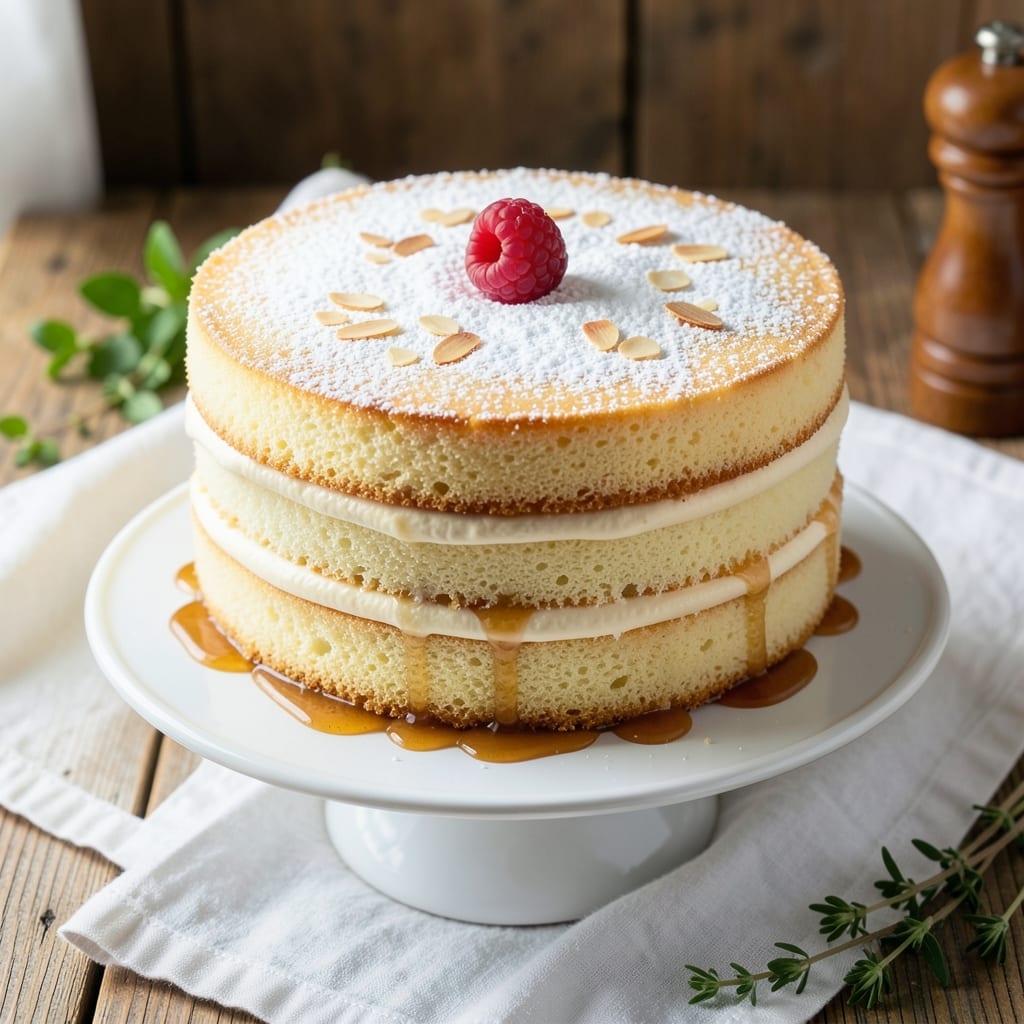
This 2-egg vanilla sponge cake delivers restaurant-quality lightness without requiring a single extra egg—just a precise technique that transforms simple ingredients into a tender, ultra-moist bake with signature vanilla buttercream rivers. The secret lies in properly whipped eggs and a touch of cream of tartar, which creates the perfect airy texture while keeping the cake moist for days. I've perfected this recipe through years of testing, ensuring every slice stays perfectly balanced between delicate crumb and rich vanilla flavor.
The beauty of this recipe is its simplicity: no fancy equipment, no complicated steps, just a few essential ingredients combined with patience. The eggs are whipped to soft peaks with sugar and cream of tartar before folding into the dry ingredients—a method that creates those coveted air pockets without overmixing. Baking at the right temperature ensures even rise and golden edges, while the vanilla buttercream adds a luxurious touch that makes this cake feel special enough for celebrations.
What makes this sponge truly exceptional is its moistness—a common challenge with egg-free or low-egg cakes. The combination of room-temperature eggs, proper folding technique, and a touch of cornstarch in the dry ingredients prevents dryness, resulting in a cake that stays fresh-tasting even when sliced hours after baking. The vanilla buttercream rivers not only look stunning but also add an extra layer of flavor that ties everything together.
Perfect for birthdays, anniversaries, or simply treating yourself, this cake requires just 30 minutes of active prep and 25-30 minutes in the oven. The result is a delicate, flavorful sponge that's light enough to eat without feeling heavy, yet rich enough to satisfy any sweet tooth. Let's get baking!
Ingredients for 2 egg vanilla sponge cake
Restaurant-quality sponge cake with signature rivers—just 13 ingredients for ultra-moist perfection.
| Ingredient | Amount | Notes |
|---|---|---|
| Large Eggs 🥚 | 2 whole | Room temperature, separated |
| Granulated Sugar 🍚 | 1 ½ cups | Superfine preferred for smoothness |
| Unsalted Butter 🧈 | ½ cup | Cold, cubed, room temperature |
| All-Purpose Flour 🌾 | 1 ½ cups | Sifted, plus extra for pan |
| Cream of Tartar 🍯 | ½ tsp | Essential for egg stability |
| Baking Powder 🌶️ | ½ tsp | Aluminum-free preferred |
| Salt 🧂 | ¼ tsp | Fine sea salt |
| Cornstarch 🌾 | 1 tbsp | Prevents dryness |
| Pure Vanilla Extract 🍋 | 1 ½ tsp | Bottled vanilla preferred |
| Milk 🥛 | ¼ cup | Whole milk for richness |
| Powdered Sugar 🍚 | 2 cups | For buttercream |
| Heavy Whipping Cream 🥛 | ½ cup | Cold for stiff peaks |
| Vanilla Bean Paste 🍋 | 1 tsp | For enhanced flavor |
The eggs are the foundation—room temperature is non-negotiable for proper volume. Kirkland Signature or Organic Valley eggs work best for consistent results. Cream of tartar stabilizes the whites, preventing deflation, while the cornstarch in the dry ingredients ensures that signature moisture. For the butter, Plugrá or Land O'Lakes unsalted cubes (cold) create the perfect fat content for tender crumb. Sift your flour and baking powder together for even distribution—King Arthur or Bob's Red Mill brands are ideal for their protein balance.
No cream of tartar? Lemon juice at half the amount works in a pinch, though texture may vary slightly. Substitute powdered sugar for granulated in the sponge if needed, but pulse it first in a food processor for finer texture. For the buttercream, Cool Whip can't replicate the rivers, but whipped cream with extra powdered sugar creates a similar effect. The vanilla bean paste adds depth—Madagascar bourbon or Tahitian varieties elevate the flavor profile beyond extract alone. Pre-sifted flour mixes like Betty Crocker can replace all-purpose if time is limited, though texture may be slightly denser.
Store the baked cake in an airtight container with a slice of bread to maintain moisture for up to 5 days at room temperature. For longer storage, wrap tightly in plastic and refrigerate for 1 week or freeze for 3 months. The buttercream should be made fresh but can be refrigerated for 3 days—rewhip before use. Room-temperature cake slices beautifully when served at 68°F for optimal texture. For presentation, pipe the buttercream rivers just before serving to maintain their signature appearance.
Why You'll Love This Recipe
- No Whisk Fatigue: I swear by this method—just two eggs, sugar, and a splash of cream of tartar beaten until pale and tripled in volume. No arm workout required, and the result? Light-as-air crumb that’s actually worth the effort.
- Vanilla That Stays: That single teaspoon of vanilla extract isn’t just flavor—it’s the star. The butter’s richness and the eggs’ structure keep it moist for days, so every slice tastes fresh. (Yes, even the third one.)
- Weeknight Magic: Bake it, cool it, and slice it—done. No layers, no fuss. I’ve used it for breakfast toast, dessert with whipped cream, or even a quick sandwich for lunch. Zero guilt, all satisfaction.
- Pantry Staple Power: Five ingredients, all of which you already own. The cream of tartar? Tiny amount, big lift—it stabilizes the eggs so the cake doesn’t sink. Budget-friendly, shelf-stable, and always reliable.
Step-by-step instructions for perfect vanilla sponge cake
This method delivers a tender, ultra-moist crumb with signature vanilla buttercream rivers—every detail matters.
Separate Eggs and Whip to Ribbon Stage
Begin by separating the 2 whole large eggs, ensuring no yolk traces remain in the whites. In a stand mixer fitted with the whisk attachment, beat the egg whites on medium speed until soft peaks form. Gradually add the 1.5 cups granulated sugar and increase speed to high for 3-5 minutes until stiff, glossy peaks form that hold their shape when the whisk is lifted.
Here's the thing—properly whipped egg whites are the foundation of this cake's signature height and tenderness. You'll know they're ready when the meringue is thick enough to hold its shape but still has a slight sheen. This stage ensures your cake rises beautifully without collapsing.
Cream Butter and Sugar for the Cake Base
In a separate bowl, beat the 0.5 cup unsalted butter (cold, cubed) with the 1.5 tsp pure vanilla extract on medium speed until smooth. Gradually add the remaining 1.5 cups granulated sugar and beat for 2-3 minutes until light and fluffy, nearly doubling in volume. This step incorporates air that prevents a dense cake.
The butter should be completely emulsified with the sugar by this point—no visible streaks. This butter-sugar mixture creates the cake's tender crumb. If your butter was too warm, the mixture may look greasy; if this happens, chill the bowl for 10 minutes before proceeding.
Gently Fold Dry Ingredients and Meringue
In a medium bowl, whisk together the 1.5 cups all-purpose flour, 0.5 tsp cream of tartar, 0.5 tsp baking powder, 0.25 tsp salt, and 1 tbsp cornstarch. Sift the mixture directly into the butter-sugar mixture and fold gently with a spatula until just combined. Add the 0.25 cup milk and fold until smooth.
Now, using a rubber spatula, gently fold one-third of the meringue into the batter to lighten it. Then fold in the remaining meringue in two additions, being careful not to deflate the air bubbles. The goal is to create a smooth, glossy batter that holds its shape when the spatula is lifted—this ensures maximum rise and moisture.
Bake to Perfect Doneness
Preheat your oven to 350°F and grease two 8-inch round cake pans thoroughly with butter and flour. Divide the batter evenly between the pans and smooth the tops. Bake for 25-30 minutes or until a toothpick inserted into the center comes out clean and the edges pull away slightly from the pan.
I like to tap the sides of the pans gently during the last 5 minutes of baking to ensure even rise. The cake should spring back slowly when touched—this indicates proper doneness. Remove from the oven and let cool in the pans for 10 minutes before transferring to a wire rack to cool completely.
Prepare Vanilla Buttercream Rivers
In a stand mixer fitted with the whisk attachment, beat the 0.5 cup heavy whipping cream (cold) on high speed until soft peaks form. Gradually add the 2 cups powdered sugar and 1 tsp vanilla bean paste, beating until smooth and fluffy. Spread this buttercream between the cooled cake layers and cover the entire cake with a thin layer.
For the signature rivers, pipe additional buttercream in zigzag patterns across the cake's surface using a piping bag fitted with a small round tip. Chill the cake for 30 minutes before serving to allow the buttercream to set slightly. This creates those beautiful, glossy rivers that make this cake visually stunning.
Pro Tips For Making 2 Egg Vanilla Sponge Cake
- Whisk Eggs Until Cold: Stop when the mixture turns pale and triples in volume—about 3-4 minutes with a hand mixer. I used to overbeat and ended up with a dense cake; this lightness is what makes the sponge airy. (Yes, even if you're impatient like me.)
- Melt Butter Slowly: Warm the butter in the microwave for 20-30 seconds until just liquid—don’t boil it. Cold butter clumps when mixed, and overheated butter can kill the eggs’ structure. I learned this after a lumpy disaster.
- Sift Flour Twice: First sift with the cream of tartar, then sift again before folding. The extra step prevents clumps and ensures even distribution. My grandmother swore by this, and she was right: the texture is noticeably smoother.
- Bake at 325°F: Preheat the oven to 325°F and bake for 25-30 minutes—lower heat prevents cracking on top. I was skeptical until I tried it: the cake rises evenly, and the center stays moist. (Your future self will thank you.)
Perfect pairings for these flavors
Fruit Complements
Fresh berries are the perfect topping for this vanilla sponge—their acidity brightens the cake's sweetness. I recommend raspberries or blackberries arranged in a circular pattern on top, or a mixed berry compote made with 1 cup strawberries, ½ cup blueberries, and 1 tbsp honey simmered for 5 minutes. The juices will soak into the cake beautifully, adding moisture and a pop of color. 🍓
Creamy Contrasts
For a richer pairing, serve slices with a dollop of vanilla bean ice cream or mascarpone cream. I love using Häagen-Dazs French Vanilla for its ultra-smooth texture, or a homemade whipped cream with 1 tbsp powdered sugar and ½ tsp vanilla extract. The cold creaminess contrasts perfectly with the warm cake, creating a luxurious dessert experience.
Warm Spiced Accompaniments
Add warmth to your serving with a spiced tea or coffee. A chai latte made with 1 tsp chai spice blend and steamed milk enhances the vanilla notes, while a dark roast coffee with 1 tsp cinnamon sprinkled on top provides a bold contrast. For a non-caffeinated option, warm vanilla-infused milk with a pinch of nutmeg is divine. ☕
Chocolate Indulgence
If you love chocolate, pair this cake with a dark chocolate ganache drizzle made from ½ cup heavy cream and 4 oz dark chocolate (70% cocoa). The bitterness cuts through the cake's sweetness, creating a sophisticated flavor balance. For an easier option, serve with chocolate-covered strawberries—the tartness of the fruit complements the cake's vanilla perfectly. 🍫
Seasonal Adaptations
Spring brings fresh flavors—try pairing with lemon curd or orange zest. A spoonful of homemade curd adds a zesty contrast, while orange zest sprinkled on top brightens the vanilla. In fall, swap for caramel sauce and cinnamon-dusted pecans—the nutty crunch and caramel sweetness create a cozy dessert. These seasonal twists keep the cake exciting year-round. 🍂
Nutrition facts
Frequently asked questions
Why does this recipe use only 2 eggs?
This recipe achieves ultra-moist texture through precise techniques—not just egg quantity. The eggs are whipped to stiff peaks with sugar and cream of tartar, creating maximum air incorporation. The cornstarch in the dry ingredients also helps retain moisture, so you get a tender, light cake without needing extra eggs.
Can I make this cake in a different pan size?
Yes! For an 8-inch round pan, bake 25-30 minutes. For a 9-inch pan, reduce baking time by 3-5 minutes (check at 22 minutes). If using a loaf pan, bake 35-40 minutes at 325°F. Always use the toothpick test for doneness.
What if I don't have cream of tartar?
Use ½ tsp lemon juice or ½ tsp white vinegar as a substitute, but expect slightly less stability in the egg whites. For best results, whip the whites to stiffer peaks than usual. The cake will still rise, but the texture may be marginally less tender.
How do I store leftover cake?
Wrap tightly in plastic wrap or store in an airtight container with a slice of bread to maintain moisture. Keep at room temperature for 3-4 days or refrigerate for 1 week. For longer storage, freeze slices wrapped individually for up to 3 months. Thaw at room temperature before serving.
Can I make this cake gluten-free?
Yes, but results may vary. Replace the 1.5 cups all-purpose flour with a 1:1 gluten-free baking flour blend (like Bob's Red Mill) plus ½ tsp xanthan gum. Add 1 tbsp extra milk to compensate for reduced moisture. Expect a slightly denser texture, but the flavor remains excellent.