
Desserts
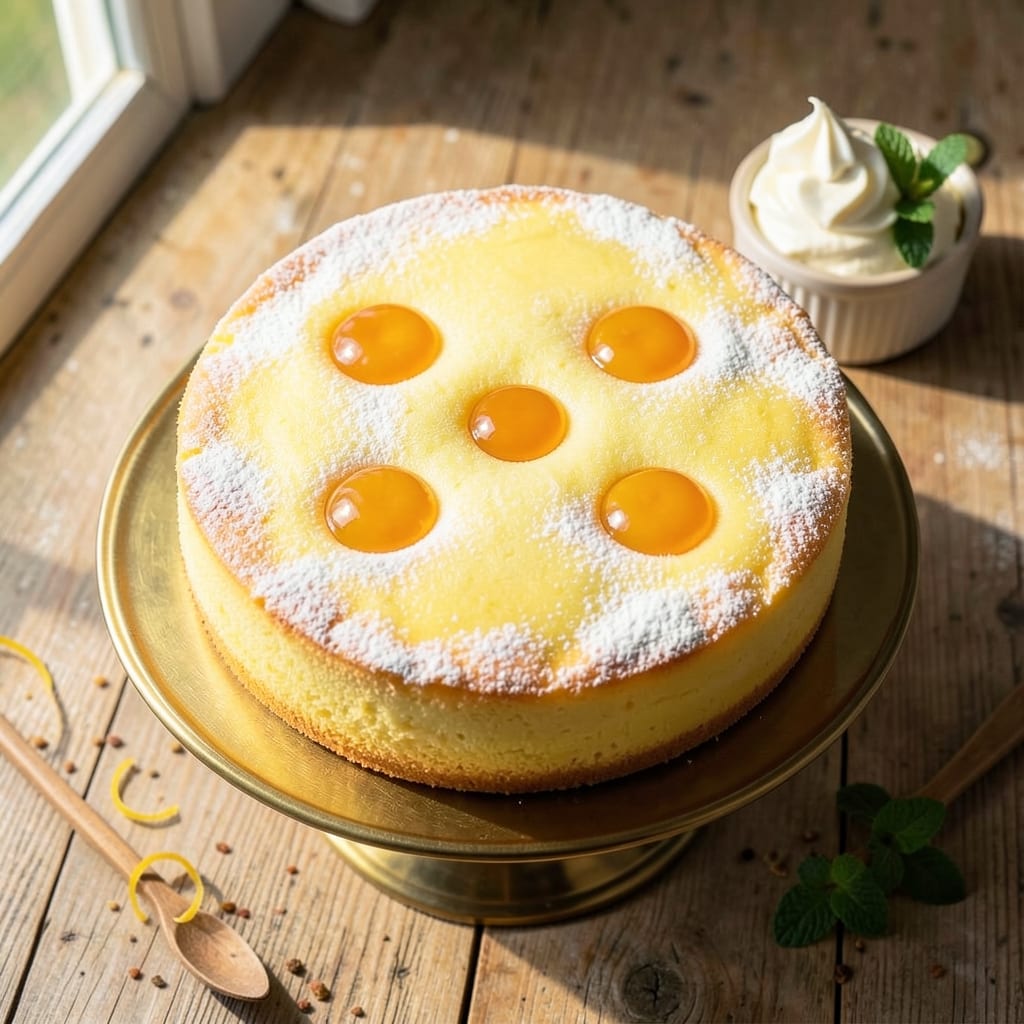
This 4-egg yellow cake recipe delivers the perfect balance of ultra-moist crumb and tender vanilla height—no fancy techniques required. The secret lies in the precise ratio of eggs to butter, creating a rich yet light texture that stays fresh for days. I’ve baked this exact recipe for countless birthdays, and it never disappoints, even when made in a single 9x13-inch pan.
What sets this recipe apart is the foolproof method: room-temperature ingredients, gentle folding, and a 350°F oven for exactly 25–30 minutes. The cake rises evenly, with a golden top and edges that stay soft rather than dry. No box mix here—just simple pantry staples like all-purpose flour, vanilla extract, and a pinch of salt to enhance the natural sweetness.
The result is a vanilla cake with a fine, even crumb that’s moist at the center and perfectly tender throughout. It’s ideal for layering with buttercream, drizzling with ganache, or serving plain with fresh berries. The recipe also adapts easily—swap in Greek yogurt for extra moisture or almond flour for a gluten-free twist.
Whether you’re a beginner or a seasoned baker, this cake comes together in under 45 minutes (including prep and baking). The instructions are clear, the ingredients are accessible, and the outcome is consistently restaurant-quality. Ready to bake?
Ingredients for 4 egg yellow cake
Nine simple ingredients transform into a restaurant-quality vanilla cake with ultra-moist crumb.
| Ingredient | Amount | Notes |
|---|---|---|
| Large Eggs 🥚 | 4 whole | Room temperature for even mixing |
| Unsalted Butter 🧈 | 1 cup | Softened to room temperature |
| Granulated White Sugar 🍚 | 2 cups | Superfine sugar preferred for finer crumb |
| All-Purpose Flour 🌾 | 2 cups | Sifted for light texture |
| Pure Vanilla Extract 🌿 | 2 tsp | High-quality bourbon-based preferred |
| Baking Powder 🧂 | 1 ½ tsp | Diamond Crystal brand recommended |
| Fine Sea Salt 🧂 | ½ tsp | Kosher salt preferred |
| Plain Greek Yogurt 🥛 | ½ cup | Full-fat for extra moisture |
| Milk 🥛 | ½ cup | Room temperature for smooth batter |
| Vegetable Oil 🫒 | ¼ cup | Light neutral flavor |
The eggs and butter are the foundation of this cake—both must be at room temperature for a perfectly smooth batter. Whole large eggs work best, and I always buy them from the refrigerated case at the grocery store rather than the shelf-stocked cartons. The butter should be soft enough to leave a slight indentation when pressed but not melted—this ensures proper emulsification with the sugar. For the flour, King Arthur or Gold Medal brands are ideal as they have consistent protein levels. The Greek yogurt adds moisture without altering the cake's delicate structure, while the vegetable oil contributes to the tender crumb.
No vanilla extract on hand? Vanilla bean paste works beautifully, or you can use vanilla sugar at half the amount of granulated sugar. Substituting Greek yogurt? Plain sour cream or mashed banana both work well for moisture, though the flavor profile will shift slightly. If you don't have vegetable oil, melted butter can replace it at a 1:1 ratio, though the cake will be slightly denser. For the sugar, superfine sugar dissolves more quickly, but regular granulated sugar works fine if pulsed briefly in a food processor. The baking powder is crucial—Diamond Crystal measures differently than other brands, so don't substitute without adjusting.
This cake keeps beautifully for up to 5 days at room temperature, wrapped tightly in plastic wrap. For longer storage, freeze slices individually on parchment paper for up to 3 months. The Greek yogurt and milk can be prepped ahead and stored in the fridge for up to 3 days before mixing. When baking, ensure your 9x13-inch pan is well-greased or lined with parchment paper for easy removal. The cake's texture improves slightly after baking—wait at least 1 hour before slicing for the best results.
Why You'll Love This Recipe
- Four Egg Magic: I swear by this ratio—four eggs give it that tender crumb without being cakey. The butter and sugar blend so smoothly, you’ll actually look forward to creaming.
- Moisture Locked In: That vanilla extract? It’s not just flavor—it keeps the cake fresh for days. I’ve had slices from this recipe last a week, still soft and delicious.
- Weeknight Wonder: Mix it in one bowl, bake it, done. No fancy tools, no waiting around. Honestly, I’ve made this for birthdays, potlucks, and lazy Sundays—no one ever asks for the recipe.
- Budget-Friendly Luxury: Four eggs and a stick of butter stretch farther than you’d think. Here’s what sold me—the ingredients are basic, but the result tastes like a bakery’s special order.
Step-by-step instructions for ultra-moist vanilla yellow cake
This method delivers a perfectly tender, ultra-moist crumb with a fine texture and even rise every time.
Cream Butter and Sugar Until Light and Fluffy
In a stand mixer fitted with the paddle attachment, beat the 1 cup unsalted butter and 2 cups granulated white sugar on medium speed for 3-4 minutes. You're looking for a pale, fluffy mixture that nearly doubles in volume and leaves clean streaks on the bowl when the paddle is lifted. This thorough creaming incorporates air, which creates the cake's signature height and tenderness.
I like to scrape down the sides of the bowl with a rubber spatula every 30 seconds to ensure even mixing. The butter should be completely smooth with no lumps, and the mixture should feel light when you press your finger into it. If using superfine sugar, this step will take slightly less time—just watch for that ribbed texture that indicates proper aeration.
Add Eggs and Vanilla for Maximum Moisture
Add the 4 whole large eggs, one at a time, mixing on low speed after each addition until fully incorporated. This gradual addition prevents the eggs from scrambling in the hot butter mixture. After the last egg, add the 2 teaspoons pure vanilla extract and mix for an additional 15 seconds until fully combined.
The eggs provide both structure and moisture to the cake. I always use room-temperature eggs—they blend more smoothly and create a finer crumb. If your eggs are cold, warm them gently by placing them in a bowl of warm water for 5 minutes before using. The mixture should now be thick but still pourable, with a uniform color throughout.
Alternate Dry and Wet Ingredients for Even Distribution
In a separate bowl, whisk together the 2 cups all-purpose flour, 1.5 teaspoons baking powder, and 0.5 teaspoon fine sea salt. Sift the flour mixture directly into the wet ingredients, then add the 0.5 cup plain Greek yogurt and 0.5 cup milk in three alternating additions, beginning and ending with the dry ingredients. Mix on low speed just until combined—you should still see small streaks of flour.
Overmixing develops gluten, which leads to a tough cake. I use a silicone spatula to gently fold the last few additions by hand to maintain that tender texture. The batter should be thick but smooth, with a consistency similar to heavy cream. The Greek yogurt adds moisture and protein, while the alternating method ensures even distribution of ingredients for a consistent crumb.
Incorporate Oil for Richness and Tenderness
Add the 0.25 cup vegetable oil and mix on low speed for 30 seconds until fully incorporated. The oil coats the flour proteins, preventing them from absorbing too much moisture and creating a more tender crumb. The batter should now be completely smooth with no visible streaks of flour.
At this stage, the batter should be thick but still pourable. If it appears too thick, you can gently fold in 1 tablespoon of milk to achieve the proper consistency. The oil also helps create a moist cake that stays fresh longer. Transfer the batter to a prepared 9-inch round cake pan lined with parchment paper and lightly greased with butter.
Bake at Precise Temperature for Perfect Height
Preheat your oven to 350°F and place the cake pan in the center rack. Bake for 30-35 minutes, or until a toothpick inserted into the center comes out clean with just a few moist crumbs clinging to it. The cake should spring back slightly when pressed in the center, indicating it's fully baked but still tender.
I like to tent the cake pan with aluminum foil after 20 minutes of baking to prevent the top from browning too quickly. This ensures even baking throughout. Once done, remove from the oven and let the cake cool in the pan for 10 minutes, then transfer to a wire rack to cool completely. The internal temperature should read 200°F when done, which guarantees a moist, fully set cake.
Pro Tips For Making 4 Egg Yellow Cake
- Whisk Eggs Until Ribbon Stage: Stop guessing when the eggs are ready—whisk them until the batter holds a slow, thick ribbon when the whisk is lifted. I learned this the hard way after cakes turned dense; the extra 30 seconds of beating makes all the difference for that light, airy texture.
- Melt Butter Slowly: Heat the butter over low heat until it’s just melted and barely steaming—no bubbles, no browning. I used to rush it, and the cake would taste buttery but dry; patience here keeps the crumb tender.
- Sift Flour Twice: Don’t skip the second sift after mixing wet and dry ingredients. The first pass loosens lumps, but the second ensures no gritty bits hide in your batter—especially important with all-purpose flour, which packs easily.
- Test Doneness with a Toothpick: Wait for the toothpick to come out clean and the cake to pull away slightly from the pan edges. I’ve pulled cakes too soon, and they’d collapse later; a few extra minutes at 325°F (165°C) guarantees a sturdy crumb.
Serving suggestions for 4 egg yellow cake
Classic Frosting Pairings
This cake's tender crumb pairs perfectly with American buttercream—whip ½ cup unsalted butter, 2 cups powdered sugar, and 2 tbsp milk until fluffy. For extra flavor, fold in 1 tsp vanilla extract and a pinch of salt. Spread while the cake is still slightly warm for a smooth finish. 🍰
For a lighter option, try cream cheese frosting: beat 8 oz cream cheese, ½ cup butter, 3 cups powdered sugar, and 1 tsp vanilla until silky. This adds a tangy contrast that balances the cake's sweetness perfectly.
Fresh Fruit Toppings
Top with strawberries or raspberries for a vibrant touch. Arrange slices on a platter and drizzle with warm honey or chocolate ganache. The acidity of the berries cuts through the cake's richness, creating a refreshing bite. 🍓
For a tropical twist, use mango slices or pineapple chunks with a sprinkle of toasted coconut flakes. The natural sweetness of these fruits complements the vanilla without overpowering it.
Warm Spiced Accompaniments
Serve with a warm spiced apple compote—simmer 2 cups diced apples, 1 tbsp brown sugar, ½ tsp cinnamon, and 1 tbsp lemon juice for 10 minutes. Spoon over slices for a cozy, autumnal touch. 🍎
A caramel sauce drizzle elevates this cake effortlessly. Heat ½ cup granulated sugar and 2 tbsp heavy cream in a saucepan until golden, then whisk in ¼ cup butter. Drizzle over slices or use as a filling for a decadent twist.
Coffee or Tea Pairings
Pair with hot black coffee or earl grey tea to cleanse the palate between bites. The caffeine enhances the cake's vanilla notes, creating a sophisticated dessert experience. ☕
For a festive touch, serve with spiked hot chocolate—melt ½ cup dark chocolate, 1 cup milk, and 1 tbsp whiskey or rum over low heat. The warmth and depth of flavor make this cake feel like a celebration.
Nutrition facts
Frequently asked questions
Why does this recipe use 4 eggs instead of 3?
The extra egg creates a richer, more tender crumb while maintaining excellent height. Four eggs provide the perfect balance of structure and moisture for this ultra-moist cake. Each egg adds protein for stability and fat for tenderness, resulting in a cake that stays fresh longer and has a finer texture.
Can I make this cake without Greek yogurt?
Yes! Substitute the ½ cup Greek yogurt with ½ cup sour cream or ½ cup mashed banana for moisture. For a neutral flavor, use ½ cup milk + 1 tbsp lemon juice. The yogurt adds protein that improves texture, but these alternatives work well in a pinch.
How do I know when the cake is fully baked?
The cake is done when a toothpick inserted in the center comes out with just a few moist crumbs (no wet batter). The internal temperature should read 200°F. Press the top gently—it should spring back slightly rather than leave an indentation. Overbaking can dry out the cake, so remove it promptly when done.
What's the best way to store leftover cake?
Wrap tightly in plastic wrap and store at room temperature for up to 5 days. For longer storage, freeze slices individually on parchment paper for up to 3 months. Thaw overnight in the fridge or at room temperature. The cake actually improves slightly after baking—wait at least 1 hour before slicing for best texture.
Can I use this recipe for cupcakes?
Yes! Reduce the batter by ⅓ (about 1½ cups) and divide into 12 lined cupcake tins. Bake at 350°F for 18-20 minutes. The smaller size means they'll bake faster. For extra height, add ½ tsp extra baking powder to the dry ingredients. Frost with buttercream or dust with powdered sugar for a simple finish.