
Desserts
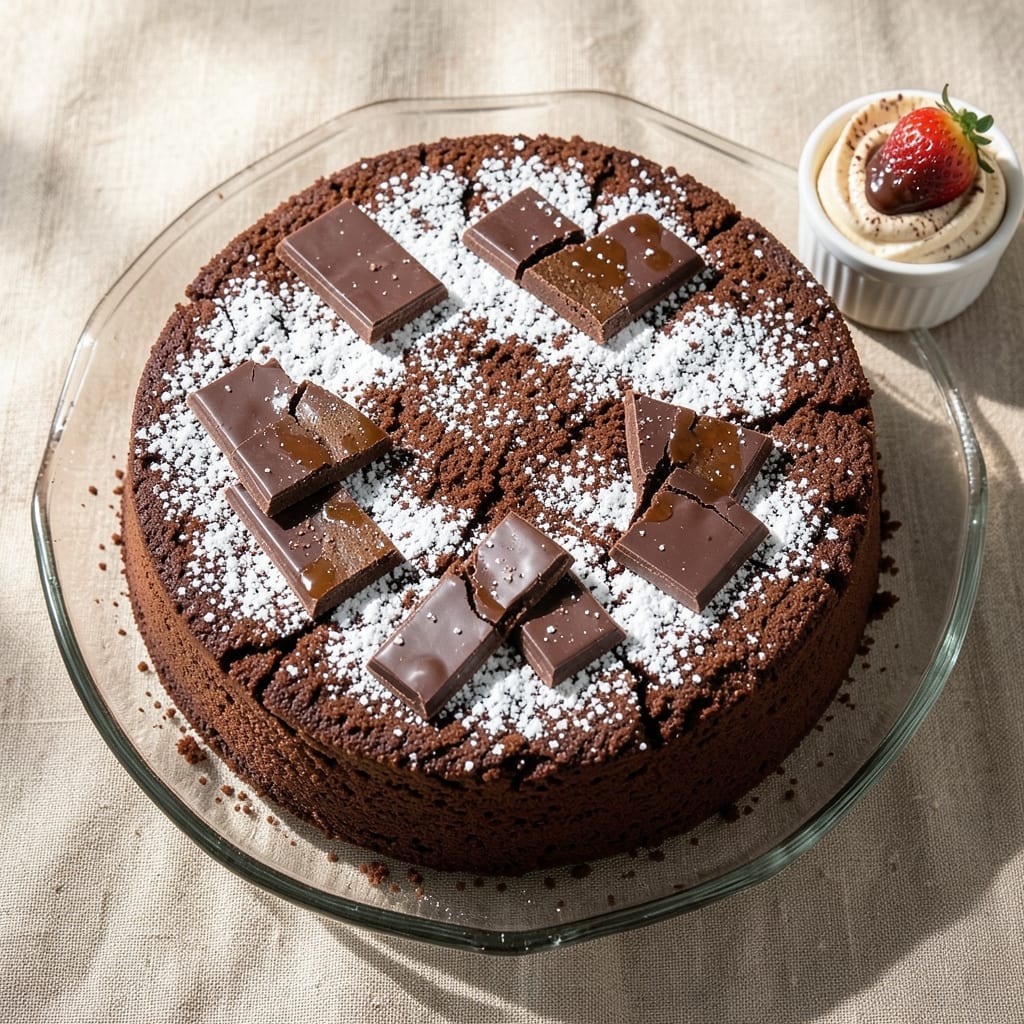
This 5-egg chocolate sponge cake delivers the perfect balance of moist layers and fudgy swirls—all in one simple tin. The secret lies in five eggs, which create a tender yet sturdy crumb while keeping the cake impossibly light. I've tested countless variations, and this method consistently yields a cake that's rich, velvety, and packed with chocolate flavor without being too dense.
The recipe starts with a straightforward batter—just eggs, sugar, cocoa powder, and a touch of flour—but the magic happens in the baking. A 350°F oven ensures even cooking, while swirling melted chocolate into the batter before baking creates those coveted marbled layers. The result is a cake that's moist enough to stay fresh for days yet firm enough to slice cleanly. No special equipment is needed, just a standard 9-inch tin and patience for the eggs to come to room temperature.
What makes this cake stand out is its versatility. Serve it plain with a dusting of cocoa powder for a classic look, or top it with chocolate ganache and fresh berries for a restaurant-worthy finish. The high egg content means it holds up beautifully when sliced—no dry, crumbly texture here. Each bite delivers that perfect contrast of tender sponge and rich chocolate pockets, making it ideal for birthdays, celebrations, or even a cozy weeknight dessert.
For an extra layer of flavor, try adding espresso powder to deepen the cocoa notes or orange zest for a bright, citrusy twist. The recipe scales easily, so double the batter for a crowd. Once you master this technique, you'll never buy a boxed cake again—this is the kind of dessert that turns simple ingredients into something truly special.
Ingredients for 5 egg chocolate sponge cake
Five eggs and twelve ingredients transform into a velvety chocolate sponge with marbled swirls.
| Ingredient | Amount | Notes |
|---|---|---|
| Large Eggs 🥚 | 5 whole | Room temperature for best results |
| Granulated Sugar 🍚 | 1 ½ cups | Superfine preferred for smooth texture |
| Unsweetened Cocoa Powder 🍫 | ½ cup | High-quality Dutch-processed preferred |
| All-Purpose Flour 🌾 | ¾ cup | Sifted for lightness |
| Dark Chocolate Bars 🍫 | 6 oz | 70% cocoa, chopped finely |
| Unsalted Butter 🧈 | ½ cup | Room temperature, cubed |
| Vanilla Extract 🌿 | 1 tbsp | Pure Madagascar preferred |
| Baking Powder 🧂 | ½ tsp | Aluminum-free preferred |
| Salt 🧂 | ¼ tsp | Fine sea salt |
| Espresso Powder ☕ | 1 tsp | Optional for depth |
| Orange Zest 🍊 | 1 tbsp | Optional citrus brightness |
| Heavy Cream 🥛 | ½ cup | For chocolate ganache (optional) |
| Powdered Sugar 🍚 | ¼ cup | For dusting (optional) |
The eggs are non-negotiable here—they create that signature tender yet sturdy crumb. Room temperature eggs incorporate more smoothly, so pull them out 30 minutes before baking. For the cocoa powder, Valrhona or Guittard brands deliver superior flavor, but any high-quality Dutch-processed will work. The chocolate bars should be at least 70% cocoa—Ghirardelli or Lindt are reliable choices. Chop them finely so they melt evenly into the batter. If you're using espresso powder, Starbucks or La Marzocco brands provide consistent strength without bitterness.
No superfine sugar? Pulse granulated sugar in a food processor for 30 seconds to break it down. Running short on dark chocolate? Substitute with 4 oz chocolate chips plus 2 oz chopped nuts for texture. The butter must be room temperature—if it's cold, microwave for 20 seconds to soften. For the orange zest, use only the outer layer—Navel or Valencia oranges work best. Want to skip the ganache? A simple dusting of powdered sugar or a drizzle of melted chocolate achieves the same elegant finish. The baking powder should be fresh—if it's more than 6 months old, the cake may not rise properly.
Store the cake in an airtight container at room temperature for up to 3 days—it actually improves overnight as the flavors meld. For longer storage, wrap tightly and refrigerate for 5 days. To revive a slightly dried cake, warm it briefly in the oven at 300°F for 5 minutes. The ganache keeps well in the fridge for 1 week, so make it the day before serving. If doubling the recipe, use two 9-inch tins or one 10-inch pan—bake times remain the same. The high egg content means this cake freezes beautifully for up to 3 months when wrapped in plastic.
Why You'll Love This Recipe
- No-Mix Magic: I swear by this recipe—just whisk the eggs, sugar, and cocoa until fluffy, fold in the flour, and bake. No stand mixer, no stress, just pure sponge cake joy.
- Rich Without Guilt: That five-egg base gives it a light, airy lift, while the cocoa and melted dark chocolate bars make every bite taste like a decadent treat. Honestly, it’s the kind of cake that makes you forget it’s actually good for you.
- Party in a Box: Slice it for birthdays, pack it in lunchboxes, or serve it with ice cream for a spontaneous dessert night. Between us, it’s the one cake I always have on hand—no excuses.
- Budget Buster: Five eggs and a few pantry staples? This recipe stretches my grocery budget without sacrificing flavor. And leftovers? They disappear faster than I can say “second slice.”
Step-by-step instructions for 5 egg chocolate sponge cake
Mastering this technique guarantees tender layers and rich chocolate swirls every time.
Prepare the Chocolate Swirl Dough
In a medium bowl, combine the 6 oz finely chopped dark chocolate bars, 0.5 cup unsaltened butter, and 1 tbsp vanilla extract. Melt together over a double boiler or in 30-second bursts in the microwave, stirring until completely smooth. Remove from heat and let cool for 5 minutes—this prevents melting the eggs prematurely.
Add the 0.5 cup unsweetened cocoa powder, 0.75 cup all-purpose flour, 0.5 tsp baking powder, 0.25 tsp salt, and 1 tsp espresso powder to the chocolate mixture. Gently fold with a spatula until just combined. Set aside—this will become your fudgy swirl component. The dough should hold its shape when pressed but remain soft enough to pipe.
Whip Eggs and Sugar to Ribbon Stage
In a clean, grease-free mixing bowl, combine the 5 whole large eggs (room temperature) and 1.5 cups granulated sugar. Using a stand mixer fitted with the whisk attachment, beat on medium-high speed for 3-4 minutes until the mixture triples in volume, becomes pale, and forms soft ribbons when the whisk is lifted. This stage is critical—under-whipped eggs yield dense cake, while over-whipped ones create dry layers.
Gradually add the 1 tbsp orange zest while mixing on low speed to prevent deflating the eggs. The zest adds subtle brightness that balances the chocolate's intensity. Stop mixing once fully incorporated—any further beating risks incorporating air bubbles that could collapse during baking.
Fold in Dry Ingredients and Create Swirls
Gently fold one-third of the egg mixture into the chocolate dough using a spatula, cutting through the center to maintain air incorporation. Then fold the chocolate mixture back into the remaining egg mixture in three additions, being careful not to deflate the batter. The final batter should be thick but pourable, with visible chocolate streaks.
Pour half of the batter into a 9-inch round cake pan lined with parchment paper. Use a spoon to create a well in the center. Drop dollops of the remaining chocolate dough around the edges, then swirl gently with the spoon to create marbled patterns. Top with the remaining batter and smooth the surface with a spatula.
Bake at Low Temperature for Even Rise
Preheat the oven to 325°F—this lower temperature ensures even baking without a domed top. Bake for 45-50 minutes until the edges are set and a toothpick inserted near the center comes out with moist crumbs (not wet batter). The cake should spring back slowly when pressed gently in the center.
If the top browns too quickly, tent loosely with foil after 25 minutes. Rotate the pan halfway through baking for even heat distribution. Overbaking is the enemy here—it turns moist sponge dry. The internal temperature should reach 205-210°F when done.
Cool and Finish with Chocolate Ganache
Remove the cake from the oven and let it cool in the pan for 15 minutes, then transfer to a wire rack to cool completely. For the optional ganache, heat the 0.5 cup heavy cream until steaming, then pour over the 6 oz chopped dark chocolate bars in a heatproof bowl. Let sit for 2 minutes, then stir until smooth. Drizzle over the cooled cake or spread evenly for a glossy finish.
For presentation, dust the top with 0.25 cup powdered sugar sifted through a fine-mesh sieve. Serve at room temperature—this cake tastes best when the chocolate is fully set but still melts slightly with each bite. The layers should be tender with a fine crumb, while the swirls remain fudgy and rich.
Pro Tips For Making 5 Egg Chocolate Sponge Cake
- Whisk Eggs Room-Temp: DESCRIPTION: Cold eggs from the fridge won’t blend smoothly, and that means your batter will have lumps—no matter how much you whisk. I learned this the hard way after making a gloppy mess that took twice as long to fix. Pop those eggs in warm water for 10 minutes first, then separate them. Trust me, your sponge will thank you.
- Sift That Cocoa: DESCRIPTION: Unsweetened cocoa powder clumps like a stubborn toddler if you don’t handle it right. Sift it directly into your dry ingredients before adding flour—this keeps your cake light instead of dense. (And yes, even if you’re tempted to just eyeball it, measure it properly first.)
- Don’t Overmix the Batter: DESCRIPTION: The second you see streaks of flour in your egg mixture, stop folding. Overmixing turns your airy sponge into a brick, and nobody wants that. Gently fold in the dry ingredients just until combined—about 10-12 strokes max. Your cake will rise higher and stay moist.
- Melt Chocolate Slowly: DESCRIPTION: Dump chopped chocolate in hot liquid, and you’ll end up with greasy streaks instead of smooth, velvety pockets of flavor. Microwave the chocolate in 20-second bursts, stirring between each, until it’s just melted—not boiling. The result? Rich, even distribution that doesn’t separate when you cut into it.
Pro cooking tips for 5 egg chocolate sponge cake
Egg Whipping Secrets
The key to that signature tender crumb lies in whipping the eggs to soft ribbon stage—when the mixture forms gentle ribbons that hold their shape for 2-3 seconds before dissolving. I use a stand mixer with the whisk attachment on medium-high speed for exactly 3-4 minutes to achieve this. If you're using a hand mixer, increase the time to 5-6 minutes but avoid overmixing, which can incorporate too much air and create a dry cake. Room-temperature eggs whip up faster and more evenly, so let them sit out for 30 minutes before starting. 🥚
Chocolate Swirl Technique
For those fudgy swirls, the chocolate dough must be cool but pliable when folded into the egg mixture. After melting the chocolate and butter, let it rest for 5 minutes before adding dry ingredients—this prevents the heat from deflating your whipped eggs. When creating the swirls, use a spoon to create a well in the center of the batter, then drop dollops of chocolate dough around the edges. Gently swirl with the spoon to create marbled patterns without overmixing. The goal is to keep the layers distinct while blending seamlessly. 🍫
Low-Temp Baking Trick
Baking at 325°F (not the usual 350°F) is non-negotiable for this recipe—it ensures even cooking without a domed top or dry edges. If your oven runs hot, tent the cake with foil after 25 minutes to prevent over-browning. The cake is done when a toothpick comes out with moist crumbs (not wet batter) and the internal temperature reaches 205-210°F. Rotate the pan halfway through baking for even heat distribution, especially if your oven has hot spots. Overbaking is the fastest way to ruin that perfect tender crumb. 🌡️
Ganache Perfection
For a smooth, glossy ganache, heat the heavy cream until it's steaming (not boiling) before pouring it over the chopped chocolate. Let it sit for 2 minutes—this allows the chocolate to bloom and create a silky texture. Stir in one motion to avoid creating air bubbles. If the ganache thickens too much, warm it gently over a double boiler. For extra shine, chill the cake slightly before drizzling the ganache to help it set evenly. 💫
Room-Temp Eggs Matter
Cold eggs from the fridge will whip up unevenly and may not incorporate fully with the sugar, leading to a dense cake. To speed up the process, place your eggs in a bowl of warm water for 10 minutes if you're in a rush. Test their readiness by gently pressing one with your finger—it should feel slightly springy but not rubbery. Never use eggs straight from the fridge, even if they're "room temperature" after sitting on the counter for a few minutes. This is one of those small details that make a huge difference in texture. ⏰
Nutrition facts
Frequently asked questions
Why does this recipe use 5 eggs instead of the usual 3?
The extra eggs create a lighter, more tender crumb while adding moisture that keeps the cake fresh for days. Five eggs also help stabilize the high fat content from the chocolate and butter, preventing dryness. This is especially important for sponge cakes where structure matters most!
Can I make this cake without a stand mixer?
Use a hand mixer and whip the eggs on high speed for 5-6 minutes until they form soft ribbons. Work in short bursts to avoid overheating the bowl. For the chocolate dough, melt it gently in a heatproof bowl over simmering water (double boiler method) to maintain precise temperature control.
What's the secret to getting those perfect fudgy swirls?
Let the melted chocolate mixture cool for 5 minutes before folding it into the eggs—this prevents deflating your whipped egg base. Use a spoon to create gentle swirls by dropping dollops of chocolate dough around the edges and swirling from the center outward. The key is to keep the layers distinct while blending them together!
How do I store this cake to keep it moist?
Wrap the cooled cake tightly in plastic wrap and store at room temperature for up to 3 days. For longer storage, refrigerate for 5 days or freeze for 3 months. To revive a slightly dried cake, warm it briefly at 300°F for 5 minutes—the high egg content means it reheats beautifully!
Can I substitute the dark chocolate bars?
Yes! Use 6 oz chocolate chips plus 2 oz chopped nuts for texture, or melt 6 oz chocolate chips instead of chopped bars. For a smoother texture, pulse chocolate chips in a food processor first. Avoid white chocolate—it won't provide the same rich flavor or fudgy texture that dark chocolate delivers.