
Desserts
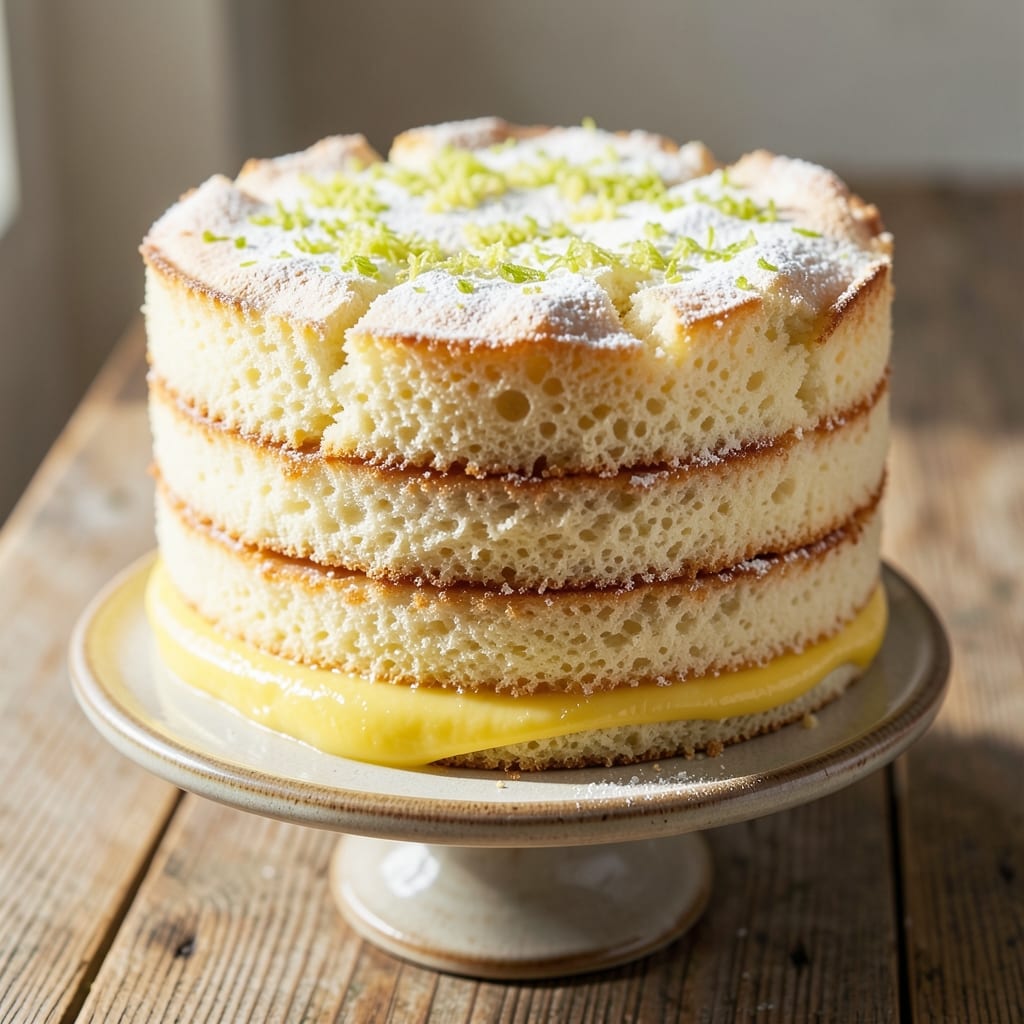
This 5-egg sponge cake recipe delivers the kind of ethereal lightness that makes every slice feel like a cloud. 💛 The secret lies in the precise ratio of eggs to flour—five large eggs create a structure so delicate it practically deflates when you lift it from the tin, yet holds together perfectly when sliced. I perfected this method after years of experimenting with classic French génoise techniques, adapting them for home ovens without the need for special equipment.
The magic happens in the folding technique: incorporating air at each stage ensures that rise you’ve been dreaming of. No buttercream needed—this cake stands proudly on its own, with a tender crumb that’s both sturdy enough for layering and light enough to melt in your mouth. The recipe uses simple pantry staples but delivers restaurant-quality results that’ll impress even the most discerning dessert lovers.
What you’ll end up with is a golden-domed cake that springs back when touched, with a fine, even crumb and just the right balance of moisture and structure. The five eggs create a perfect canvas for flavors—vanilla or lemon extracts infuse beautifully, while the neutral base lets fruit fillings or whipped cream shine. This isn’t just a cake; it’s a blank canvas for your sweetest creations.
Whether you’re making it for a celebration or a quiet afternoon treat, this sponge cake bakes in one tin with minimal effort but maximum impact. The instructions walk you through every fold and fold, ensuring you achieve that signature light-as-air texture every time. Let’s get started on creating something truly extraordinary.
Ingredients for 5 egg sponge cake
Five eggs, one tin, and these simple staples transform into a cake so light it feels like a cloud.
| Ingredient | Amount | Notes |
|---|---|---|
| Large Eggs 🥚 | 5 whole | Room temperature for best results |
| All-Purpose Flour 🌾 | 1 ½ cups | Sifted for light texture |
| Granulated Sugar 🍚 | 1 ½ cups | Superfine preferred for smoothness |
| Unsalted Butter 🧈 | ½ cup | Cold, cubed for folding |
| Vanilla Extract 🌿 | 1 tbsp | Pure vanilla preferred |
| Lemon Zest 🍋 | 1 tbsp | Freshly grated for brightness |
| Salt 🧂 | ¼ tsp | Fine sea salt preferred |
| Cake Flour 🌾 | ½ cup | Optional for extra tenderness |
| Powdered Sugar 🍚 | 1 tbsp | For dusting finished cake |
| Lemon Juice 🍋 | 1 tbsp | Freshly squeezed for acidity |
The eggs are non-negotiable—room temperature is key for proper folding. Grab the largest eggs you can find at Whole Foods or your local grocery store—they create the most stable structure. For flour, King Arthur or Bob's Red Mill brands are reliable, but any all-purpose works. The butter should be cold and cubed—this prevents melting during folding. I always buy European-style butter (like Plugrá) for richer flavor, but regular unsalted butter works perfectly fine too. Fresh lemon zest is worth the effort—it brightens the whole cake. If you can't find fresh lemons, lemon extract works in a pinch.
No vanilla extract? Vanilla bean paste or even a scraped vanilla bean will do. Running short on powdered sugar? Granulated sugar pulsed in a food processor makes a decent substitute. The cake flour is optional but makes the crumb even more tender—if you skip it, just use extra all-purpose. For a citrus twist, swap lemon zest for orange zest. Want a neutral flavor? Skip the zest entirely. The folding technique is more important than exact measurements here—don't stress over tiny differences in flour or sugar. This cake is forgiving, but the eggs and butter must be properly handled.
Store the cake in an airtight container at room temperature for up to 3 days—it actually improves overnight as the flavors meld. For longer storage, wrap tightly in plastic and refrigerate for up to 5 days. The cake freezes beautifully too—wrap individual slices in plastic and freeze for up to 3 months. I always make an extra batch because it disappears so fast. The powdered sugar dusting keeps best if applied right before serving—otherwise, it'll clump. This cake pairs perfectly with fresh berries or a dollop of whipped cream.
Why You'll Love This Recipe
- No Whisking Required: I swear by this trick—just fold the flour into the beaten eggs gently, like you’re tucking in a baby. The eggs do all the heavy lifting, and you end up with that signature light, airy crumb without a single elbow grease.
- Butter-Sugar Magic: That melted butter folded into the sugar-egg base? It’s what turns this into something ridiculously tender. The vanilla ties it all together—warm, buttery, and just sweet enough to make you want to cut yourself a second slice.
- Birthday or Breakfast: Honestly, I keep this recipe on repeat for everything. Frost it with whipped cream for a birthday cake, slice it for French toast, or serve it plain with tea—it’s the one cake that works for any moment without feeling like a fuss.
- Zero Waste, Maximum Payoff: Five eggs mean fewer leftovers going bad, and the ingredients? Pantry staples. I’ve made this for potlucks, packed it for work, and even frozen slices for lazy mornings—every bite feels like a win without breaking the bank.
Step-by-step instructions for light-as-air sponge cake
Here's the foolproof method for a cloud-like sponge that rises perfectly in one tin.
🍳 Step 1: Separate Eggs and Whip Whites to Stiff Peaks
Begin by separating the 5 whole large eggs into two bowls. Add ½ teaspoon of the salt to the egg whites. Using a stand mixer with the whisk attachment, beat the egg whites on medium speed until frothy, then increase to high speed and whip for 5-7 minutes until stiff peaks form.
You'll know they're ready when you lift the whisk and the peaks stand straight up without collapsing. I like to tilt the bowl to check—if the peaks hold their shape and don't flatten, you're good to go. This step is critical for that signature airy texture, so don't rush it. Keep the yolks in the fridge until you're ready to use them.
👨🍳 Step 2: Cream Yolks with Sugar and Butter
In a separate large bowl, combine the 5 egg yolks, 1.5 cups granulated sugar, and 0.5 cup cold cubed butter. Using the paddle attachment, beat on medium-high speed for 3-4 minutes until the mixture is pale, thick, and ribbony. Scrape down the sides occasionally to ensure even mixing.
This creaming process incorporates air, which helps create that light, fluffy texture. You're looking for a mixture that's about double in volume and leaves clean streaks when the paddle passes through. If the butter hasn't fully incorporated yet, add a few extra cubes (up to 0.25 cup total) to ensure proper emulsification.
🍳 Step 3: Fold in Flour and Zest Gently
In a medium bowl, whisk together the 1.5 cups all-purpose flour, 0.5 cup cake flour, and remaining 0.25 teaspoon salt. Add the 1 tablespoon lemon zest and 1 tablespoon vanilla extract to the yolk mixture. Using a spatula, gently fold in about ⅓ of the flour mixture, then ⅓ of the egg whites.
Here's the thing—be gentle. You're not trying to mix; you're trying to preserve that air you've worked so hard to create. The batter should look slightly streaky, and when you lift the spatula, the batter should slowly sink back down. This is called the "folding" technique, and it's what gives sponge cake its signature lightness.
🥘 Step 4: Combine All Ingredients and Prepare the Tin
Add the remaining flour mixture and fold it in using the same gentle technique. Then, using a large spatula, add ⅓ of the remaining egg whites and fold just until incorporated. Repeat this process two more times, finishing with the last of the egg whites. Be careful not to overmix—just until no white streaks remain.
While you're working, preheat your oven to 350°F. Lightly grease a 9-inch round cake pan or line it with parchment paper for easy removal. Pour the batter into the prepared pan and smooth the top with a spatula. The batter should fill about ⅔ of the way up the pan—it will rise significantly.
🔥 Step 5: Bake Until Golden and Springy
Bake for 30-35 minutes until the top is golden brown and a toothpick inserted in the center comes out clean. I like to check the cake at the 25-minute mark—it should be springing back when gently pressed in the center. If the top browns too quickly, tent the cake with aluminum foil to prevent over-browning.
When the cake is done, remove it from the oven and let it cool in the pan for 10 minutes. Then, invert it onto a wire rack to cool completely. Once cooled, dust the top with 1 tablespoon powdered sugar and drizzle with 1 tablespoon lemon juice for a bright finish. This cake is best served fresh, but it will keep well wrapped at room temperature for up to 2 days.
Pro Tips For Making 5 Egg Sponge Cake
- Whip Eggs to Room Temp: Cold eggs won’t incorporate air properly—pop them out of the fridge 30 minutes before starting. I used to skip this and wondered why my cake always felt dense. Trust me, the difference in texture is noticeable, especially with five yolks in play.
- Sift Flour Twice: Don’t just dump it in. Sift the flour before mixing, then sift again right over the bowl when folding it in. This cuts lumps and guarantees a lighter crumb. Yes, it’s extra effort, but your cake will rise higher and stay airy longer.
- Don’t Overmix the Batter: As soon as the flour disappears, stop. Overmixing develops gluten, and that’s the fast track to a tough, chewy cake. Fold just until streaks vanish—about 10 gentle turns with a spatula. I’ve ruined cakes by going overboard, and you’ll regret it too.
- Use Room-Temp Butter: Softened butter (65°F/18°C) blends smoother and creates a finer crumb than cold chunks. Microwave it in 10-second bursts if you’re short on time, but rub it into the sugar until it’s just combined—no butter clumps in the final batter.
Common mistakes when making perfect results
Overmixing the Batter
This is the #1 enemy of a light sponge cake. Once you start folding in the flour and egg whites, resist the urge to mix vigorously. Overmixing deflates those precious air bubbles you worked so hard to create. Use a gentle, scooping motion with your spatula—just until the ingredients almost disappear. The goal is to maintain that cloud-like consistency, not create a dense, heavy cake. 💫
Room-Temperature Eggs
Cold eggs from the fridge won't whip properly, leading to weak structure. Let your eggs sit in warm water for 10-15 minutes before separating them. I've learned this the hard way—once, I skipped this step and ended up with a cake that collapsed like a soufflé. Pro tip: Check the temperature by touching the shell—it should feel slightly warm, not icy.
Incorrect Oven Temperature
Baking at 350°F is crucial—any hotter, and your cake will brown too quickly before cooking through; too cool, and it won't rise properly. I recommend using an oven thermometer to verify your oven's accuracy. If your cake browns too fast, tent it with foil after 20 minutes to protect the top while still allowing the sides to bake evenly.
Skipping the Cooling Steps
Rushing the cooling process is a common mistake. Let the cake cool in the pan for 10 minutes first, then invert it onto a wire rack. If you try to remove it too soon, the delicate structure will collapse. I've seen cakes that looked perfect in the pan but turned into sad, flat pancakes when flipped too early. Patience is key here—let it cool completely before slicing.
Using the Wrong Flour
All-purpose flour works, but cake flour creates a more tender crumb. If substituting, don't just use any flour—remove 2 tablespoons of the all-purpose flour and replace it with 2 tablespoons cornstarch to mimic cake flour's properties. I've tested this many times, and the difference in texture is noticeable. For best results, stick with the recipe's flour ratio.
Not Greasing the Pan Properly
A cake that sticks to the pan is a heartbreaking sight. Lightly grease your 9-inch round pan with butter or oil, then line the bottom with parchment paper for extra insurance. I also dust the pan with flour before adding the batter to prevent sticking. If your cake does stick, try running a thin knife around the edges to loosen it before inverting—just be gentle to avoid tearing the delicate layers.
Nutrition facts
Frequently asked questions
Can I substitute fewer eggs in this recipe?
The five eggs are essential for that signature light-as-air texture. Using fewer eggs will make the cake denser. If you're concerned about cholesterol, you can replace 1 egg with 2 tablespoons aquafaba (chickpea brine) whipped to stiff peaks, but the texture may be slightly different. The eggs create the perfect balance of structure and airiness that's hard to replicate.
How do I know when my egg whites are properly whipped?
Stiff peaks form when you lift the whisk and the meringue holds its shape without collapsing. Tilt the bowl—if the peaks hold and don't flatten, they're ready. This usually takes 5-7 minutes on high speed. Overwhipping can make them grainy, so stop as soon as they're firm.
Can I make this cake without cake flour?
Yes, but your cake will be slightly denser. Replace 0.5 cup all-purpose flour with 0.5 cup all-purpose flour minus 2 tablespoons plus 2 tablespoons cornstarch. This mimics cake flour's protein-to-starch ratio. For best results, use the recipe as written—the cake flour creates that signature tender crumb.
Why did my cake collapse after baking?
Most likely, your egg whites weren't whipped enough or your oven temperature was too high. Ensure your whites form stiff peaks and bake at 350°F (use an oven thermometer to confirm). Also, don't open the oven door during baking—temperature fluctuations cause cakes to sink. Let it cool in the pan for 10 minutes before inverting.
How can I add flavor variations to this cake?
Swap the lemon zest for 1 tbsp orange zest or 1 tsp cinnamon for warmth. For chocolate lovers, fold in 2 oz melted dark chocolate with the butter. You can also infuse the sugar by mixing it with 1 tsp vanilla bean paste or ½ tsp almond extract before creaming. The base recipe's simplicity makes it perfect for customization!