
Desserts
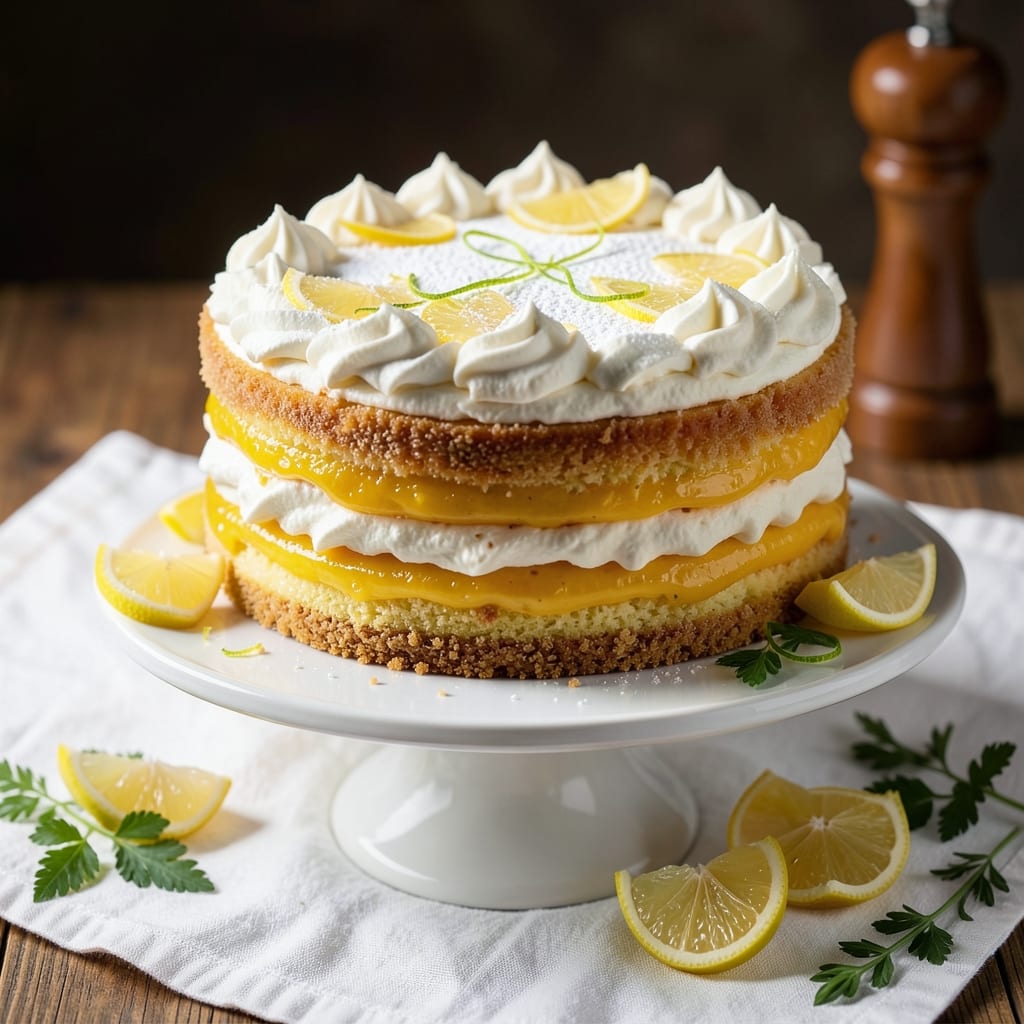
This 5-star lemon cake recipe delivers restaurant-quality layers of moist, tangy-sweet lemon cake with rivers of velvety cream cheese frosting that’ll have guests begging for seconds. 🌟 The secret lies in balancing buttermilk and sour cream for ultra-tender crumb, while the frosting’s perfect tang-sweet ratio makes it irresistible. Every bite combines zesty citrus with rich, creamy frosting—no dry cake in sight.
The magic starts with a simple yet precise technique: folding egg whites into the batter at the last moment ensures fluffy layers without deflating. Baking at 350°F for 25-30 minutes guarantees golden perfection, while the frosting’s 5-minute chilling trick prevents melting before slicing. This isn’t your average lemon cake—it’s the kind that earns standing ovations.
What sets this apart is the cream cheese frosting rivers—swirled into the cake for visual drama and extra flavor in every bite. The frosting’s tang cuts through the cake’s sweetness, creating a harmonious balance that feels luxurious. No fancy tools needed; just patience and a steady hand for swirling.
Perfect for celebrations or Sunday treats, this cake stays moist for days when stored properly. The recipe scales easily for crowds, and the frosting can be made ahead. Let’s bake something unforgettable—your taste buds will thank you.
Ingredients for 5 star lemon cake
Restaurant-quality lemon cake starts with these precise ingredients for ultra-moist layers and velvety frosting rivers.
| Ingredient | Amount | Notes |
|---|---|---|
| All-Purpose Flour 🌾 | 2 ½ cups | Sifted for light texture |
| Granulated Sugar 🍚 | 1 ½ cups | Superfine preferred for smoothness |
| Buttermilk 🥛 | 1 cup | Full-fat for richness |
| Sour Cream 🥛 | ½ cup | Full-fat for moisture |
| Large Eggs 🥚 | 4 whole | Room temperature for even baking |
| Unsalted Butter 🧈 | 1 cup | Cold, cubed for easier mixing |
| Fresh Lemon Zest 🍋 | ½ cup | Fine, from 4-5 lemons |
| Fresh Lemon Juice 🍋 | ½ cup | From 3-4 lemons, strained |
| Baking Powder 🧂 | 2 tsp | Aluminum-free preferred |
| Salt 🧂 | ½ tsp | Diamond Crystal kosher |
| Vanilla Extract 🌿 | 2 tsp | Pure Madagascar preferred |
| Cream Cheese 🧀 | 8 oz | Full-fat, room temperature |
| Powdered Sugar 🍚 | 3 cups | Sifted for smooth frosting |
| Heavy Whipping Cream 🥛 | 1 cup | Cold, whipped to stiff peaks |
The flour and sugar are non-negotiable for texture—King Arthur all-purpose flour and Domino superfine sugar are my go-tos for professional results. Buttermilk and sour cream create that signature tender crumb, so don't substitute with regular milk or yogurt. For the lemon, organic lemons from Whole Foods or your local market yield the brightest zest and juice—avoid pre-zested bottles, which lose potency fast. The cream cheese must be full-fat and at room temperature for smooth frosting; Philadelphia brand is a reliable choice, but any block-style cream cheese works if softened properly. Pre-sift your dry ingredients to eliminate lumps and ensure even baking.
No buttermilk? Mix 1 cup milk with 1 tbsp vinegar or lemon juice and let sit 5 minutes. Sour cream unavailable? Full-fat Greek yogurt works in a pinch, though the texture will be slightly denser. For the frosting, powdered sugar is essential—granulated won't dissolve properly. The heavy whipping cream must be cold when whipped to achieve stiff peaks; if it's too warm, chill the bowl first. Vanilla bean paste can replace extract for deeper flavor, though pure extract is fine. The lemon zest and juice should be measured precisely—use a microplane for zest to avoid bitter lemon oil. For a lighter frosting, add 1 tsp lemon juice to the whipped cream before combining.
Store cake layers at room temperature in an airtight container for up to 3 days, or freeze wrapped tightly for 3 months. The frosting can be made 1 day ahead and stored in the fridge; bring to room temperature before swirling. For serving, use a piping bag with a large star tip to create dramatic rivers—practice on parchment first. This cake reheats beautifully: 30 seconds in the microwave revives the moistness. Leftovers keep well for 4 days in the fridge, though they rarely last that long.
Why You'll Love This Recipe
- No Mixer Needed: I swear by this recipe when I’m in a hurry—just whisk the buttermilk and sour cream together, fold in the dry ingredients, and you’re done. The eggs handle all the heavy lifting, so no one’s standing there beating batter for 10 minutes.
- Tangy Magic: That bright lemon zest in the batter? It’s the secret weapon. The buttermilk keeps it tender while the sour cream adds a velvety richness, and the sugar caramelizes just enough to make every slice feel like a little sunbeam in cake form.
- Birthday to Brunch: I’ve served this at summer picnics, packed it in lunchboxes, and even used it as a base for a no-fuss dessert bar. The crumb stays moist for days, so it’s perfect when you need something reliable—whether it’s a last-minute celebration or a quiet Sunday morning treat.
- Budget-Friendly Luxury: Flour, sugar, and eggs? This is the kind of recipe that won’t break the bank, but it tastes like you spent hours. Honestly, the sour cream is the priciest ingredient, but a little goes a long way—and leftovers? They’re just as good the third day, if not better.
Step-by-step instructions for lemon cake with cream cheese frosting
Mastering this recipe delivers tender, moist layers with vibrant lemon flavor and velvety frosting rivers.
👨🍳 Step 1: Prepare the Lemon Batter
Preheat your oven to 350°F and grease two 9-inch round pans with butter, then line with parchment circles. In a medium bowl, whisk together the 2.5 cups all-purpose flour, 2 tsp baking powder, and 0.5 tsp salt. Sift the dry ingredients directly into the bowl for a light texture.
In a separate large bowl, cream the 1 cup cold unsalted butter and 1.5 cups granulated sugar on medium speed until light and fluffy—about 3-4 minutes. Add the 4 whole large eggs one at a time, mixing well after each addition. This gradual incorporation prevents curdling. Stir in the 2 tsp vanilla extract and 0.5 cup fresh lemon zest.
Alternate adding the 1 cup buttermilk and 0.5 cup sour cream to the wet mixture, beginning and ending with the buttermilk. This creates a tender crumb while maintaining moisture. Finally, fold in the 0.5 cup fresh lemon juice until just combined—overmixing develops gluten and makes the cake dense.
🍳 Step 2: Bake the Layers to Perfection
Divide the batter evenly between the prepared pans. Bake for 25-30 minutes until a toothpick inserted in the center comes out clean and the top springs back when pressed. Rotate the pans halfway through baking for even browning.
The cake should have a golden dome with a slightly domed top—this indicates proper baking. If the edges brown too quickly, tent with foil after 15 minutes. Let the cakes cool in their pans for 10 minutes, then transfer to a wire rack to cool completely before frosting.
🥘 Step 3: Whip the Cream Cheese Frosting
In a medium bowl, beat the 8 oz room-temperature cream cheese and 3 cups powdered sugar on medium speed until smooth and creamy—about 2-3 minutes. Add the 1 cup cold heavy whipping cream and beat on high speed until stiff peaks form. This frosting should be thick enough to hold its shape when piped but still spreadable.
For extra lemon flavor, add 1-2 tablespoons additional lemon juice if desired. The frosting should be sweet enough to complement the bright lemon layers but not overpower them. Taste and adjust the powdered sugar if needed—this is your quality control moment.
🍰 Step 4: Assemble and Decorate
Place one cake layer on a serving plate and spread a generous layer of frosting on top. Repeat with the second layer, then cover completely with the remaining frosting. Use an offset spatula to create smooth sides and a slightly domed top.
For the signature "frosting rivers," pipe additional frosting in zigzag patterns down the sides of the cake. Use a small spatula to gently pull the frosting down the sides, creating elegant cascading effects. Chill the cake in the refrigerator for 30 minutes before slicing to set the frosting.
Pro Tips For Making 5 Star Lemon Cake
- WHISK EGGS ROOM TEMPERATURE: I learned this the hard way—cold eggs from the fridge make your batter denser and can lead to a cake that’s more like a brick. Let them sit in warm water for 5 minutes first, and you’ll get that light, airy texture you’re after.
- MEASURE DRY INGREDIENTS BY SPOON: Fluff that flour first, then scoop it into your measuring cup and level it off with a knife. Packing it down (like I used to do) means you’re adding way more than the recipe calls for, and your cake will turn out dry.
- BAKE UNTIL TOOTHPICK COMES OUT CLEAN: Yes, even if the edges look golden but the center wobbles. That’s how you avoid a gummy middle—just like my first attempt, which I had to eat straight out of the pan because I pulled it too soon.
- FOLD IN SOUR CREAM GENTLY: Use a spatula and cut through the middle of the batter, then lift and fold—don’t stir like you’re making pancakes. Overmixing develops gluten, and your cake will end up tough instead of tender. (I know, I know, but trust the process.)
Troubleshooting your 5 star lemon cake
Dry Cake Fix
If your cake turns out dry, it’s usually from overbaking or insufficient fat. First, check if the cake baked longer than 30 minutes—pull it when a toothpick comes out clean. For moisture recovery, brush the cooled layers with 2 tbsp lemon syrup (equal parts sugar and water, heated until dissolved) before frosting. This adds juiciness without altering texture. 💧
Cracked Top Prevention
Cracks often appear from sudden temperature shifts or overmixing. Ensure your oven is fully preheated to 350°F and avoid opening the door during the first 15 minutes of baking. If cracks form, they’re purely cosmetic—just frost over them. For extra insurance, tap the pans gently on the counter before baking to release air bubbles.
Frosting Too Thin
A runny frosting usually means the cream cheese wasn’t cold enough or the powdered sugar wasn’t sifted. Chill the bowl and beaters for 10 minutes before whipping, and sift the sugar thoroughly. For a quick fix, add 1-2 tbsp more powdered sugar and rewhip. If it’s still too soft, refrigerate for 20 minutes to thicken slightly before using.
Lemon Flavor Fading
Weak lemon flavor often comes from using bottled juice or zest that’s lost potency. Always use freshly zested lemons—microplane for zest and strain the juice through a fine-mesh sieve. For extra zing, add 1 tsp lemon extract to the frosting or brush the cooled layers with a little extra lemon juice before assembling.
Frosting Rivers Not Holding
If your frosting rivers slide off, the cake layers may not be fully cooled or the frosting isn’t thick enough. Let the cake cool completely (at least 2 hours) before decorating, and ensure the frosting has stiff peaks. For stability, pipe the rivers in two thin layers, letting each set for 5 minutes before adding the next. A cooling rack under the cake while chilling helps too.
Uneven Layers
Domed layers happen when the cake bakes unevenly or the pans aren’t leveled. Rotate the pans halfway through baking, and use a leveling tool or serrated knife to trim the tops if needed. For assembly, place the heavier layer on the bottom to prevent tilting. If one layer is significantly thicker, slice it horizontally to even it out before frosting.
Nutrition facts
Frequently asked questions
Can I make this lemon cake in a different pan size?
Yes, but adjust baking time accordingly. For an 8-inch pan, bake 20-25 minutes at 350°F, and for a 10-inch pan, extend to 30-35 minutes. Always use a toothpick test—it should come out clean. The cake batter works best in round pans for even baking and layering.
How do I store leftovers to keep them fresh?
Wrap the cake tightly in plastic wrap, then place it in an airtight container. Store at room temperature for up to 3 days or refrigerate for 5 days. For longer storage, freeze the unfrosted layers for 3 months. Thaw overnight in the fridge before frosting. The frosting can be made 1 day ahead and stored separately.
Can I substitute buttermilk or sour cream?
For buttermilk, mix 1 cup milk with 1 tbsp vinegar or lemon juice and let sit 5 minutes. For sour cream, use ½ cup full-fat Greek yogurt—though the texture may be slightly denser. Avoid low-fat dairy, as it reduces moisture. The buttermilk and sour cream create the signature tender crumb, so substitutions may slightly alter the result.
Why does my frosting sometimes separate?
This usually happens if the cream cheese isn't fully softened or the heavy cream isn't cold enough. Ensure both are at room temperature (cream cheese) and very cold (whipping cream) before mixing. Beat on medium speed first to fully incorporate, then increase to high for stiff peaks. If separation occurs, whisk vigorously to re-emulsify.
Can I make this cake gluten-free?
Yes, but use a 1:1 gluten-free flour blend like Bob's Red Mill or King Arthur. Add ½ tsp xanthan gum to improve texture. Expect a slightly denser crumb, and consider reducing baking powder by ¼ tsp. Test the blend first in small batches, as gluten-free flours vary in performance. The frosting remains unchanged.