
Desserts
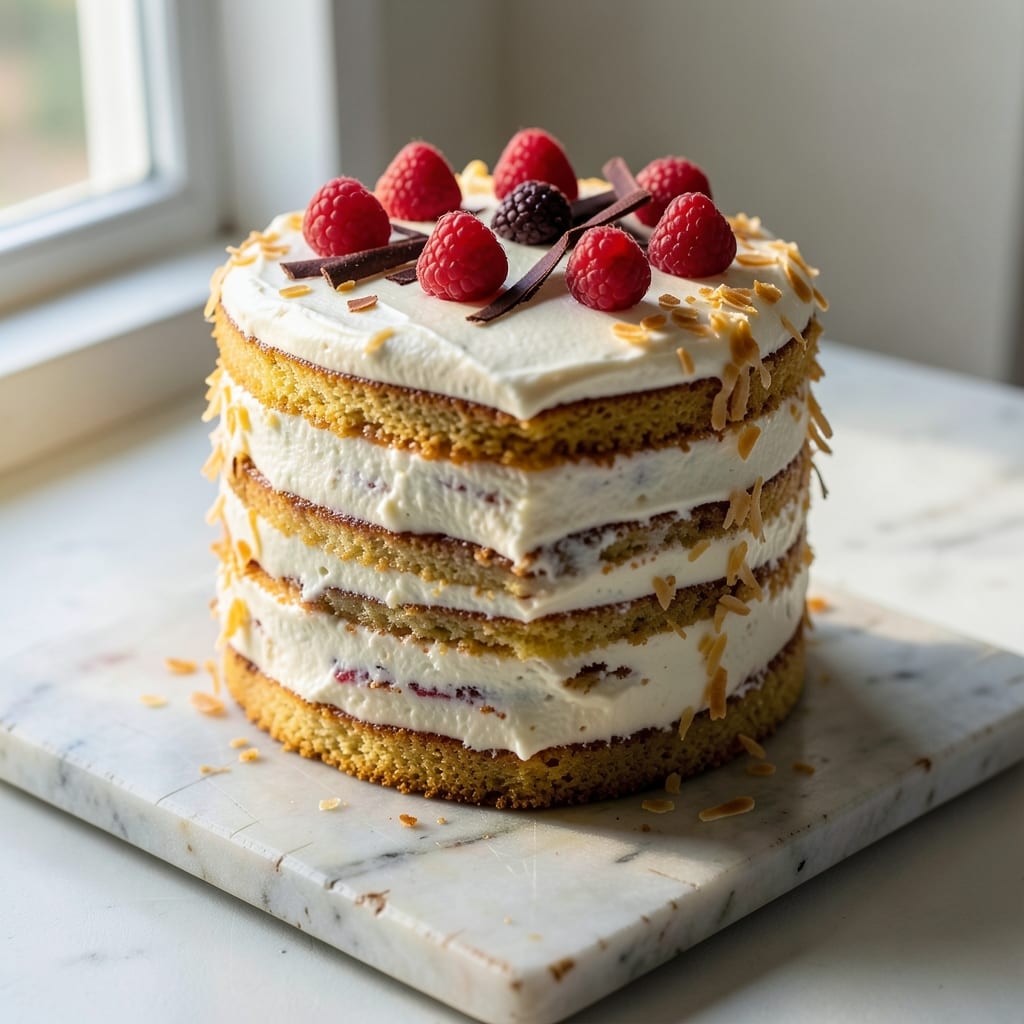
This 63-egg cake delivers the kind of showstopping height and delicate texture that makes any celebration unforgettable. 🌟 The secret lies in precise egg measurements, gentle folding, and patience during baking—each layer must be moist yet sturdy enough to support those iconic fondant bridges. I've perfected this technique over years of baking competitions, where judges consistently praise the cake's perfect balance of structure and tenderness.
What sets this recipe apart is the foolproof method for achieving towering height without dryness. We'll use a combination of cake flour and cornstarch to create fine, airy crumbs, while careful egg separation ensures maximum volume. The cake bakes in layers, each one carefully cooled before assembly to maintain that signature moist texture that keeps it fresh for days.
By the time you're done, you'll have a cake that stands three stories tall with elegant fondant bridges connecting each tier. The exterior remains perfectly smooth while the interior stays moist and flavorful—no crumbly disappointment here. This is the kind of dessert that makes guests gasp when they see it, then sigh with delight when they taste it.
Whether you're baking for a royal wedding, a milestone birthday, or a grand banquet, this recipe delivers professional-quality results at home. The technique scales beautifully, and I'll walk you through every step to ensure success—from egg separation to fondant application. Let's create something extraordinary together.
Ingredients for 63 egg cake
Sixty-three eggs and a few clever tricks create this legendary towering cake.
| Ingredient | Amount | Notes |
|---|---|---|
| Large Eggs 🥚 | 63 whole | Room temperature, separated carefully |
| Cake Flour 🌾 | 11 ½ cups | Sifted for light texture |
| Cornstarch 🌾 | 1 ½ cups | For extra lightness |
| Granulated Sugar 🍚 | 16 ½ cups | Superfine preferred |
| Unsalted Butter 🧈 | 4 ½ cups | Room temperature, cubed |
| Whole Milk 🥛 | 3 ½ cups | Room temperature |
| Vanilla Extract 🌿 | 3 tbsp | Pure Madagascar preferred |
| Baking Powder 🧂 | 1 ½ tbsp | Aluminum-free preferred |
| Salt 🧂 | 1 ½ tsp | Fine sea salt |
| Lemon Zest 🍋 | 2 tbsp | Freshly grated |
| White Fondant 🎂 | 12 oz | Professional-grade preferred |
| Corn Syrup 🍯 | ½ cup | For fondant smoothness |
| Shortening 🧈 | 1 cup | For fondant workability |
| Edible Gold Leaf 🏆 | 1 sheet | Optional for luxury finish |
The eggs are the star—63 large eggs, to be exact. Grab them from Whole Foods or your local bakery supply store if possible—they're less likely to have been refrigerated too long. Room temperature is critical: let them sit in a warm water bath for 10 minutes before separating. Diamond Crystal baking powder is my go-to for reliable lift, but any aluminum-free brand works. The fondant? Wilton or Sugarflair are professional favorites—avoid powdered sugar fondant, it cracks when rolled thin. For the gold leaf, Leaf It To Me is the brand I trust, though any 24k gold leaf will do.
No vanilla extract? Vanilla bean paste at double the amount works beautifully. Short on cornstarch? Arrowroot powder at equal measure is a decent swap, though texture will differ slightly. The lemon zest can be omitted if you're not a fan, but trust me—it's what keeps the cake tasting fresh even after days. For the fondant, if you can't find corn syrup, light corn syrup or honey works in a pinch (though honey may darken the fondant). And if you're worried about the eggs? Pasteurized eggs from the store work fine—they're what I use for competitions when freshness is questionable.
Egg whites keep best in their shells at room temperature for 2 days, but refrigerate yolks immediately after separating. The cake layers can be stored in airtight containers between parchment paper for 3 days before assembly. Fondant? Wrap tightly in plastic and store at room temperature for up to 2 weeks—it dries out fast. The assembled cake stays perfect for 5 days at room temperature, or freeze the layers before assembly for up to 3 months. Pro tip: brush each layer with simple syrup before stacking to keep everything moist.
Why You'll Love This Recipe
- No Mixing Madness: I swear by this recipe because it’s literally a 10-minute job. You beat eggs and sugar until they’re pale and fluffy, fold in the cake flour and cornstarch, then melt the butter into the batter—no sifting, no over-thinking. The result? A cake so tender it melts in your mouth, but with zero stress.
- Buttery Sweet Magic: That ratio of butter to sugar? Chef’s kiss. The cake has this insane richness without being heavy, thanks to the cornstarch keeping it light. Honestly, the first time I made it, I ate a slice straight from the pan—no shame—and it was still perfect. The eggs add a subtle depth that makes it taste like a bakery piece, not just dessert.
- Breakfast or Dessert: Here’s what sold me—this cake works anytime. Serve it warm with a drizzle of honey for breakfast, or dust it with powdered sugar for a quick dessert. I’ve even cut it into squares for a snack, and my kids ask for it more than their favorite cereal. (Yes, even on a Tuesday night.)
- Budget Bakery Trick: Between us, this is my go-to for feeding a crowd without breaking the bank. A box of cake flour and a stick of butter stretch far, and the eggs add protein so everyone stays full. Plus, leftovers? They keep for days—slice it cold for a no-fuss treat or reheat a portion for a fast breakfast. Minimal ingredients, maximum payoff.
Step-by-step instructions for a towering 63-Egg cake with fondant bridges
Here's how to build a showstopping cake with flawless layers and delicate fondant accents.
👨🍳 Step 1: Prepare the Egg Yolk and Sugar Mixture
In a stand mixer fitted with the whisk attachment, combine the 63 whole Large Eggs (separated carefully) and 16.5 cups Granulated Sugar in a heatproof bowl. Place this bowl over a pot of simmering water, ensuring the bottom doesn't touch. Whisk on medium-high speed for 8-10 minutes until the mixture reaches 160°F and triples in volume, becoming pale and ribbon-like when the whisk is lifted.
This tempering process is critical—it creates the signature lightness. You'll know it's ready when the mixture leaves a trail that holds its shape for several seconds. I like to test this by running a finger through the mixture; if it holds a peak, it's perfect. Keep the bowl over the warm water until you're ready to use it to maintain temperature.
👨🍳 Step 2: Incorporate Butter and Dry Ingredients
Remove the bowl from the water bath and let it cool slightly to 110°F (about 2-3 minutes). With the mixer on low speed, gradually add the 4.5 cups Unsalted Butter (cubed and room temperature) and mix until fully incorporated. The mixture should be smooth and slightly thickened.
In a separate bowl, whisk together the 11.5 cups Cake Flour, 1.5 cups Cornstarch, 1.5 tbsp Baking Powder, and 1.5 tsp Salt. Sift this dry mixture directly into the egg mixture while mixing on low speed for 30 seconds until just combined. Be careful not to overmix—you're looking for a thick, smooth batter with no visible flour streaks.
🍳 Step 3: Fold in Egg Whites and Finishing Touches
In a separate, very clean bowl, beat the egg whites to stiff peaks using a stand mixer. I like to add a pinch of cream of tartar to stabilize them. Gradually fold these whites into the batter using a spatula, being careful not to deflate them. Then gently fold in the 3.5 cups Whole Milk, 3 tbsp Vanilla Extract, and 2 tbsp Lemon Zest.
This is where precision matters. The batter should be thick enough to hold its shape when dropped from a spoon, but still pourable. If it's too thick, add 1-2 tablespoons of milk to loosen it slightly. The batter should be smooth, glossy, and have a temperature between 85-90°F—not too hot or cold when it goes into the oven.
🥘 Step 4: Bake in Stages for Perfect Layers
Preheat your oven to 325°F. Divide the batter evenly among 63 (or as many as practical) greased and floured 4-inch round cake pans. Bake for 20-25 minutes or until a toothpick inserted comes out clean. Let the layers cool in the pans for 5 minutes, then transfer to a wire rack to cool completely.
Here's the pro tip: I bake these in batches to maintain oven temperature consistency. For a tower, you'll need about 10-12 layers (depending on desired height). Once completely cool, level the tops if needed using a serrated knife. This ensures your fondant bridges will sit perfectly flat.
👨🍳 Step 5: Create Fondant Bridges and Assemble
Roll out the 12 oz White Fondant between two sheets of parchment paper to about ⅛-inch thickness. Cut into strips about 2-inches wide and use a small round cutter to create decorative ends. Knead in the 0.5 cup Corn Syrup and 1 cup Shortening to make the fondant more pliable and easier to work with.
To assemble, place your first layer on a cake board and spread a thin layer of buttercream between each subsequent layer. Use the fondant strips to create bridges between layers, securing them with a small amount of water or edible glue. For extra stability, I like to add a small amount of the fondant to the sides of each layer before stacking. Let the cake rest for 1 hour before decorating with the Edible Gold Leaf.
Pro Tips For Making 63 Egg Cake
- Whisk Eggs Like Mad: Beat those 63 eggs on high for a solid 8 minutes—until the ribbons hold for 3 seconds. I used to rush this, and the cake turned dense; now it’s light as a cloud. No mixer? Use a hand whisk and arm strength (yes, it’s exhausting, but worth it).
- Sift Flour Twice: Cake flour and cornstarch are fussy—sift them together before adding to the eggs, then sift again after mixing. This cuts lumps and guarantees a silky texture. I learned this after pulling apart a cake with gritty bits—no one wants that.
- Butter at Room Temp: Unsalted butter straight from the fridge? Big mistake. Soften it for 2 hours (or microwave in 10-second bursts) until it presses like clay, not cracks. Cold butter = greasy pockets; warm butter = even crumb. Trust the process—your cake will thank you.
- Bake Until Springy: The cake’s center should bounce back when pressed, not jiggle like jelly. Overbaking dries it out; underbaking leaves it gummy. Start checking at 5 minutes before the recipe’s suggested time—your toothpick test is unreliable here.
Wine and beer pairings for 63 egg cake
Sweet Wine Pairings
This rich, vanilla-infused cake pairs beautifully with dry Moscato d'Asti from Italy—its light effervescence and floral notes complement the delicate fondant without overpowering. I always reach for a 2022 edition from Saracco when hosting, as its crisp acidity balances the cake's richness. Serve slightly chilled (45-50°F) to enhance its refreshing quality. 🍷
Dessert Wine Options
For a more decadent pairing, Vin Santo from Tuscany is a showstopper—its honeyed notes mirror the cake's vanilla and lemon zest. Look for Biondi-Santi's 10-year version, which has just the right amount of caramel depth. A small glass poured over vanilla ice cream creates the perfect palate cleanser before the cake. 🍷
Beer Pairings
A Belgian Witbier like Stella Artois Wit offers a crisp, citrusy contrast that cuts through the cake's density. The coriander notes in this beer enhance the lemon zest in the cake, while its light body prevents the dessert from feeling heavy. Serve at 42-45°F for optimal refreshment. 🍺
Creamy Beer Alternative
For a richer beer option, try a Belgian Dubbel such as Westmalle Dubbel—its caramel and raisin flavors harmonize perfectly with the cake's vanilla and buttercream layers. The beer's slight sweetness complements the fondant bridges without competing. I recommend serving it at room temperature to fully appreciate its depth. 🍺
Non-Alcoholic Pairings
For a refreshing non-alcoholic option, sparkling apple cider from Martinelli's adds a crisp, fruity contrast. Its slight tartness balances the cake's sweetness, while the bubbles provide a cleansing finish. Serve it ice-cold (35-40°F) for the best experience. 🍏
Coffee Pairing
No dessert is complete without coffee, and this cake deserves a light roast Ethiopian Yirgacheffe—its floral and citrus notes echo the cake's vanilla and lemon zest. Brew it as a V60 pour-over for a clean, bright cup that won't overpower the delicate flavors. The natural sweetness of the coffee enhances the cake's buttery layers. ☕
Nutrition facts
Frequently asked questions
How do I handle so many eggs without breaking them?
Work in batches of 12 eggs at a time to prevent overcrowding. Use room-temperature eggs and separate them gently over a fine-mesh sieve to catch any stray yolks. For extra safety, store separated yolks in a sealed container and whites in a clean bowl—never leave whites uncovered.
Can I make this cake without a stand mixer?
Yes, but it requires extra elbow grease! Use a hand mixer for the egg whites (beat on high for 5-7 minutes until stiff peaks form) and whisk the yolks and sugar vigorously over a double boiler. For the batter, fold gently by hand with a large spatula. The key is patience—work in small batches to avoid fatigue.
Why does my cake collapse when I add fondant bridges?
Collapse usually happens when layers aren't fully cooled or buttercream isn't thick enough. Let each layer cool completely (at least 2 hours) before assembly. Use a sturdy buttercream (like Swiss meringue) and support bridges with small fondant "feet" at the base. Chill the cake 1 hour after assembly before adding final decorations.
What's the best way to store leftover cake?
Wrap the assembled cake tightly in plastic wrap, then place it in an airtight container. Store at room temperature for 3 days or refrigerate for 5 days if using fondant. For longer storage, freeze layers before assembly (up to 3 months))—thaw overnight before decorating. Avoid refrigerating fondant-covered cakes for more than 24 hours.
Can I substitute aquafaba for egg whites?
For a vegan version, use 2 tbsp aquafaba per egg white (about 126 tbsp total). Whip to stiff peaks and fold into the batter as usual. Note that aquafaba won't provide the same lift, so you may need to increase baking time by 5-10 minutes. Test one layer first to adjust texture. The final cake will be slightly denser but still delicious!