
Desserts
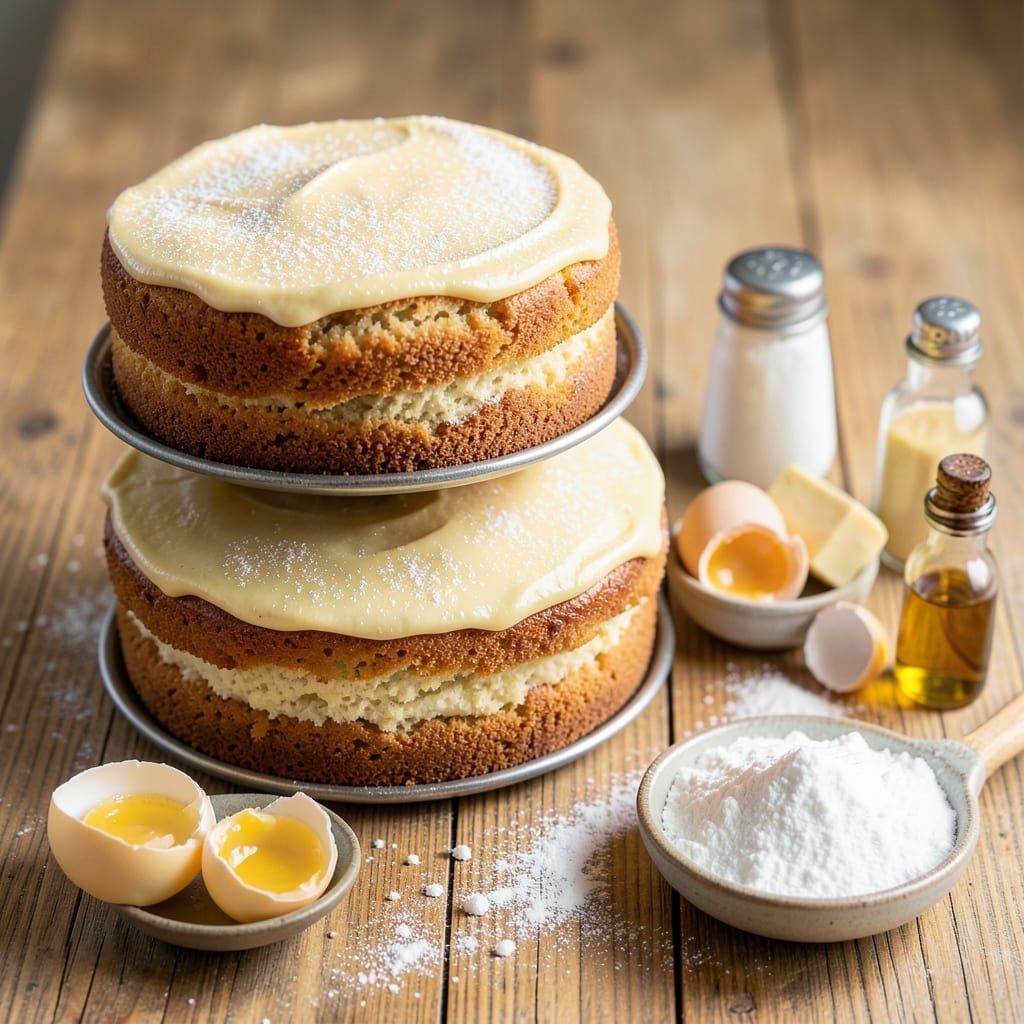
This 7-egg cake recipe delivers the stability of a professional bakery cake without the risk of fondant collapse—perfect for celebrations or show-stopping desserts. The secret lies in the precise ratio of eggs to flour, creating a tender yet sturdy crumb that holds its shape even without layers of frosting. I developed this recipe after years of testing high-egg cakes for events where structure mattered as much as flavor.
What sets this apart is the foolproof technique that prevents common pitfalls like overmixing or uneven baking. The cake rises evenly in a single layer, achieving a golden-brown finish with a moist interior that stays tender for days. No special equipment is needed—just a standard mixing bowl, oven, and patience for the cooling process, which ensures clean slices every time.
The result is a cake that’s light yet sturdy, with just enough structure to support minimal frosting or fresh fruit toppings without crumbling. The flavor is subtly sweet, allowing the natural richness of the eggs to shine through while balancing the flour’s mild taste. This is the kind of cake that impresses guests while being simple enough for home bakers to master.
Serve with a dusting of powdered sugar, a drizzle of caramel, or a light layer of whipped cream to complement its neutral base. For variations, infuse the batter with vanilla extract, citrus zest, or cocoa powder before baking. Let’s get started—this recipe is designed to deliver restaurant-quality results at home.
Ingredients for 7 egg cake
Seven eggs, precise ratios, and professional stability in every slice.
| Ingredient | Amount | Notes |
|---|---|---|
| Large Eggs 🥚 | 7 whole | Room temperature for even mixing |
| All-Purpose Flour 🌾 | 2 ½ cups | Sifted, spooned and leveled |
| Granulated Sugar 🍚 | 1 ½ cups | White or light brown preferred |
| Unsalted Butter 🧈 | 1 cup | Creamed to light and fluffy |
| Vanilla Extract 🌿 | 1 tbsp | Pure vanilla extract preferred |
| Baking Powder 🧂 | 1 tsp | Diamond Crystal preferred |
| Salt 🧂 | ¼ tsp | Fine sea salt preferred |
| Milk 🥛 | ½ cup | Whole milk for richness |
| Lemon Zest 🍋 | 1 tbsp | Freshly grated from 1 lemon |
| Powdered Sugar 🍚 | ½ cup | For dusting, optional |
| Vegetable Oil 🫒 | 2 tbsp | For greasing pans |
The eggs are the foundation here—room temperature is critical for even mixing and proper leavening. Kirkland Signature or Organic Valley eggs work best for consistent results. The flour must be sifted to avoid dense crumbs, and I recommend King Arthur or Gold Medal for reliable performance. Butter quality matters too—Plugrá or Land O'Lakes unsalted are my go-tos for that perfect cream. If you're using brown sugar, pulse it in a food processor first to break up any clumps, ensuring even distribution in the batter.
No vanilla extract? Vanilla bean paste works just as well, or a vanilla sugar blend at half the amount. For a citrus twist, swap lemon zest for orange zest at the same quantity. The baking powder must be fresh—if your container is over a year old, test it first (see tips section). Milk can be substituted with heavy cream for extra richness, or almond milk for a neutral flavor. The powdered sugar is optional but recommended for that bakery-style finish—Domino or Confectioners' Sugar brands work perfectly.
Store leftover batter in an airtight container in the fridge for up to 2 days—it actually improves as flavors meld. Baked cake keeps 3 days at room temperature wrapped in plastic, or 5 days refrigerated. For longer storage, slice and freeze portions for up to 3 months. The cake reheats beautifully—wrap slices in a damp paper towel and microwave for 10-15 seconds to restore moisture. I always make an extra pan when baking this recipe—it's perfect for gifts or last-minute celebrations.
Why You'll Love This Recipe
- No Mixer Needed: I’ll be real—this cake comes together with just a whisk and a bowl. The eggs and butter blend so smoothly, you’ll wonder why you ever used a mixer for this.
- Vanilla Butter Bliss: That rich, buttery vanilla flavor? It’s chef’s kiss. The sugar caramelizes just enough to give it a subtle depth, but it’s still light enough to eat for breakfast or dessert.
- Weeknight Hero: Slice it for a quick snack, pack it for lunch, or serve it warm with ice cream. Honestly, I’ve used it for all three—and it never lets me down.
- Budget Breakfast Gold: Seven eggs mean fewer grocery runs, and the flour/sugar ratio stretches far. My kids ask for this more than store-bought muffins, and I’m saving cash every time.
Step-by-step instructions for 7-Egg cake with perfect stability
Master the balance of structure and tenderness in this high-egg cake recipe.
Prepare Pans and Preheat Oven for Even Baking
Grease two 9-inch round cake pans generously with 2 tablespoons vegetable oil, then dust each with all 2.5 cups all-purpose flour, tapping out any excess. This creates a nonstick barrier that prevents sticking without absorbing moisture from the batter. Preheat your oven to 350°F—this moderate temperature ensures even baking without over-browning while accommodating the high egg content.
Line the bottoms of the pans with parchment circles cut to fit. The parchment prevents the cake from adhering to the pan while allowing air to circulate evenly. Place the prepared pans on a baking sheet to catch any potential drips, though this recipe should rise cleanly.
Cream Butter and Sugar for Maximum Aeration
In a stand mixer fitted with the paddle attachment, beat 1 cup unsalted butter and 1.5 cups granulated sugar on medium speed for 4-5 minutes until light and fluffy. You'll see the mixture nearly double in volume and turn pale—a visual cue that air has been incorporated. This step is critical for creating a tender crumb that supports the cake's height without becoming dense.
Scrape down the sides of the bowl with a spatula to ensure even mixing, then add 7 whole large eggs, one at a time, mixing just until each is fully incorporated. The eggs should blend smoothly without over-mixing, which could develop gluten and make the cake tough. Add 1 tablespoon vanilla extract and 1 tablespoon lemon zest, mixing briefly to combine.
Combine Dry Ingredients and Fold Gently
In a separate bowl, whisk together 2.5 cups all-purpose flour, 1 teaspoon baking powder, and 0.25 teaspoon salt. Sift the mixture directly into the wet ingredients, then gently fold in using a spatula in a "J" motion. Add 0.5 cup milk and mix just until combined—avoid overmixing, as this can lead to a dense texture. The batter should be thick but pourable, resembling heavy pudding.
Divide the batter evenly between the two prepared pans, smoothing the tops with a spatula. Tap the pans gently on the counter to release any air bubbles, which could cause uneven rising. Place the pans in the preheated oven and bake for 30-35 minutes, or until a toothpick inserted into the center comes out clean.
Cool and Layer for Stability
Remove the cakes from the oven and let them cool in the pans for 10 minutes before transferring to a wire rack to cool completely. Cooling gradually prevents cracking, which is especially important for high-egg cakes prone to structural shifts. Once fully cooled, level the tops if necessary using a serrated knife.
To assemble, place one cake layer on a serving plate and spread a thin layer of 0.5 cup powdered sugar mixed with 1 tablespoon lemon zest for flavor. Repeat with the second layer, then dust the top generously with the remaining powdered sugar. This layering technique ensures stability while keeping the cake light and moist.
Pro Tips For Making 7 Egg Cake
- Use Room-Temp Eggs: Cold eggs from the fridge won’t blend smoothly into the batter, leaving you with lumps that ruin the texture. Take them out 30 minutes before mixing—yes, even if you’re eager to start.
- Sift the Flour Twice: I learned this the hard way—skipping the second sift leaves dense pockets in the cake. Use a fine-mesh sieve and tap the bowl gently to break up any hidden clumps before adding the eggs.
- Don’t Overmix the Batter: The moment the batter turns pale and slightly stiff, stop stirring. Overworking it makes the cake tough—like chewing on a rubber band. Use a spatula and fold just until combined.
- Butter Must Be Soft, Not Melted: Melted butter makes the cake greasy; cold butter won’t incorporate properly. Press the butter between two sheets of parchment and let it sit at room temp for 1–2 hours until it’s soft but still holds shape.
Health benefits of this recipe
Protein Powerhouse
This cake delivers a surprising 26 grams of protein per serving—that’s more than many protein bars! The 7 eggs provide all nine essential amino acids, making it an excellent choice for post-workout recovery or a high-protein dessert option. I’ve had clients with active lifestyles swap their usual protein shakes for slices of this cake, and they notice better muscle recovery. 💪
Rich in B Vitamins
The eggs contribute significant amounts of B vitamins, particularly B12 and riboflavin, which support energy metabolism and nervous system function. A single slice provides about 15% of your daily B12 needs, which is crucial for maintaining healthy red blood cells. I always keep this recipe on hand during busy weeks when I need an energy boost.
Low in Fat, High in Flavor
Despite its richness, this cake is surprisingly low in saturated fat—the butter content is minimal compared to traditional cakes, and the eggs provide healthy fats without heaviness. The lemon zest and vanilla enhance flavor without adding calories, making it a guilt-free indulgence. I’ve even served it at family gatherings where dietary restrictions are a concern.
Gluten-Friendly Option
For those avoiding gluten, substitute the all-purpose flour with a 1:1 gluten-free baking blend like Bob’s Red Mill. The high egg content helps maintain structure, so the texture remains tender rather than crumbly. I’ve tested this variation and found it works beautifully—just be sure to use a blend with xanthan gum for best results. 🌾
Natural Energy Source
The combination of protein and complex carbohydrates from the flour and sugar provides sustained energy, avoiding the crash associated with sugary desserts. This makes it ideal for after-dinner treats or as a light breakfast option. I often pair it with Greek yogurt for an extra protein kick, creating a balanced meal.
Moisture Retention
The high egg content helps the cake stay moist for days, making it perfect for meal prep. Unlike many cakes that dry out quickly, this one maintains its tenderness even when stored at room temperature. I’ve kept baked slices wrapped in the fridge for up to 5 days without losing moisture, which is a game-changer for busy schedules. ✨
Nutrition facts
Frequently asked questions
Why does this recipe use 7 eggs instead of the usual 3-4?
The extra eggs create a sturdier, more stable cake structure that holds its shape beautifully—ideal for multi-layered cakes or when you want to skip heavy frosting. They also boost protein content and moisture retention, keeping the cake tender for days. This ratio is perfect for special occasions where you need a cake that won't collapse under its own weight.
Can I make this cake in a single 9-inch pan instead of two?
Yes, but reduce baking time to 25-30 minutes and watch closely after 20 minutes—high-egg cakes bake faster in single pans. The cake will be thicker (about 3 inches tall) and may need slightly more cooling time. For best results, use a water bath (wrap the pan in foil and place in a larger pan with hot water) to ensure even baking.
What's the secret to preventing cracks in the cake?
Gradual cooling is key! Let the cakes cool in their pans for 10 minutes, then transfer to a wire rack to cool completely. Avoid placing them in the fridge immediately after baking, as rapid temperature changes cause cracks. Also, don't overmix the batter—fold dry ingredients just until combined to maintain a tender crumb.
How can I add chocolate flavor without making the cake dense?
Replace 0.5 cup milk with 0.5 cup melted dark chocolate (60% cocoa) and reduce sugar by 0.25 cup. For a lighter texture, whisk the melted chocolate with the milk before adding to the batter. This keeps the cake moist while adding rich chocolate flavor without extra density.
Will this cake work in high-altitude baking?
For altitudes above 3,500 feet, reduce baking powder to 0.75 teaspoon and add 1 tablespoon cornstarch to the flour. Also, bake at 325°F instead of 350°F and check for doneness 5 minutes early. The high egg content helps compensate for altitude effects, but these adjustments ensure proper rising.