
Desserts
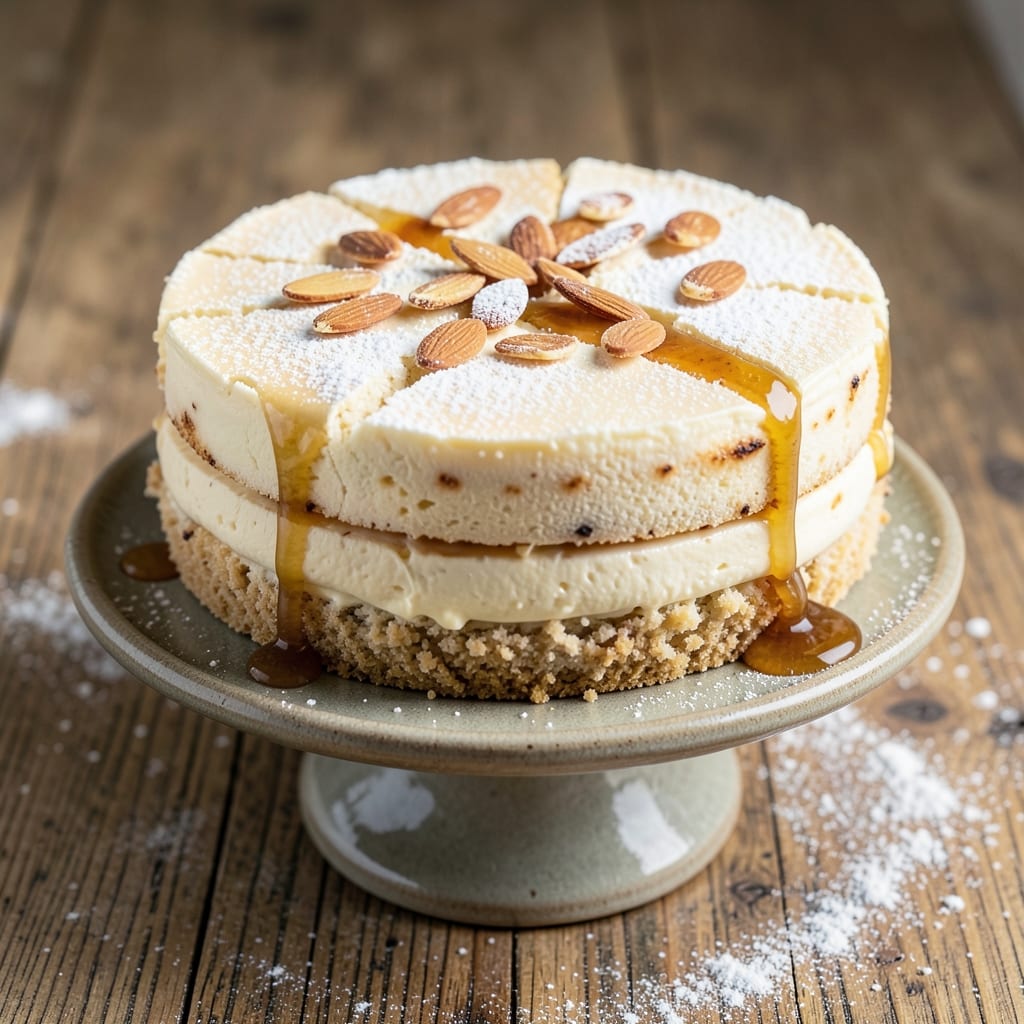
This almond custard cake recipe delivers the perfect balance of silky custard and fragrant almond flavor—every slice is a revelation. The secret lies in blending almond flour with a classic custard base, creating a tender crumb that melts in your mouth while toasted almonds add crunch. I’ve perfected this recipe through years of baking, ensuring the custard stays velvety without becoming dense, and the almond essence infuses every bite with warm, nutty depth.
The foundation of this cake is a rich custard made with whole eggs, heavy cream, and vanilla, which gives it that signature moistness. Almond flour replaces some of the all-purpose flour, adding natural sweetness and a delicate texture that’s both light and substantial. Unlike dense almond cakes, this version stays tender yet holds its shape beautifully, making it ideal for special occasions or when you want to impress without fuss.
What sets this recipe apart is the balance of techniques—whisking the eggs and sugar until pale and ribbony ensures a smooth custard, while folding in the almond flour and toasted almonds keeps the texture luxurious. Baked at 325°F for about 50-60 minutes, the cake emerges golden with a fragrant aroma that fills your kitchen. The result? A slice that’s rich, fragrant, and just sweet enough to satisfy any craving.
For an extra touch, drizzle with a caramel glaze or dust with powdered sugar before serving. This cake pairs beautifully with a cup of coffee or tea, making it the perfect dessert for gatherings or a quiet afternoon treat. Let’s get baking!
Ingredients for almond custard cake
Just 12 ingredients for a cake that tastes like a bakery secret.
| Ingredient | Amount | Notes |
|---|---|---|
| Large Eggs 🥚 | 6 whole | Room temperature for even baking |
| Granulated Sugar 🍚 | 1 ½ cups | Superfine preferred for smooth texture |
| Unsalted Butter 🧈 | 1 cup | Cold, cubed for creaming |
| Almond Flour 🌰 | 1 ½ cups | Finely ground, unsweetened |
| All-Purpose Flour 🌾 | ½ cup | Light, sifted for tender crumb |
| Heavy Cream 🥛 | 1 ½ cups | Cold, full-fat for richness |
| Pure Vanilla Extract 🌿 | 1 tbsp | High-quality, Madagascar preferred |
| Almond Extract 🌰 | 1 tsp | Pure, for authentic almond flavor |
| Baking Powder 🍞 | 1 tsp | Fine, aluminum-free |
| Salt 🧂 | ¼ tsp | Fine sea salt |
| Toasted Sliced Almonds 🌰 | ½ cup | Lightly toasted, for crunch |
| Powdered Sugar 🍚 | ¼ cup | For dusting, optional |
The almond flour is non-negotiable here—Bob’s Red Mill or King Arthur are my go-tos for consistent texture. If you can’t find almond flour, blend whole almonds into a fine powder (food processor, 1-2 minutes), but sift it well to avoid grittiness. For the butter, Plugrá or Land O’Lakes work great, but keep it cold when creaming. The eggs should be at room temp (take them out 30 minutes before baking)—this ensures they blend smoothly with the sugar. Vanilla extract? Madagascar Bourbon from McCormick adds that extra depth everyone loves.
No almond extract? Almond essence works, but it’s stronger—use half the amount. Running low on almond flour? Substitute with 1 cup whole wheat flour plus 1 tbsp almond essence, but the texture will be denser. For a lighter cake, replace half the almond flour with cake flour. The toasted almonds can be swapped for pecans or hazelnuts if needed, but almonds are the star here. If you’re baking in a dry climate, add 1 tbsp milk to the dry ingredients—helps keep the cake moist. And trust me, don’t skip the almond extract—it’s what makes this taste like a Parisian pâtisserie.
This cake keeps beautifully—3 days at room temp in an airtight container, or 1 week refrigerated. For extra freshness, wrap it in plastic wrap and store in the fridge. If you’re prepping ahead, bake the cake 1 day in advance—the flavors meld even better. To reheat, warm slices in the oven at 300°F for 5 minutes. Leftovers? Slice and freeze for up to 3 months—thaw at room temp before serving. The powdered sugar is optional but adds that final touch—dust right before serving so it stays crisp.
Why You'll Love This Recipe
- Same recipe, two vibes: serve it plain with tea for a lazy afternoon, or dust it with powdered sugar and a drizzle of honey for a birthday dessert. My kids ask for it after school, but it’s also the showstopper at potlucks.
- No-Fuss Mixing: The batter comes together in one bowl—no sifting, no extra steps. Just whisk eggs, sugar, and butter until smooth, then fold in the almond flour and all-purpose flour. Honestly, I’ve made it while chatting on the phone. The eggs give it that silky texture without overworking.
- Rich Without Overpowering: The almond flour lends a subtle nuttiness that doesn’t scream "health food," while the custard base keeps it tender and moist. Between us, the first bite makes me think of French patisseries—except this one’s my kitchen’s doing.
- Weeknight or Celebration: Same recipe, two vibes: serve it plain with tea for a lazy afternoon, or dust it with powdered sugar and a drizzle of honey for a birthday dessert. My kids ask for it after school, but it’s also the showstopper at potlucks.
Step-by-step instructions for almond custard cake
Here's the method for a cake that's impossibly tender, rich with almond flavor, and topped with a velvety custard layer.
Prepare the Almond Cake Batter
Start by preheating your oven to 350°F. In a stand mixer fitted with the paddle attachment, beat the 6 whole Large Eggs on medium speed until they're pale and slightly thickened—about 3-4 minutes. This step is crucial for incorporating air that will make your cake light and tender.
Gradually add the 1.5 cups Granulated Sugar while continuing to mix on medium speed. The mixture should become thick, ribbony, and about double in volume. This is your base—don't rush it. Once fully combined, reduce the speed to low and add the 1 cup Unsalted Butter, 1 tbsp Pure Vanilla Extract, and 1 tsp Almond Extract. Mix just until the butter melts and everything is smooth. Here's where the almond flavor really starts to develop—take a sniff, you'll notice that nutty aroma.
In a separate bowl, whisk together the 1.5 cups Almond Flour, 0.5 cup All-Purpose Flour, 1 tsp Baking Powder, and 0.25 tsp Salt. Sift the dry ingredients directly into the wet mixture, mixing on low speed just until combined—you should still see some flour streaks. Overmixing develops gluten, which can make your cake tough. The batter should be thick and smooth, like a rich cake batter should be.
Bake the Almond Cake Layer
Pour the batter into two 8-inch round cake pans lined with parchment paper. Tap the pans gently on the counter to remove any air bubbles. Sprinkle the 0.5 cup Toasted Sliced Almonds evenly over the top of each cake layer—they'll add texture and extra almond flavor. Bake for 25-30 minutes or until a toothpick inserted in the center comes out clean and the edges are just starting to pull away from the pan.
I like to check the cakes at the 25-minute mark because ovens vary. The tops should be golden brown, and the cakes should spring back slightly when gently pressed in the center. Remove from the oven and let them cool in the pans for 10 minutes before transferring to a wire rack to cool completely. This cooling step is important—it prevents the cakes from cracking when you add the custard layer later.
Make the Silky Custard Filling
While the cakes cool, make the custard filling. In a medium saucepan, combine the 1.5 cups Heavy Cream and 0.25 cup Powdered Sugar. Heat over medium-low heat until the sugar dissolves completely—about 3-4 minutes. Don't let it boil, just warm it gently so the sugar integrates smoothly.
In a separate bowl, whisk the 6 whole Large Eggs (yes, we're using them again—they're the secret to that silky texture). Slowly pour the warm cream mixture into the eggs while whisking constantly to temper them. This prevents the eggs from scrambling when they hit the heat.
Return the mixture to the saucepan and cook over medium-low heat, stirring constantly with a wooden spoon or silicone spatula. The custard will thicken as it heats—you'll know it's ready when it coats the back of the spoon and leaves a clean trail when you run your finger through it. This should take about 5-7 minutes. Immediately remove from heat and stir in the 1 tbsp Pure Vanilla Extract and 1 tsp Almond Extract for that signature almond depth.
Assemble and Chill the Cake
Place one of the cooled cake layers on a serving plate. Spread the custard filling evenly over the top, leaving about a ½-inch border uncovered. This ensures the top layer sticks properly. Place the second cake layer on top and gently press down to create a smooth surface. The custard should ooze slightly at the edges—that's a good sign it's spread evenly.
Chill the assembled cake in the refrigerator for at least 4 hours, or preferably overnight. This chilling time is what transforms the cake into its final, luxurious form. The custard will set completely, creating that signature creamy texture between the layers. When you're ready to serve, dust the top with a little extra powdered sugar if you like—it adds a beautiful finish and balances the rich almond flavors.
Pro Tips For Making Almond Custard Cake
- WHISK EGGS COLD: Start with eggs straight from the fridge—room temperature makes them too eager to bind properly. I used to skip this, and my cakes turned out dense and sad; now they’re light and fluffy. Whisk them vigorously for 2-3 minutes until the mixture is pale and thick enough to hold a ribbon when you lift the whisk.
- SIFT ALMOND FLOUR FIRST: Almond flour clumps like a stubborn teenager if you don’t handle it right. Sift it with the all-purpose flour together—this keeps the texture smooth and prevents pockets of dryness. I learned this after pulling apart a cake that looked fine but tasted like it had sand in it.
- BAKE UNTIL 200°F: Most recipes say "until golden," but almond custard cake needs to hit 200°F internally to set properly. A toothpick with moist crumbs is fine—this cake is meant to be tender, not dry. I used to pull mine out too soon, and the center stayed gummy for hours.
- CREAM BUTTER AND SUGAR LOW: Beat the butter and sugar on medium-low until just combined—no need to turn it into buttercream. High speed incorporates too much air, which can make the cake collapse. I was skeptical until I tried it; the texture is richer and more stable. (Yes, even if you’re impatient like me.)
Health benefits of almond custard cake
Almonds for Heart Health
Almond flour and almond extract in this cake deliver heart-healthy fats—specifically monounsaturated fats that help reduce LDL ("bad") cholesterol. A single serving contains about 14 grams of healthy fats, supporting cardiovascular function. Plus, almonds are rich in vitamin E, a powerful antioxidant that protects cells from oxidative stress. 💪
Protein-Packed Dessert
Unlike many cakes loaded with refined flour, this recipe packs 8 grams of protein per slice thanks to the eggs and almond flour. That's nearly half the protein of a typical chicken breast serving! The combination of whole eggs and almond flour makes this a surprisingly nutritious dessert option, especially for those watching their sugar intake.
Blood Sugar Balance
The almond flour in this cake has a lower glycemic index than all-purpose flour, helping stabilize blood sugar levels. The fiber content from almonds (about 3 grams per serving) slows digestion, preventing rapid spikes in glucose. This makes it a better dessert choice for those managing diabetes or insulin sensitivity—just watch portion sizes!
Rich in Vitamin E
Almonds are one of the best natural sources of vitamin E, with this cake providing about 20% of your daily needs per slice. Vitamin E supports skin health, immune function, and even cognitive health. The toasted almonds on top add an extra boost of this essential nutrient while providing satisfying crunch. 🌰
Magnesium for Muscle Recovery
Almonds contain magnesium, a mineral crucial for muscle relaxation and recovery—great for post-workout desserts! A single slice provides about 10% of your daily magnesium needs, helping prevent cramps and supporting nerve function. The calcium in almond flour also contributes to bone health, making this cake a surprisingly nutrient-dense treat.
Low-Carb Option
For those following a low-carb or keto diet, this cake can be adapted by replacing the all-purpose flour with additional almond flour (up to 2 cups total). The original recipe already contains net carbs of about 18g per slice (thanks to the sugar and custard), but reducing the sugar to 1 cup and using sugar-free vanilla extract can cut carbs by nearly half while keeping the rich flavor intact.
Nutrition facts
Frequently asked questions
Why does your recipe use both almond flour and almond extract?
The almond flour adds natural sweetness and a delicate, nutty texture that replaces traditional flour, while the extract intensifies that signature almond aroma. Together, they create the perfect balance of flavor and texture—like a French almond frangipane but lighter. The flour gives body, and the extract ensures every bite tastes authentically almond-forward!
Can I make this cake in a single layer instead of two?
For a single-layer version, bake the batter in one 9-inch round pan and pour the custard over the top after baking. Chill for 4 hours before serving. The texture will be slightly denser, but it’s perfect for smaller gatherings or when you prefer a taller slice. Just reduce the custard to 1 cup to avoid overflow.
How do I prevent the custard from becoming grainy?
Graininess happens when eggs scramble or sugar crystallizes. Always temper the eggs by slowly pouring warm cream into them while whisking constantly. Cook the custard on medium-low heat and stir vigorously until it thickens to a pudding-like consistency—it should coat the back of a spoon but not boil. Remove it from heat immediately once thickened.
Can I substitute almond flour with another nut flour?
Yes, but results will vary. Hazelnut flour works well for a similar texture, while cashew flour adds richness but may make the cake slightly denser. For a lighter option, use half almond flour and half cake flour. Just note that the flavor will shift—almond extract remains key for that classic taste. Toast the nut flour first to enhance flavor, just like the recipe suggests.
Why does the cake need to chill for so long?
The 4-hour (or overnight) chill is essential for the custard to fully set into a smooth, creamy layer. Rushing this step can leave the custard too soft or watery, compromising the cake’s structure. Think of it like making crème brûlée—the patience pays off with that signature silky texture between the layers. If you’re short on time, chill for at least 2 hours, but expect slightly softer custard.