
Desserts
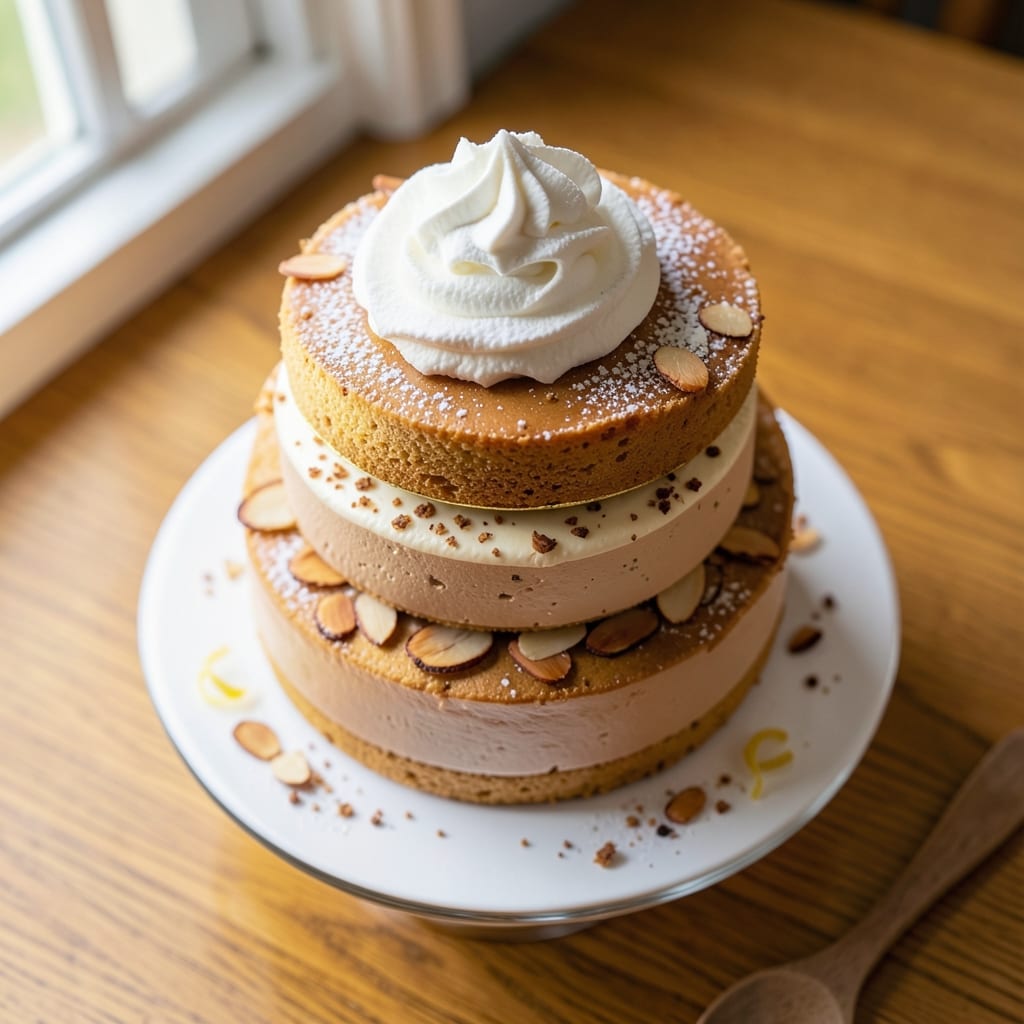
This almond dacquoise cake recipe delivers the perfect balance of crisp meringue layers and rich almond cream filling. The French technique of whipped egg whites and toasted almonds creates those signature airy towers, while the nutty ganache filling adds depth. I've perfected this classic dessert to ensure light, airy layers that shatter with each bite, paired with a creamy almond center that melts in your mouth.
The secret to success lies in properly toasted almond flour and stabilized meringue—no grainy textures or collapsed layers here. With three simple components (meringue, almond cream, and chocolate ganache), this recipe builds elegance without complexity. The baking process transforms delicate meringue into crispy, golden towers while keeping the filling perfectly set.
What you'll achieve is a dessert that looks impressive yet comes together with precision. The meringue towers hold their shape beautifully, the almond cream stays luscious, and the chocolate ganache ties everything together. This cake is elegant enough for special occasions but simple enough for weeknight dessert cravings.
Serve chilled for the best texture, and watch as the contrast between crispy meringue and creamy filling delights everyone at the table. The recipe includes tips for perfecting each layer, ensuring your dacquoise turns out just like the classics—without the fuss. Let's get started!
Ingredients for almond dacquoise cake
Three components—meringue, almond cream, and chocolate ganache—crafted with precision for signature French elegance.
| Ingredient | Amount | Notes |
|---|---|---|
| Large Egg Whites 🥚 | 8 whole | Room temperature, separated carefully |
| Granulated Sugar 🍚 | 2 cups | Superfine preferred for smooth texture |
| Almond Flour 🌰 | 1 ½ cups | Toasted for enhanced flavor |
| Unsalted Butter 🧈 | ½ cup | Cold, cubed for almond cream |
| Almond Paste 🌰 | 1 cup | High-quality, smooth texture |
| Heavy Cream 🥛 | 1 cup | Cold for whipped cream base |
| Powdered Sugar 🍚 | 1 ½ cups | For almond cream sweetness |
| Dark Chocolate 🍫 | 8 oz | 70% cacao, chopped fine |
| Vanilla Extract 🌿 | 1 tbsp | Pure, high-quality extract |
| Kosher Salt 🧂 | ¼ tsp | Fine grain for delicate seasoning |
| Cornstarch 🌾 | 1 tbsp | For meringue stability |
| White Vinegar 🍶 | ½ tsp | For meringue stabilization |
The almond flour and almond paste are non-negotiable for authentic flavor. Whole Foods or specialty baking stores carry high-quality almond flour—look for brands like Bob's Red Mill or Anthony's Goods. Toasting your almond flour (350°F for 8-10 minutes) deepens the nutty aroma without burning. For almond paste, La Maison du Macaron or Nocciolata brands deliver that velvety texture. Egg whites must be completely fat-free—even a trace of yolk defeats meringue stability. Separate them over a bowl to catch any accidental yolks.
No almond flour? Blitz raw almonds in a food processor (3 cups yields ~1.5 cups flour)—but texture won't match commercial versions. Substituting almond paste with marzipan works, but reduce by 15%** to avoid heaviness. For chocolate ganache, 70% cacao is ideal—Valrhona or Guittard brands excel. Short on powdered sugar? Process granulated sugar in a blender for 1-2 minutes, but sift afterward to remove lumps. The vinegar and cornstarch duo stabilizes meringue—never skip both. For a dairy-free version, replace butter with vegan butter** and heavy cream with coconut cream.
Meringue peaks must be stiff but not dry—under-mix slightly to prevent weeping. Pipe immediately onto parchment-lined trays and bake at 250°F for 1.5 hours to ensure crispness without browning. Almond cream should be thick but pourable—chill for 30 minutes before assembling. Store assembled cake in an airtight container in the fridge for 4-5 days, or freeze components separately for up to 3 months**. Reheat ganache between layers gently (microwave 15-second bursts) to maintain lusciousness.
Why You'll Love This Recipe
- No Whipped Cream Needed: I swear by this trick—just those egg whites and sugar, whipped to stiff peaks, then folded into almond flour. No extra steps, no fancy tools. That first bite? Light as air, but sturdy enough to hold your coffee.
- Nutty Crunch Magic: Between the almond paste layers and the toasted almond flour, every forkful has that perfect texture. Honestly, the buttercream (if you add it) just makes it better—but even without, it’s dangerously addictive.
- Date Night or Dessert Party: This cake feels fancy but doesn’t demand hours. Serve it at a dinner party, and guests will think you slaved over it. (Between us, it’s ready in under an hour.) Slice it thin for elegant portions or let it be the star—no judgment.
Step-by-step instructions for almond dacquoise cake
Mastering this delicate French dessert requires precision—follow these steps to achieve light meringue layers and rich almond cream fillings.
Prepare the Meringue Base
Begin by separating the 8 whole large egg whites into a clean, grease-free bowl. Add the 0.25 teaspoon kosher salt and 0.5 teaspoon white vinegar, then whip on medium speed until soft peaks form. Gradually add 2 cups granulated sugar while whipping continuously—this ensures even distribution and prevents graininess.
Increase speed to high and whip for 5-7 minutes until the meringue becomes glossy and holds stiff peaks. The bowl should feel cool to the touch, and the meringue should be thick enough to hold its shape when lifted. This foundation is critical for the cake's signature airiness.
Create the Almond Cream Filling
In a separate bowl, beat the 0.5 cup cold unsalted butter until creamy. Gradually add 1 cup almond paste and mix until fully incorporated. In another bowl, whip the 1 cup cold heavy cream to soft peaks, then gently fold it into the butter-almond paste mixture.
In a separate bowl, sift together 1.5 cups powdered sugar and 1 tablespoon vanilla extract, then fold this into the almond cream mixture. The result should be a smooth, pipeable consistency—thick enough to hold its shape but light enough to spread easily. This filling will be sandwiched between meringue layers for that signature dacquoise texture.
Assemble the Meringue Layers
Preheat your oven to 350°F and line two baking sheets with parchment paper. Divide the prepared meringue into two equal portions and spread each into a 9-inch round on the prepared sheets, creating even layers about ½-inch thick. Bake for 3-4 hours until the meringue is completely dry and crisp.
Allow the baked meringue rounds to cool completely before assembling. This patience ensures they won't crumble when layered. Once cooled, place one round on a serving plate and spread half of the almond cream evenly over the surface. Top with the second meringue round and spread the remaining almond cream over the top.
Add Chocolate Decoration (Optional)
Melt the 8 ounces dark chocolate with 1 tablespoon cornstarch over low heat, stirring constantly until smooth. Allow the chocolate to cool slightly until it thickens enough to pipe. Spread or pipe the chocolate over the top layer of the cake, creating an elegant finish.
Let the chocolate set completely before slicing. For best results, chill the cake in the refrigerator for at least 2 hours before serving. This ensures clean slices and allows all flavors to meld together perfectly.
Pro Tips For Making Almond Dacquoise Cake
- Whisk Egg Whites to Stiff Peaks: I learned this the hard way—under-whipped egg whites are the #1 reason dacquoise layers collapse. Use a stand mixer with the whisk attachment (not a hand mixer) and stop when the meringue holds a peak that bends slightly at the tip, not when it looks "perfect." Over-whipping dries them out, and under-whipping makes them too soft to support the weight of the almond flour.
- Toast Almond Flour First: Skip the raw almond flour—it’s a shortcut that makes your cake taste flat and bland. Toast the almond flour in a dry skillet over medium heat for 3-5 minutes, stirring constantly, until it smells nutty and turns a shade darker. Let it cool completely before folding it into the meringue, or you’ll kill the air bubbles and lose that signature crispness.
- Chill Layers Between Assemblies: I used to rush and stack the layers too soon, and every time, the buttercream oozed out the sides like a sad, melted mess. After baking each meringue layer, let it cool completely at room temperature, then refrigerate for 15 minutes before adding buttercream. This keeps the structure intact and prevents a soggy middle—trust me, your cake will thank you.
- Use Room-Temp Almond Paste: Cold almond paste is a nightmare to work with—it cracks, sticks, and makes filling the layers a struggle. Take it out of the fridge 30 minutes before using and knead it briefly with your hands to soften it evenly. If it’s still too firm, microwave it for 10-second bursts (yes, even if it sounds risky) until it’s pliable but not warm. Warm paste spreads too much and ruins the shape.
Common mistakes when making this dish
Meringue Overmixing
I’ve seen meringue go from silky perfection to a sad, grainy mess because of overmixing. Once your egg whites reach stiff peaks, stop whipping immediately—even a few extra seconds can turn them dry and crumbly. The goal is glossy, not dry. Test by lifting a spoonful: if it holds its shape without dripping, you’re golden. Overmixing also traps air unevenly, leading to uneven baking and potential collapse. 🌟
Uneven Baking
Dacquoise meringue layers need low-and-slow baking to dry evenly without browning. If your oven runs hot, reduce temp to 250°F and extend baking to 4-5 hours. Uneven heat causes some sections to crisp too fast while others stay damp, creating a spongy texture. Always rotate trays halfway through baking for consistency. Pro tip: Use an oven thermometer to confirm accuracy—many ovens misread temps.
Almond Cream Too Thin
The filling is the soul of dacquoise, but thin almond cream won’t hold its structure between layers. If yours looks runny, chill the bowl for 20 minutes before assembling—this thickens it naturally. Another fix: add 1 extra tablespoon powdered sugar to stabilize. Never skip chilling the assembled cake either; warm almond cream will ooze out the sides when sliced. 🥛
Skipping the Chill Step
Rushing to slice your dacquoise without chilling is a cardinal sin. The meringue needs at least 2 hours in the fridge to set properly, while the almond cream firms up. Cutting too soon leads to messy, crumbly slices. I’ve learned this the hard way—once, I served a warm dacquoise and watched it disintegrate like a soufflé. Patience here makes all the difference for clean, elegant portions.
Almond Flour Not Toasted
Untosted almond flour lacks depth of flavor and can taste raw or slightly bitter. Toast yours at 350°F for 8-10 minutes, stirring often, until fragrant. This step caramelizes natural oils, giving the almond cream its signature nutty richness. If you skip it, your filling will taste flat and lack the complexity that makes dacquoise special. 🌰
Overfilling the Layers
Generous almond cream is delicious, but overfilling causes the meringue to bulge and crack under pressure. Spread the filling evenly in a thin layer—about ¼-inch thick—to avoid structural issues. If you’re worried about coverage, pipe a decorative border instead of a thick center. Trust me, a perfectly balanced dacquoise is worth the precision. 💡
Nutrition facts
Frequently asked questions
Can I make this almond cake without almond flour?
You can substitute almond flour by blending 3 cups raw almonds into a fine powder, but the texture won't be identical. For best results, use store-bought almond flour—brands like Bob's Red Mill work perfectly. If you're avoiding almonds entirely, try a 1:1 hazelnut flour substitute, though the flavor will differ slightly.
How long does the meringue need to bake?
The meringue layers require 3-4 hours at 350°F to dry completely without browning. For extra crispiness, bake at 250°F for 4-5 hours. The key is patience—meringue must be fully dry to support the almond cream filling. Test doneness by tapping the base: it should sound hollow.
Can I prepare the almond cream ahead of time?
Yes! The almond cream can be made 1 day ahead and stored in an airtight container in the fridge. Bring it to room temperature before assembling to ensure smooth spreading. The meringue layers, however, should be baked fresh for best texture. For make-ahead convenience, bake the meringue rounds a day ahead and store in a cool, dry place.
Why did my dacquoise collapse?
Collapse usually happens from underbaked meringue or overfilled layers. Ensure meringue is fully dry before adding filling, and spread almond cream in a thin, even layer (about ¼-inch thick). Also, avoid adding filling immediately after baking—let meringue cool completely first. Chill the assembled cake for 2 hours before slicing.
What's the best way to serve this cake?
Serve chilled for optimal texture—this enhances the contrast between crisp meringue and creamy filling. Use a serrated knife for clean slices and dust with powdered sugar or toasted almonds for extra elegance. Pair with espresso or berry compote to complement the nutty flavors. For a showstopper, pipe chocolate ganache in decorative patterns on top.