
Desserts
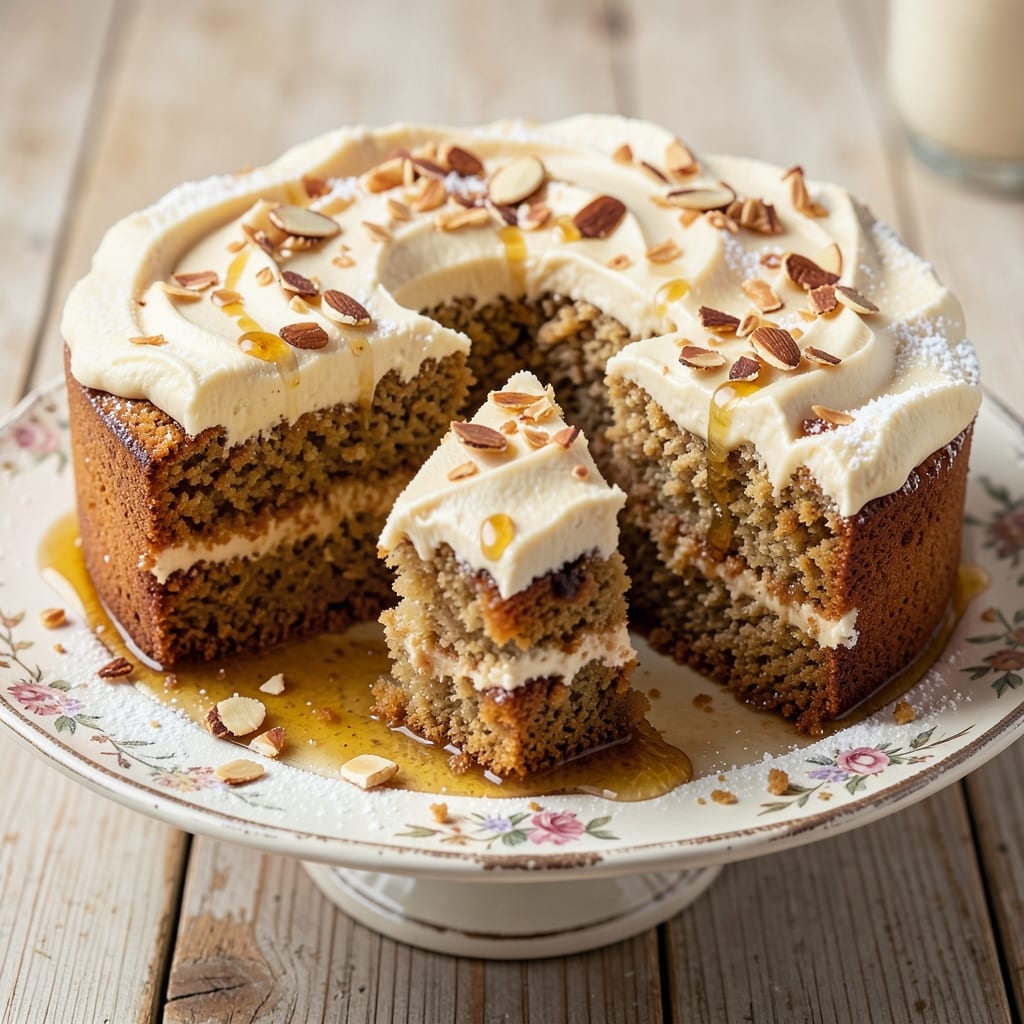
This almond flour butter cake delivers a velvety crumb and rich nutty flavor without the heaviness of traditional flour. The secret lies in balancing almond flour's dryness with just the right amount of moisture—creating a tender, moist cake that crumbles perfectly. After years of perfecting this recipe, I've eliminated guesswork with precise measurements and foolproof techniques.
The beauty of almond flour is its natural sweetness and subtle earthiness, which pairs beautifully with classic butter cake flavors. This recipe uses room-temperature butter and eggs to ensure a smooth batter that bakes up with a golden crust and fine, even crumb. What sets it apart is the addition of a touch of honey, which enhances moisture while complementing the almond's natural sweetness.
What you'll end up with is a cake that's rich yet light, with a delicate crumb that melts in your mouth. The nutty depth from almond flour adds sophistication, while the buttery flavor keeps it familiar and comforting. Perfect for special occasions or when you want a gluten-free option that doesn't compromise on texture.
Once baked, let it cool completely before slicing—this ensures clean cuts and prevents crumbling. Serve warm with a dusting of powdered sugar or a dollop of whipped cream for a restaurant-quality dessert. The recipe yields a 9-inch cake, ideal for sharing or enjoying a slice as a treat.
Ingredients for almond flour butter cake
Precise measurements create the perfect balance of nutty richness and tender crumb in this almond flour masterpiece.
| Ingredient | Amount | Notes |
|---|---|---|
| Almond Flour 🌰 | 2 ½ cups | Finely ground, blanched preferred |
| Unsalted Butter 🧈 | 1 cup | Room temperature, European preferred |
| Granulated Sugar 🍚 | 1 ½ cups | Superfine for smoother texture |
| Large Eggs 🥚 | 4 whole | Room temperature, organic preferred |
| Honey 🍯 | ¼ cup | Wildflower for floral notes |
| Vanilla Extract 🌿 | 1 tbsp | Pure Madagascar bourbon |
| Baking Powder 🍞 | 1 tsp | Aluminum-free for gluten-free |
| Salt 🧂 | ½ tsp | Diamond Crystal kosher |
| Almond Milk 🥛 | ½ cup | Unsweetened, for moisture |
| Powdered Sugar 🍚 | ¼ cup | For dusting, confectioners |
| Unsweetened Cocoa Powder 🍫 | ¼ cup | Dutch-processed for smoothness |
| Lemon Zest 🍋 | 1 tbsp | Fresh organic preferred |
The almond flour is non-negotiable—Bob's Red Mill or Anthony's Goods are my go-tos for consistent texture. European-style unsalted butter (like Plugrá) adds depth, but regular butter works in a pinch. For the honey, local wildflower enhances the almond's natural sweetness without overpowering. The cocoa powder should be Dutch-processed—it dissolves smoothly and prevents graininess. Room-temperature eggs are crucial; they emulsify better and create a lighter crumb. If your kitchen isn't warm, let them sit in warm water for 10 minutes.
No almond flour? Substitute with a 1:1 blend of oat flour and tapioca starch, but expect a denser texture. Running short on butter? Avocado oil or coconut oil can replace up to half the amount, though texture may vary slightly. Superfine sugar unavailable? Pulse granulated sugar in a food processor for 30 seconds to mimic it. The almond milk can be swapped for coconut milk (full-fat for best results), but avoid dairy milk—it alters the crumb structure. For a deeper chocolate flavor, increase the cocoa powder to 0.375 cups and reduce sugar by 0.125 cups to maintain balance.
Store baked cake in an airtight container at room temperature for up to 3 days, or refrigerate for 1 week to preserve moisture. For longer storage, slice and freeze portions on parchment-lined trays before transferring to a bag—up to 3 months. Reheat slices at 300°F for 5-7 minutes to restore freshness. The lemon zest adds a bright contrast; if you prefer a sweeter profile, reduce it to 0.5 tbsp and add 0.125 cups extra powdered sugar to the dusting. Always let the cake cool completely before slicing to prevent crumbling.
Why You'll Love This Recipe
- Just Three Bowls: I swear, this cake comes together with zero fuss—no sifting, no creaming, just mix-and-bake. The almond flour handles all the heavy lifting while you whip eggs and honey in one bowl, butter in another, and sugar in the last. Honestly, I’ve made it while scrolling through my phone.
- Honey-Butter Magic: That first bite? Rich, buttery, and just sweet enough—thanks to the honey cutting through the almond’s natural nuttiness. The crust gets this perfect golden crunch, but the inside stays tender, like a hug from a bakery but with half the guilt. (Yes, even on a Tuesday night.)
- Crowd-Pleaser Every Time: Birthday? Brunch? A "I-forgot-to-bake" last-minute gift? This cake disappears fast—it’s neutral enough for tea but bold enough for dessert. I’ve served it plain, with lemon glaze, or even crumbled on yogurt, and no one’s ever complained. (My kid picks out the drippings first.)
Step-by-step instructions for almond flour butter cake
This method delivers a moist, velvety crumb with perfect texture every time.
Cream Butter and Sugars to Light and Fluffy
In a stand mixer fitted with the paddle attachment, beat the 1 cup unsalted butter on medium speed until completely smooth and free of lumps. This should take about 1 minute. Gradually add the 1.5 cups granulated sugar and beat for another 3-4 minutes until the mixture is light, fluffy, and nearly doubled in volume.
The key here is achieving proper aeration—the butter should be pale in color and ribbon-like when you lift the paddle. If you're using room-temperature butter, you'll notice it becomes smooth and creamy as it incorporates air. This step creates the foundation for that signature tender crumb in almond flour cakes.
Incorporate Wet Ingredients for Maximum Moisture
Add the 4 whole large eggs, one at a time, mixing on low speed after each addition until fully incorporated. Scrape down the sides of the bowl as needed. Then add the 0.25 cup honey, 1 tbsp vanilla extract, and 1 tbsp lemon zest, mixing on low speed for 30 seconds until just combined.
Here's where the moisture balance comes into play—the honey and almond milk will keep this cake wonderfully moist without making it dense. The lemon zest adds a subtle brightness that cuts through the richness of the butter and almond flour. I like to press the lemon zest against the side of the bowl to release its oils before adding it to the mixture.
Combine Dry Ingredients Gently for Perfect Texture
In a separate bowl, whisk together the 2.5 cups almond flour, 1 tsp baking powder, 0.5 tsp salt, and 0.25 cup unsweetened cocoa powder. Sift the mixture through a fine-mesh sieve directly into the wet ingredients. This prevents lumps and ensures even distribution of the cocoa.
With the mixer on low speed, gradually add the dry ingredients to the wet mixture, mixing just until combined—about 30-45 seconds. You should still see some flour streaks, but the batter should be smooth. Overmixing develops gluten in the almond flour, which can make the cake dense rather than tender. Stop mixing as soon as everything comes together.
Fold in Almond Milk for Lightness
Remove the bowl from the mixer and gently fold in the 0.5 cup almond milk using a silicone spatula. The batter will be thick but should still be pourable. This final addition ensures the cake remains moist without altering the delicate texture we've built so carefully.
At this stage, the batter should be smooth, thick, and slightly shiny. If it appears too stiff, you can add an extra 1-2 tablespoons of almond milk to achieve the right consistency. The batter will naturally thicken as it sits, so don't worry if it looks perfect now—it's designed to be slightly thick before baking.
Bake to Golden Perfection with Precision Timing
Preheat your oven to 350°F and grease two 8-inch round cake pans thoroughly with butter and dust with almond flour. Divide the batter evenly between the pans and smooth the tops. Bake for 25-30 minutes or until a toothpick inserted into the center comes out clean and the edges are lightly golden.
The almond flour gives this cake its signature texture, so it's crucial not to overbake. The cake should spring back slightly when pressed in the center. If the tops brown too quickly, tent the pans with aluminum foil after 15 minutes of baking. Let the cakes cool in the pans for 10 minutes before transferring to a wire rack to cool completely.
Pro Tips For Making Almond Flour Butter Cake
- MEASURE ALMOND FLOUR BY WEIGHT: Almond flour compacts like crazy—scooping it from a bag gives you way too much. Use a kitchen scale for accuracy; 1 cup of almond flour is about 120 grams, not the 150g you’d guess by volume. (Yes, even if your recipe card says "1 cup"—trust the scale.)
- CREAM BUTTER AND HONEY FIRST: Mixing cold butter into almond flour creates a gritty, uneven batter. Warm the butter slightly (just until pliable, not melted), then whisk it with honey until it’s pale and fluffy—this ensures the eggs blend in smoothly later. (I used to skip this and ended up with a cake that looked like it had sand in it.)
- DON’T OVERMIX THE BATTER: Almond flour cakes rise from air, not gluten. Once the eggs are fully incorporated, stop mixing—just fold in the dry ingredients until just combined. Overmixing makes the texture dense and chewy instead of tender. (I learned this after a cake so tough it could’ve been a doorstop.)
- BAKE UNTIL 205°F INTERNAL: Almond flour cakes don’t brown like wheat flour ones, so rely on temperature, not color. Pull it out when the center hits 205°F—any lower and it’ll stay gummy. Let it cool in the pan for 10 minutes first, or it’ll sink. (I cut into one too soon once and nearly cried.)
Essential equipment for this dish
Stand Mixer Essentials
Your stand mixer is the workhorse of this recipe—I use my KitchenAid Artisan Series with the paddle attachment for creaming butter and sugar. The paddle's flat design ensures proper aeration without overmixing. If you don’t have a mixer, use a hand mixer or whisk with elbow grease, but be prepared for more arm work. The key is patience: creaming should take 3-4 minutes for that light, fluffy texture. 🌟
Precision Measuring Tools
Almond flour is tricky—it compacts easily, so use a spoon-and-level method for accurate measurements. My go-to is the OXO Good Grips Measuring Cups with their angled sides. For the superfine sugar, a fine-mesh sieve ensures even distribution. Weighing ingredients on a digital kitchen scale (like the Escali Primo) gives the most consistent results, especially for the almond flour and cocoa powder.
Baking Pans Matter
Invest in two 8-inch round cake pans with non-stick coating or high-quality carbon steel pans (like Nordic Ware). These distribute heat evenly and prevent sticking. Grease them thoroughly with room-temperature butter and dust with almond flour—this creates a non-stick barrier that’s better than flour alone. If you’re short on pans, a 9-inch pan will work, but reduce baking time by 5-7 minutes.
Oven Thermometer Check
Ovens lie! Use an oven thermometer (I love the Thermoworks Oven Thermometer) to confirm your oven hits 350°F. Almond flour cakes are forgiving, but precise temperature control ensures even baking. Place the thermometer near the center rack where your cakes will bake. If your oven runs hot, reduce the temperature to 340°F to prevent overbrowning.
Silicone Spatulas
A heat-resistant silicone spatula (like OXO Good Grips) is a game-changer for folding in the almond milk. Its flexible edge scrapes every bit of batter from the bowl, ensuring no dry spots. Avoid metal spatulas—they can scratch non-stick pans or react with acidic ingredients like lemon zest. For the final transfer to pans, use a long offset spatula to smooth the batter evenly. 💪
Cooling Rack & Airtight Storage
Let your cakes cool on a wire cooling rack (like Willow & Everett) to prevent soggy bottoms. For storage, I use glass Pyrex containers with snap-on lids—they keep the cake moist for up to 3 days at room temperature. If you’re freezing, wrap slices in parchment paper before placing them in a freezer bag to prevent freezer burn. A digital timer (like the Kitchenaid Timer) helps track cooling and baking times accurately.
Nutrition facts
Frequently asked questions
Why does my almond flour cake turn out dry?
Almond flour absorbs moisture differently than regular flour, so underestimating moisture is the #1 cause of dryness. The recipe includes honey and almond milk specifically to combat this—never skip them! Also, avoid overbaking: the cake is done when a toothpick comes out clean (not dry). For extra moisture, brush warm slices with simple syrup (equal parts sugar and water, heated).
Can I make this cake without eggs?
Yes! Replace the 4 eggs with a flax egg mix: combine 4 tbsp ground flaxseed with 10 tbsp water, let sit for 5 minutes to thicken, then use as a 1:1 substitute. For binding, add 1 tsp apple cider vinegar to the almond milk. The texture will be slightly denser but still delicious. The eggs provide structure and moisture, so these substitutes work best when combined with the recipe's other moisture sources.
How do I prevent cracks in the cake?
Cracks usually appear from uneven baking or overmixing. First, ensure your oven is properly calibrated (use an oven thermometer). Second, mix the batter just until combined—stop as soon as the dry ingredients disappear. Third, avoid opening the oven door during the first 20 minutes of baking. For extra insurance, bake in a water bath (place pans in a larger pan filled with 1 inch of hot water) to create gentle, even heat.
What's the best way to serve this cake?
This cake shines with simple elegance! Dust with powdered sugar and serve warm with a scoop of vanilla bean ice cream or a dollop of whipped cream. For a fancy touch, add a drizzle of dark chocolate ganache or fresh berries. The nutty flavor pairs beautifully with citrus—try a lemon glazestrong> (powdered sugar + lemon juice) for brightness. Cut into 1-inch slicesstrong> for perfect portions.
Can I use this recipe for cupcakes?
Divide the batter evenly among 12 lined cupcake moldsstrong> (fill ⅔ full) and bake at 350°F for 18-22 minutesstrong> or until a toothpick comes out clean. For extra height, use a cupcake liner with a paper boosterstrong>. The baking time will be shorter than for a full cake, but the texture remains the same. Top with a simple buttercream frostingstrong> or dust with powdered sugar for a rustic look.