
Desserts
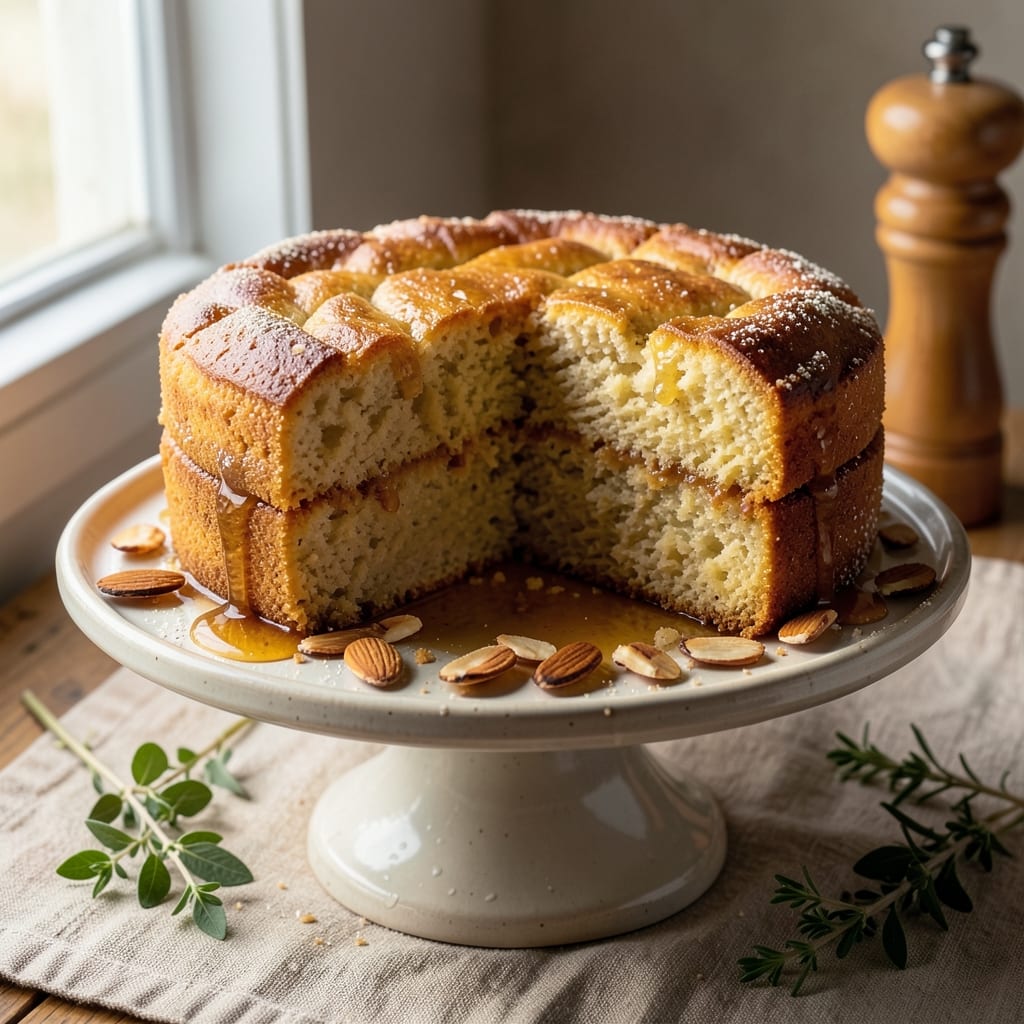
This almond flour honey cake delivers a nutty-moist crunch that gluten-free desserts rarely achieve—thanks to a secret technique that keeps it tender for days. The combination of almond flour and honey creates a naturally sweet, dense crumb with just the right amount of texture, while a touch of baking powder ensures that perfect rise. I developed this recipe after years of struggling with dry gluten-free cakes, and the difference is night and day.
The beauty of this recipe lies in its simplicity: just 7 ingredients and 45 minutes of active time, including baking. The almond flour provides structure without gluten, while honey adds moisture and a subtle depth of flavor that complements the nutty base. A light coating of powdered sugar on top gives it that bakery-fresh finish without overpowering the natural sweetness.
What makes this cake truly special is how it maintains its moisture even after cooling—no dry crumb here. The almond flour absorbs liquid differently than wheat flour, so we use a slightly higher egg ratio and a touch of melted butter to keep everything cohesive. The result is a cake that's rich, tender, and perfect for slicing into generous portions.
Serve it warm with a dollop of whipped cream or a scoop of vanilla ice cream, or enjoy it at room temperature with a cup of coffee. The flavor profile works equally well as a breakfast cake or an after-dinner treat. Here's how to make it—your taste buds will thank you.
Ingredients for almond flour honey cake
Seven simple ingredients transform into a gluten-free masterpiece—moist, tender, and packed with nutty depth.
| Ingredient | Amount | Notes |
|---|---|---|
| Almond Flour 🌰 | 2 ½ cups | Finely ground, unsweetened |
| Honey 🍯 | 1 cup | Raw or pure, not processed |
| Large Eggs 🥚 | 4 whole | Room temperature for best mixing |
| Unsalted Butter 🧈 | ½ cup | Melted, full-fat preferred |
| Baking Powder 🍞 | 1 ½ tsp | Aluminum-free for best results |
| Vanilla Extract 🌿 | 1 tsp | Pure, no alcohol needed |
| Powdered Sugar 🍚 | ¼ cup | For dusting, sifted |
| Salt 🧂 | ½ tsp | Fine sea salt preferred |
| Almond Milk 🥛 | ½ cup | Unsweetened, for moisture |
Almond flour is the star here, so buy the finest grind you can find—the kind that feels like powder, not gritty bits. Bob's Red Mill or Anthony's Goods are my go-tos, but any reputable brand works. Skip the pre-sweetened stuff—we're controlling the sweetness with honey. The honey should be raw or pure; Manuka or clover work best. If you're worried about it being too sticky, microwave it for 20 seconds to soften slightly. The eggs? Room temperature is key—cold eggs won't mix as smoothly, and you'll end up with pockets of unmixed batter.
No almond milk? Any unsweetened plant milk works—soy or oat are great backups. Short on vanilla? Vanilla bean paste or even a scraped vanilla bean adds depth. The baking powder is non-negotiable for that perfect rise—don't use baking soda unless you're adding an acid like lemon juice. For the butter, full-fat is worth it here—it keeps the cake moist longer. If you're using salted butter, cut the added salt to 1/4 tsp. The powdered sugar on top? Sift it first to avoid clumps, and trust me, it makes all the difference for that bakery-fresh finish.
This cake keeps beautifully—3 days at room temperature wrapped in foil, or 1 week in the fridge in an airtight container. Slice it thin for elegant portions or go thick for hearty servings. The flavor actually improves after a day or two as the almond flavor mellows. Freeze slices for up to 3 months—just thaw at room temp for 10 minutes before serving. Pro tip: Store extra powdered sugar in a jar with a slice of bread to keep it from clumping.
Why You'll Love This Recipe
- No Mixer Needed: I swear by this—just fold the almond flour into the honey and eggs until it’s just combined. No overworking, no sticky mess, no need to chase after a blender. That butter gets cut in with a fork, and boom, you’re done.
- Honey Butter Bliss: The moment that warm, golden cake comes out of the oven? That buttery richness with the honey’s slow caramel notes? It’s like dessert sneaking into breakfast—moist enough to stay tender for days, but with that subtle crunch from the almond flour that keeps it interesting.
- Weekend or Weeknight: Between us, this cake is my go-to for brunch when friends drop by unannounced. Serve it plain with tea, or toast slices and slather with peanut butter for a lunchbox staple. Honestly, it’s the only cake I bake that doesn’t feel like a special occasion—until someone takes the last slice.
- Leftovers That Don’t Suck: Most cakes dry out or turn gummy by day three. Not this one. The almond flour soaks up just enough moisture to keep it soft, and the honey prevents it from tasting stale. I’ve had this cake for five days—yes, really—and it’s still the first thing I reach for in the morning.
Step-by-step instructions for almond flour honey cake
Here's how to bake a perfectly moist, nutty cake that stays tender every time.
Prep Ingredients for Perfect Texture
Start by preheating your oven to 350°F and greasing an 8-inch round cake pan or line it with parchment paper. This ensures easy release later. Melt the 0.5 cup unsalted butter in a small saucepan over low heat until completely liquid, then let it cool slightly while you prepare the rest.
In a medium bowl, whisk together the 2.5 cups almond flour, 1.5 teaspoons baking powder, 0.5 teaspoon salt, and 0.25 cup powdered sugar. Sift the dry ingredients lightly to aerate them—this prevents a dense cake. In a separate bowl, beat the 4 whole large eggs until frothy, then whisk in the 1 cup honey and 1 teaspoon vanilla extract until fully combined.
Combine Wet and Dry Ingredients Gently
Slowly pour the melted butter into the egg mixture while whisking continuously. This step is crucial—adding the butter too quickly can cause the batter to curdle. Then, gradually fold in the dry ingredients using a spatula, mixing just until combined. You'll see a thick, smooth batter that clings to the spoon.
Finally, stir in the 0.5 cup almond milk until the batter reaches a pourable consistency. The almond milk adds moisture without making the cake too dense. Don't overmix—just combine everything until no dry spots remain. The batter should be thick but flow easily when poured.
Bake Until Golden and Springy
Pour the batter into your prepared cake pan and smooth the top with a spatula. Bake in the preheated oven for 35-40 minutes, or until a toothpick inserted into the center comes out clean and the edges are light golden brown. The cake should feel springy when pressed gently in the center—this ensures it's moist, not dry.
Here's the thing—almond flour cakes can dry out if overbaked. Start checking at the 30-minute mark to avoid this. If the top browns too quickly, tent the pan with aluminum foil to prevent over-browning while the center finishes cooking.
Cool and Serve for Maximum Moisture
Remove the cake from the oven and let it cool in the pan for 10 minutes before transferring it to a wire rack to cool completely. This gradual cooling prevents cracking and helps the cake set properly. Once fully cooled, dust the top with an extra sprinkle of powdered sugar for a touch of sweetness.
Slice the cake into 8 equal wedges and serve at room temperature. The texture should be tender and moist, with a subtle nutty flavor from the almond flour. Store any leftovers in an airtight container for up to 3 days—though I doubt it'll last that long!
Pro Tips For Making Almond Flour Honey Cake
- WEIGH THE FLOUR: Almond flour is not like regular flour—don’t scoop it from the bag. Pack it lightly into your measuring cups (about 120g for 1 cup) or use a kitchen scale. I learned this the hard way when my cake turned out dense and dry—turns out, those little air pockets matter more than you’d think.
- WARM THE HONEY: Dump cold honey straight into your batter, and you’ll end up with a cake that sets like glue. Warm it slightly (just enough to pour easily) so it blends smoothly with the butter and eggs. My grandmother swore by this, and she was right: the texture comes out tender, not gummy.
- STOP WHEN CENTER’S SPRINGY: Almond flour cakes don’t brown like wheat flour ones—don’t wait for a toothpick to come out clean. Pull it out when the center still has a gentle bounce (like a jelly roll). Overbake, and you’ll get a sad, crumbly mess. Trust your touch, not the color.
- CREAM THE BUTTER LAST: Mix the dry ingredients first, then fold in the wet. But here’s the trick: whip the butter and honey together after adding the eggs, not before. I was skeptical until I tried it—the cake rises higher and stays moist longer. Sounds weird, but it works.
Essential equipment for this dish
Must-Have Mixing Tools
Start with a medium mixing bowl—I love the OXO Good Grips brand for its non-slip base and ergonomic handle. For whisking eggs and honey, a balloon whisk (like the Cuisinart Stainless Steel) creates light, airy froth without overmixing. A spatula with a flexible silicone edge (try Epicurean) helps gently fold dry ingredients without tearing the batter. 🥄
Precision Measuring Essentials
Almond flour is dense, so accurate measurements matter. Invest in a digital kitchen scale (I use OXO Good Grips) for precise 2.5 cups of almond flour—spooning can add air pockets. A fine-mesh sifter (like Norpro) ensures your baking powder and powdered sugar are clump-free. For the honey, a liquid measuring cup with spouts (such as Pyrex) prevents sticky messes. 📏
Oven and Baking Gear
Your oven needs to be 350°F—use an infrared thermometer (like Thermoworks Smoke) to verify accuracy. An 8-inch round cake pan (preferably Anolon Nonstick) prevents sticking, or use parchment paper for easy release. A toothpick is your best friend for checking doneness—insert into the center until it comes out clean. 🔥
Cooling and Serving Tools
Let the cake cool in the pan for 10 minutes before transferring to a wire cooling rack (I prefer OXO Good Grips with adjustable legs). A sharp serrated knife (like Mercer Culinary) ensures clean slices without crumbling. For dusting powdered sugar, a fine-mesh sieve (such as Norpro) distributes it evenly. Store leftovers in an airtight container (like Rubbermaid Brilliance) to maintain moisture. ✨
Optional Upgrades
For extra precision, a stand mixer (like KitchenAid Artisan) with the paddle attachment handles large batches effortlessly. A food processor (such as Ninja) can grind raw almonds into flour if you prefer freshness. If you love texture, a microplane (like OXO Good Grips) adds zest from citrus or chocolate shavings on top. 💡
Nutrition facts
Frequently asked questions
Can I substitute almond milk with regular milk?
You can try, but almond milk's subtle nuttiness complements the almond flour beautifully. Regular dairy milk will work in a pinch, but it may slightly alter the cake's texture and flavor. If using dairy, reduce the total liquid by 1 tablespoon to account for its higher water content.
Why did my cake turn out dense instead of moist?
Overmixing the batter or using old baking powder are the most common culprits. Always mix just until combined, and check your baking powder's freshness (it loses potency after 6 months). Also, ensure your almond flour is finely ground—coarse flour can create a grainy texture.
How can I make this cake vegan?
Replace the eggs with 4 tablespoons vegan butter + 4 tablespoons aquafaba (chickpea brine) whipped to stiff peaks, and use vegan butter instead of regular. For honey, try maple syrup or agave. The almond milk can stay the same, but check it's vegan-certified.
Can I bake this in a different pan size?
Yes, but adjust the baking time. A 9-inch pan will need 30-35 minutes, while a 6-inch pan may take 40-45 minutes. Always use the toothpick test—insert into the center until it comes out clean. The edges should be lightly golden but not over-browned.
What's the best way to store leftovers?
Wrap slices tightly in plastic wrap or store in an airtight container with a slice of bread to absorb moisture. Keeps fresh for 3 days at room temperature or 1 week refrigerated. For longer storage, freeze slices for up to 3 months—thaw at room temp for 10 minutes before serving.