
Desserts
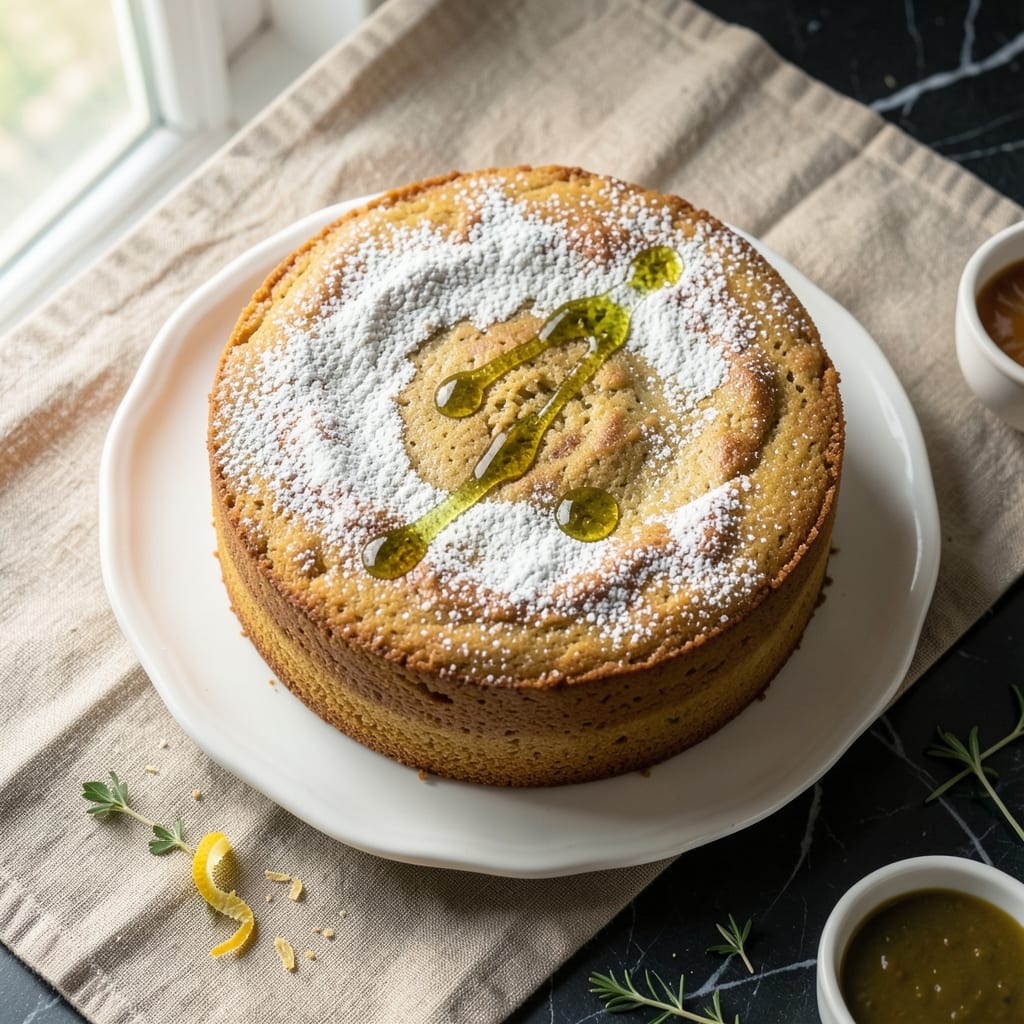
This almond flour olive oil cake delivers the perfect balance of crunchy top and moist heart without relying on gluten or dairy. The secret lies in combining fine almond flour with high-quality olive oil for a tender yet sturdy crumb—ideal for those seeking a naturally sweetened, plant-based dessert. What sets this recipe apart is the golden, crackly crust that forms during baking, creating a satisfying contrast to the soft interior.
The beauty of this recipe is its simplicity: just 6 core ingredients and 45 minutes from start to finish. No special equipment is needed beyond a mixing bowl and oven, making it accessible for home bakers of all skill levels. The olive oil keeps the cake rich and moist, while the almond flour provides a delicate nuttiness that pairs beautifully with citrus zest or vanilla extract for added depth.
By the time it emerges from the oven, you'll have a cake that's naturally gluten-free, richly textured, and effortlessly elegant. The aroma of toasted almonds and olive oil fills the kitchen, promising a dessert that's both impressive and satisfying. Whether served with fresh berries or a dusting of powdered sugar, this cake proves that plant-based baking can be just as indulgent as traditional recipes.
Perfect for special occasions or a simple treat, this recipe scales easily for gatherings. The moist interior holds up well for slicing, ensuring every bite delivers that ideal contrast of textures. Let's get baking!
Ingredients for almond flour olive oil cake
Six core ingredients transform into a gluten-free, dairy-free masterpiece with perfect texture contrast.
| Ingredient | Amount | Notes |
|---|---|---|
| Fine Almond Flour 🌰 | 2 ½ cups | Blanched, for optimal texture |
| Extra-Virgin Olive Oil 🫒 | 1 cup | High quality, fruity variety |
| Coconut Sugar 🍯 | ¾ cup | For natural sweetness |
| Unsweetened Almond Milk 🥛 | ¾ cup | Lightly sweetened if preferred |
| Pure Vanilla Extract 🌿 | 1 tbsp | Bottled or homemade |
| Baking Powder 🍞 | 1 tsp | Aluminum-free preferred |
| Fine Sea Salt 🧂 | ½ tsp | Diamond Crystal preferred |
| Lemon Zest 🍋 | 1 tbsp | Freshly grated for brightness |
| Ground Flaxseed 🌾 | 1 tbsp | For egg replacement |
| Water 💧 | 3 tbsp | For flax egg mixture |
Almond flour is non-negotiable here—Bob's Red Mill or Anthony's Goods brands deliver the finest texture. The flour should be lightly toasted for enhanced nuttiness, which you can achieve by baking it at 350°F for 8-10 minutes before using. Extra-virgin olive oil makes this cake uniquely rich; California-based Corto or Italian brands like Filippo Berio offer exceptional quality. For the coconut sugar, Wholesome! brand is widely available and maintains the natural caramel notes without graininess. Lemon zest should be freshly grated—pre-packaged zest often loses potency quickly.
No almond milk on hand? Oat milk or cashew milk work equally well, though texture may vary slightly. Substituting maple syrup for coconut sugar requires reducing the amount by 20% to account for its higher moisture content. For vanilla, Madagascar bourbon vanilla adds depth, but pure vanilla extract suffices. The flax egg can be pre-made and stored in the fridge for up to 5 days, making it a convenient binder for other vegan recipes. If you prefer a more neutral flavor profile, omit the lemon zest entirely—though you'll miss that bright contrast to the almond's richness.
Store the baked cake in an airtight container at room temperature for 3-4 days, though it's best enjoyed within 24 hours for optimal moisture. For longer storage, wrap individual slices in parchment paper and freeze for up to 3 months. Reheat slices at 300°F for 5-7 minutes to restore the crust's crispness. The cake's texture improves slightly after sitting for 1 hour, allowing flavors to meld. Portion into single servings before freezing to maintain the perfect crunch-moist balance when reheated.
Why You'll Love This Recipe
- No Mixer Needed: I swear by this—just fold the almond flour into the olive oil until it’s almost crumbly, then add the wet stuff. No electric mess, no sticky hands (okay, maybe a little), and the texture turns out fluffier than you’d expect. Honestly, it’s the kind of recipe that makes me want to bake more.
- Rich Without Guilt: That olive oil? It’s the star—deep, fruity, and buttery without tasting heavy. The coconut sugar caramelizes just enough to give it a subtle toasted edge, while the vanilla extract (use the good stuff) ties it all together like a warm hug. Between us, it’s the kind of cake that makes me forget it’s technically “healthy.”
- Weeknight Magic: Slice it fresh for breakfast, pack it in a lunchbox, or serve it at 7 PM when you realize you forgot dessert. It keeps perfectly for days in the fridge—no drying out, no weird textures—so I always bake a double batch. (Yes, even on a Tuesday night.)
- Budget-Friendly Luxury: Almond flour’s pricey, but you use way less than flour-heavy cakes, and the olive oil stretches further than butter. Plus, the almond milk and sugar are cheap staples that don’t skimp on flavor. It’s the kind of treat that feels fancy without draining my wallet—or my willpower.
Step-by-step instructions for almond flour olive oil cake
This method delivers a perfectly moist crumb with a signature crunchy top—no gluten required.
Prepare the Flax Egg Mixture
In a small bowl, combine the 1 tablespoon ground flaxseed with the 3 tablespoons water. Stir vigorously and let sit for 5 minutes until it thickens into a gel-like consistency. This flax egg replaces traditional eggs while adding moisture and binding properties. The mixture should resemble raw egg whites in viscosity—if it's still runny, add another teaspoon of flaxseed.
While waiting, preheat your oven to 350°F and position a rack in the center position. Grease an 8-inch round cake pan with extra-virgin olive oil and line the bottom with parchment paper for easy removal. The oil creates a non-stick barrier while adding subtle flavor to the cake.
Mix Wet and Dry Ingredients Separately
In a large mixing bowl, whisk together the 1 cup extra-virgin olive oil, 0.75 cup coconut sugar, 0.75 cup unsweetened almond milk, 1 tablespoon pure vanilla extract, and 1 tablespoon lemon zest. The olive oil should be at room temperature—if it's cold, let it sit for 10 minutes to blend smoothly. Mix until the coconut sugar dissolves completely and the mixture is homogeneous.
In a separate bowl, sift together the 2.5 cups fine almond flour, 1 teaspoon baking powder, and 0.5 teaspoon fine sea salt. Sifting prevents lumps and ensures even distribution of leavening agents. The almond flour should be fine and free of grit—if it's coarse, pulse it briefly in a food processor before measuring.
Combine and Fold Gently
Add the dry ingredients to the wet mixture in three additions, folding gently with a spatula after each addition. Be careful not to overmix—the goal is to combine without developing gluten. The batter should be thick but pourable, similar to cookie dough. If it's too thick, add 1 tablespoon unsweetened almond milk to achieve the right consistency.
Stir in the flax egg mixture last, folding it in until just combined. The batter will be dense and slightly sticky—this is normal. Avoid using an electric mixer, as the high-speed action can incorporate too much air, leading to a dense cake instead of the desired moist texture.
Bake with Precision
Pour the batter into the prepared cake pan and smooth the top with a spatula. Place the pan on the preheated rack and bake for 35-40 minutes. The cake is done when a toothpick inserted into the center comes out clean and the edges are deep golden brown. The top should develop a crispy crust while maintaining a moist interior—this is the signature texture of this recipe.
During the last 5 minutes of baking, keep an eye on the cake. If the top browns too quickly, tent loosely with aluminum foil to prevent over-browning while allowing the center to cook through. The internal temperature should reach 205-210°F—this ensures complete doneness without drying out the cake.
Cool and Serve
Remove the cake from the oven and let it cool in the pan for 10 minutes. Then transfer it to a wire rack to cool completely. The cake will sink slightly in the center as it cools—this is normal and indicates a properly baked cake. Once fully cooled, slice into 8 equal wedges for serving.
For the best texture, serve the cake at room temperature. The contrast between the crunchy top and moist interior is most pronounced when sliced fresh. Store leftovers in an airtight container at room temperature for up to 3 days or refrigerate for up to 5 days. Reheat slices in a 350°F oven for 3-4 minutes to restore the crispy texture.
Pro Tips For Making Almond Flour Olive Oil Cake
- Sift the Almond Flour: I learned this the hard way—skipping the sift turns your cake into a dense brick. Use a fine-mesh sieve to aerate the flour before mixing; it’s worth the extra 30 seconds to get that light, tender crumb. ---
- Measure Olive Oil Cold: Warm olive oil loses its structure, and your cake will turn greasy. Scoop it straight from the bottle with a spoon—no heating, no pouring—then mix it in just until combined. The texture stays firm, not soggy. ---
- Skip the Overmixing: Almond flour develops gluten like wheat flour, and once you see streaks of dry flour, it’s too late. Mix wet and dry ingredients until just combined—lumpy is better than tough. I’ve ruined three cakes by overdoing it. ---
- Warm the Almond Milk: Cold almond milk won’t blend evenly, leaving pockets of dry flour. Microwave it for 10 seconds or warm it in a saucepan—just enough to loosen the sugar and oil. The batter will be smoother, and the cake rises better.
Storing and reheating this almond flour olive oil cake
Room Temperature Storage
Store your almond flour olive oil cake in an airtight container at room temperature for up to 3 days for optimal texture. The cake's delicate crunchy top softens slightly over time, so I recommend enjoying it within 24 hours for that perfect contrast. Place a slice of bread or parchment paper on top to absorb any excess moisture and maintain freshness. 💫
Refrigerator Preservation
If you need to store leftovers longer, refrigerate the cake in an airtight container for up to 5 days. The cold temperature helps preserve the moist interior, though the top may lose some of its crispness. To restore it, simply warm the slice at 350°F for 3-4 minutes—this reactivates the crust's texture beautifully. I like wrapping individual slices in parchment paper before refrigerating for easy reheating.
Freezing for Later
For maximum shelf life, wrap individual cake slices in parchment paper and place them in a freezer-safe bag with all the air removed. This method preserves the cake's texture for up to 3 months. When ready to serve, thaw at room temperature for 1 hour before reheating in a 300°F oven for 5-7 minutes to revive the crust. Freezing works best for single servings rather than the whole cake.
Reheating Secrets
To restore the cake's signature crunchy top, I recommend reheating slices in a 350°F oven for 3-4 minutes. For a quicker option, use the air fryer at 325°F for 2 minutes—this method works surprisingly well without drying out the cake. Avoid microwaving, as it can make the texture gummy. A light dusting of powdered sugar or flaky sea salt after reheating enhances the flavor contrast.
Serving After Storage
After refrigeration or freezing, let the cake sit at room temperature for 10-15 minutes before slicing to prevent crumbling. The texture improves as it comes to room temp, making it easier to cut clean slices. For a restaurant-worthy presentation, serve with a dollop of vegan whipped cream or fresh berries—the acidity cuts through the cake's richness beautifully. The contrast between cold toppings and room-temperature cake creates an unforgettable experience. 🍓
Nutrition facts
Frequently asked questions
Can I substitute almond flour with another nut flour?
While you can try hazelnut or cashew flour, almond flour provides the best texture for this recipe. Hazelnut flour works in a pinch (use 1:1 ratio) but lacks the delicate nuttiness, while cashew flour tends to make the cake denser. For a gluten-free alternative, try a 50/50 blend with oat flour—but expect a slightly different crumb.
Why does my almond flour cake turn out dry?
Overbaking or using coarse almond flour are the most common causes. Always check for doneness at 35 minutes—the cake should spring back when gently pressed. For extra moisture, add 1 tablespoon extra olive oil or reduce baking time by 2-3 minutes. Toasting the almond flour lightly before mixing also helps prevent dryness.
How do I make this cake more flavorful?
Add 1 teaspoon cinnamon or ½ teaspoon cardamom to the dry ingredients for warmth. For brightness, increase lemon zest to 2 tablespoons or add 1 teaspoon orange blossom water. A splash of almond extract (½ teaspoon)** can deepen the nutty profile without overpowering.
Can I bake this in a different pan size?
Yes, but adjust baking time accordingly. For a 9-inch pan, reduce time by 5-7 minutes (check at 30 minutes). A 6-inch pan requires 10-12 minutes longer. Always use the toothpick test—insert at the center and edges. The edges may brown faster in smaller pans, so tent with foil if needed.
Is this cake suitable for nut allergies?
No, this recipe contains almond flour and is not safe for nut allergies. For a nut-free version, substitute with a gluten-free oat flour blend (like Bob's Red Mill 1:1) and use sunflower seed butter instead of olive oil. The texture will differ slightly but remain moist. Always check labels for cross-contamination warnings.