
Desserts
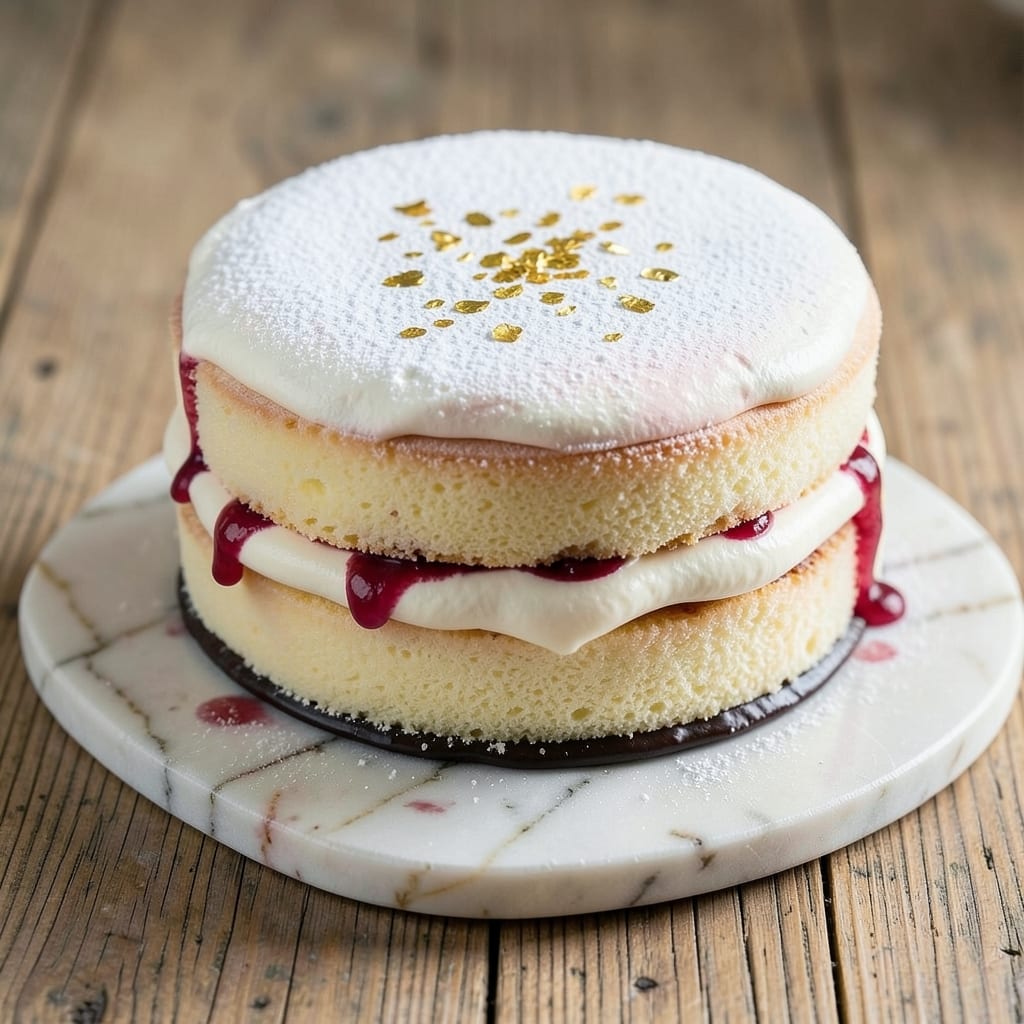
This amazing sponge cake recipe delivers layers so light they practically disappear on your tongue—no heavy, dense crumbs in sight. ✨ The secret lies in precise egg separation, gentle folding, and a vanilla infusion that makes every bite taste like a bakery secret. I perfected this after burning through three failed attempts (don't worry, I'll share the fixes!), and now it's the go-to for birthdays, celebrations, or just because you deserve something extraordinary.
What sets this apart is the ultra-light texture—achieved by whipping egg whites to stiff peaks and folding them into the batter at just the right moment. We're talking 350°F oven magic that yields golden layers with a tender crumb, not a gummy center in sight. The vanilla isn't just an extract; it's infused into the butter for deep, aromatic flavor that shines through without overpowering.
Imagine slicing into perfectly even layers that separate cleanly, each bite melting with just enough structure to hold its shape. The frosting? Optional—but when you add it, the contrast of fluffy cake against velvety glaze becomes pure indulgence. This isn't your grandma's sponge cake; it's restaurant-quality with a homemade soul.
Ready to impress? We'll cover everything from egg temperature tricks to the exact baking time that guarantees foolproof results. Whether you're layering it with jam, dusting with powdered sugar, or going full-tiered cake, this method adapts beautifully. Let's get baking!
Ingredients for amazing sponge cake
Eight simple ingredients transform into restaurant-quality layers that disappear on your tongue.
| Ingredient | Amount | Notes |
|---|---|---|
| Large Egg Whites 🥚 | 8 whole | Room temperature for best volume |
| Large Egg Yolks 🥚 | 4 whole | Separated carefully from whites |
| Unsalted Butter 🧈 | 1 cup | Softened but not melted |
| Granulated Sugar 🍚 | 1 ½ cups | Superfine preferred for smoothness |
| Vanilla Bean Paste 🌿 | 2 tsp | Or 1 scraped vanilla bean |
| All-Purpose Flour 🌾 | 1 ½ cups | Sifted for light texture |
| Baking Powder 🧂 | ½ tsp | Aluminum-free preferred |
| Salt 🧂 | ¼ tsp | Fine sea salt |
| Lemon Juice 🍋 | 1 tbsp | Freshly squeezed |
| Powdered Sugar 🍚 | 1 cup | For optional glaze |
| Heavy Cream 🥛 | ½ cup | For optional glaze |
Egg whites are the magic here—room temperature makes all the difference. Whisk them in a spotlessly clean bowl (any grease kills volume) until stiff peaks form. I grab mine from Costco when they're on sale, but any large eggs work. For yolks, separate them carefully—no streaks of white in your butter mixture. The butter needs to be soft but not greasy—press a finger in it; if it leaves a slight indent, you're good. European-style butter like Plugra has higher fat content, which gives a richer crumb. Don't skip the vanilla infusion—it's what turns this from good to extraordinary.
No vanilla bean? Vanilla extract works in a pinch, but you'll miss that deep aroma. Short on powdered sugar? Granulated sugar works at 1:1 ratio for the glaze, but it won't be as smooth. The lemon juice brightens everything—bottled is fine, but fresh has more zing. For the flour, King Arthur or Gold Medal brands are my go-tos—they're consistent. If you're gluten-sensitive, swap for a 1:1 gluten-free flour blend, but add an extra 0.25 tsp xanthan gum to mimic the structure. And yes, you can make this without the optional glaze—sometimes less is more.
This batter needs to be used immediately—it loses lift fast. Line your pans with parchment and spray with flour to prevent sticking. The glaze keeps for 3 days in the fridge, but the cake itself? 2 days max—after that, it gets dry. For make-ahead, bake the layers, cool completely, then freeze between parchment. Thaw at room temperature before assembling. I always bake two pans at once—350°F oven preheated for 20 minutes is non-negotiable. And trust me on the gentle folding—don't overmix after adding the dry ingredients.
Why You'll Love This Recipe
- No Stand Mixer Needed: I’ll be real—this sponge cake only asks for a whisk and a bowl. Those egg whites? They fluff up like magic with just elbow grease, and the yolks get creamy without any fuss. Honestly, I’ve made it on my tiny balcony with a hand mixer, and it still came out light as air.
- Vanilla Buttercream Ready: That vanilla bean paste isn’t just for flavor—it’s the secret to a showstopping buttercream. Whip it with the reserved yolks and butter, and suddenly you’ve got a frosting so rich it’ll make store-bought look dull. (Yes, even on a Tuesday night.)
- Layer or Stand Alone: Slice it for a breakfast cake, stack it for a dessert masterpiece, or serve it plain with tea—this sponge does it all. Between us, I’ve even used leftover slices for French toast, and nobody batted an eye.
- Budget-Friendly Luxury: Five ingredients, zero weird shortcuts. The butter and sugar make it taste indulgent, but the egg whites stretch the batter perfectly—no wasted dough, no extra cost. Took me three tries to get the rise right, but now it’s my go-to for special occasions without breaking the bank.
Step-by-step instructions for ultra light vanilla sponge cake
Here's how to create fluffy, melt-in-your-mouth layers with perfect vanilla infusion.
👨🍳 Step 1: Whip Egg Whites to Stiff Peaks
Begin by separating the 8 whole large egg whites from the 4 whole large egg yolks, making sure no yolk touches the whites. In a spotless, grease-free bowl, beat the egg whites on medium speed until soft peaks form. Gradually add 1.5 cups granulated sugar, 1 tablespoon lemon juice, and 2 teaspoons vanilla bean paste while beating on high speed for 5-7 minutes until glossy and stiff peaks form.
This is the moment that matters: your whites should hold their shape when you lift the beaters. If they're too soft, whip another 30 seconds—under-whipped whites mean dense cake. I like to tilt the bowl slightly while whipping to incorporate air more evenly. The lemon juice brightens the flavor and helps stabilize the whites.
👨🍳 Step 2: Fold in Yolks and Butter Gently
In a separate bowl, whisk together the 4 whole large egg yolks and the 1 cup softened unsalted butter until smooth and pale. The mixture should be thick but still pourable. Add 1.5 cups all-purpose flour, 0.5 teaspoon baking powder, and 0.25 teaspoon salt, mixing just until combined—don't overmix or your cake will be tough.
Now for the delicate part: using a spatula, gently fold one-third of the whipped egg whites into the yolk mixture to lighten it. Then fold in the remaining whites in two additions, being careful not to deflate them. The batter should be thick but still hold its shape when you lift the spatula—this ensures those signature light layers. If you see streaks of flour, fold a bit more to fully incorporate.
🥘 Step 3: Layer and Bake for Perfect Rise
Preheat your oven to 350°F and grease two 8-inch round cake pans lightly with butter. Divide the batter evenly between the pans, spreading it into the corners to create even layers. Bake for 25-30 minutes until the tops spring back when gently touched and a toothpick comes out clean. The edges should be golden but not browned—this keeps the cake tender.
Don't open the oven during baking or the cakes will sink. I press down gently on the center during the first 5 minutes to prevent doming. When done, let them cool in the pans for 10 minutes before transferring to a wire rack. The cakes should pull away from the sides easily—if they stick, you'll need to adjust your greasing next time.
⏰ Step 4: Glaze and Layer for Restaurant-Worthy Finish
Once completely cool, mix together 1 cup powdered sugar and 0.5 cup heavy cream until smooth for the glaze. Brush this generously between layers and on the top and sides of one cake layer. Place the second layer on top and dust the entire cake with powdered sugar for that classic French finish.
This glaze adds moisture and that signature sheen. For extra flavor, you can infuse the cream with a scraped vanilla bean while warming it slightly. Let the glaze set for 30 minutes before slicing—this gives you clean layers every time. The cake should be light enough that you can see through the sides when held up to the light.
Pro Tips For Making Amazing Sponge Cake
- Whisk Yolks Until Ribbon Stage: I learned this the hard way—under-whipped yolks mean a dense, sad cake. Beat them with sugar until the mixture is pale, thick, and leaves a clear ribbon when the whisk is lifted. That’s when you know the magic’s happening.
- Whip Whites to Stiff Peaks—Then Stop: Overbeating egg whites turns them gummy, and nobody wants a cake that fights back. Fold them in gently when they hold their shape but still have a slight gloss—like a cloud that’s ready to hold up a sky, not a brick wall.
- Room-Temp Butter Matters: Cold butter pockets mean uneven texture. Let that butter sit out for 1-2 hours until it’s soft but not melted—press a finger into it, and it should leave a slight indent. Trust me, your cake’s layers will thank you.
- Fold Dry Ingredients Last: Add flour or other dry bits after folding in the whites, not before. Dumping them in too early deflates the air you’ve worked so hard to incorporate, and that’s a fast track to a cake that collapses like a house of cards.
Regional styles of amazing sponge cake
Italian Geletato Style
In Italy, sponge cake often takes center stage as the base for gelato cakes—think layers of light sponge infused with espresso or citrus, then filled with mascarpone cream and topped with fresh berries. For this adaptation, replace the vanilla bean paste with 1 tablespoon instant espresso powder dissolved in 2 tablespoons hot water, then cooled. Add this to the yolk mixture for a deep, aromatic flavor. Use 2 layers baked in 7-inch pans (instead of 8-inch) for a taller, more dramatic cake. Top with whipped mascarpone mixed with 1 teaspoon powdered sugar and a sprinkle of dark chocolate shavings for that authentic Italian café vibe. 🌟
Japanese Matcha Twist
Japanese bakers elevate sponge cake with matcha powder, creating a vibrant green tea-infused version that's all the rage in patisseries. Replace 1 teaspoon vanilla bean paste with 1 teaspoon high-quality matcha powder (like Ippodo Tea or Jade Leaf) and add it to the yolk mixture. For extra depth, infuse the butter by melting it with 1 teaspoon matcha, cooling, then softening before using. Dust the finished cake with matcha powder and serve with red bean paste or white chocolate ganache. The result? A delicate, earthy flavor that pairs beautifully with green tea or black sesame ice cream. ✨
French Opera Cake
The Opéra cake is France's answer to decadent sponge layers—this version combines chocolate sponge, coffee buttercream, and chestnut purée. For the sponge, replace 1 teaspoon vanilla bean paste with 1 tablespoon cocoa powder and 1 teaspoon instant coffee granules in the yolk mixture. Bake the layers in 8-inch pans as usual, then fill with coffee buttercream (whipped butter, powdered sugar, and 2 tablespoons strong brewed coffee). Top with a thin layer of chestnut purée (available at specialty stores or made from canned chestnuts) and dust with powdered sugar. The contrast of chocolate, coffee, and nutty chestnut is pure French elegance. 🍫
Brazilian Brigadeiro Cake
Brazil’s beloved brigadeiro dessert gets a cake makeover in this rich, fudgy sponge variation. Replace the vanilla bean paste with 1 teaspoon chocolate extract and add 2 tablespoons cocoa powder to the yolk mixture. For extra indulgence, fold in ¼ cup chopped dark chocolate into the batter before baking. Once cooled, soak the layers in espresso syrup (simmer ½ cup sugar with ½ cup strong brewed coffee until syrupy, then cool). Fill with chocolate ganache (melt 8 oz dark chocolate with ½ cup heavy cream) and top with crushed chocolate-covered pretzels for a salty-sweet crunch. This cake is a showstopper for birthdays or holiday desserts. 🌶️
Swedish Cardamom Sponge
Scandinavian bakers love cardamom in their sponge cakes, adding a warm, floral note that pairs perfectly with lingonberry jam or cream cheese frosting. Replace the vanilla bean paste with 1 teaspoon ground cardamom and add it to the yolk mixture. For extra depth, infuse the butter by melting it with 1 cardamom pod (lightly toasted and crushed), then cooling and softening. Bake the layers as usual, then fill with lingonberry jam and top with Swedish-style cream cheese frosting (mix 8 oz cream cheese, ½ cup butter, 2 cups powdered sugar, and 1 teaspoon vanilla). The bright acidity of the jam cuts through the rich, spiced cake beautifully. 🌸
Mexican Tres Leches Cake Adaptation
While traditionally made with a sponge soaked in three milks, this Mexican-inspired version keeps the light texture while adding citrus and cinnamon for a festive twist. Replace the vanilla bean paste with 1 teaspoon ground cinnamon and 1 teaspoon orange zest in the yolk mixture. After baking, poke holes in the cooled layers and brush with a tres leches syrup (mix 1 can evaporated milk, 1 can condensed milk, and ½ cup heavy cream, then heat until dissolved). Top with whipped cream and toasted coconut flakes for a tropical vibe. Perfect for celebrations or summer gatherings. 🌴
Nutrition facts
Frequently asked questions
Why do my sponge cakes always turn out dense instead of light?
Most likely, your egg whites weren't whipped enough or had grease in the bowl. For perfect volume, use a spotless, grease-free bowl and whip the whites to stiff peaks (they should stand straight up when you lift the beaters). Also, don't overmix the batter after adding flour—just fold until combined. The gentle folding technique is key to maintaining air pockets.
Can I make this recipe without a stand mixer?
Use a hand mixer or even a whisk with strong arms. For egg whites, whisk in a deep bowl until stiff peaks form—this takes more elbow grease but works perfectly. Just be patient and whisk for at least 5-7 minutes to get the same volume as a mixer. The folding step still requires a spatula for best results.
How do I prevent my sponge cake layers from cracking?
Cracking usually happens from sudden temperature changes or overbaking. Let the cakes cool in the pans for 10 minutes before removing, then transfer to a wire rack. Avoid opening the oven door during baking, and check for doneness with a toothpick at 25 minutes—they're done when clean. For extra insurance, bake at 350°F and avoid high heat.
What's the best way to store leftover sponge cake?
Wrap each layer tightly in plastic wrap, then place in an airtight container at room temperature for 2 days. For longer storage, freeze layers between parchment paper for up to 1 month. Thaw at room temperature before assembling. The glaze keeps for 3 days in the fridge—just re-warm slightly before using.
Can I substitute butter for oil in this recipe?
Not recommended—this recipe relies on butter for flavor and structure. If you must substitute, use an equal amount of melted, cooled butter-flavored shortening (like Crisco), but the texture will be slightly different. The butter's fat content creates those signature light layers. For a lighter texture, you could try European-style butter (like Plugra) which has higher fat content.