
Desserts
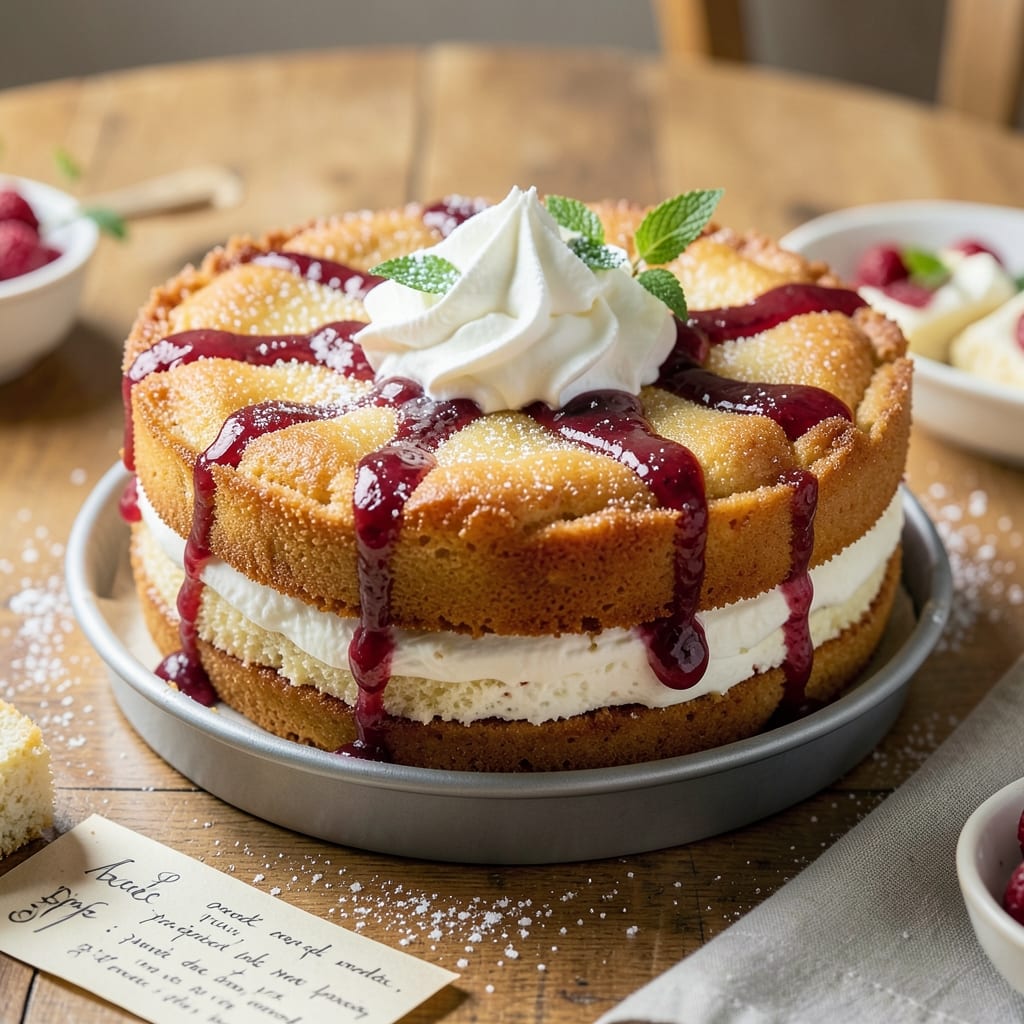
A 10-egg cake isn't just dessert—it's a statement piece that transforms any celebration into an elegant affair. The secret lies in the precise ratio of eggs to flour, creating a light, airy texture that defies gravity with its towering height. This recipe delivers a classic sponge cake with delicate fondant bridges, perfect for weddings, anniversaries, or simply impressing guests with restaurant-quality results at home.
The foundation of this cake is all in the technique: folding whipped egg whites into the batter at just the right moment ensures maximum volume without density. Baking at a precise temperature maintains that signature crisp shell while keeping the interior tender. With careful layering and fondant work, you'll achieve a cake that's not only stunning but structurally sound enough to support decorative bridges.
What sets this apart is the balance between tradition and modern flair—the classic sponge base pairs beautifully with contemporary fondant designs. The result is a cake that's light enough to slice cleanly, rich enough to satisfy any palate, and elegant enough to be the centerpiece of any event. Every layer tells a story of patience and precision.
Whether you're a seasoned baker or tackling this for a special occasion, this recipe breaks down into manageable steps. The key is confidence in the process—whipping those eggs properly and baking with precision. The payoff? A cake that looks like it took hours to create but comes together with careful technique and a little practice.
Ingredients for 10 egg cake
Ten eggs, precise ratios, and delicate fondant bridges transform this cake into a showstopper.
| Ingredient | Amount | Notes |
|---|---|---|
| Large Eggs 🥚 | 10 whole | Room temperature for best volume |
| All-Purpose Flour 🌾 | 4 cups | Sifted, plus extra for dusting |
| Granulated Sugar 🍚 | 2 ½ cups | Superfine preferred for smooth texture |
| Unsalted Butter 🧈 | 1 ½ cups | Cold, cubed, 60% fat preferred |
| Vanilla Extract 🌿 | 2 tsp | Pure Madagascar bourbon preferred |
| Cream of Tartar 🧂 | ¼ tsp | Stabilizes egg whites |
| Salt 🧂 | ¼ tsp | Fine sea salt preferred |
| White Fondant 🎂 | 3 lb | 1600-1700 weight for bridges |
| Corn Syrup 🍯 | 2 tbsp | For fondant elasticity |
| Vegetable Shortening 🧈 | 1 tbsp | For fondant workability |
| Powdered Sugar 🍚 | 1 cup | For fondant dusting |
| Lemon Juice 🍋 | 1 tbsp | Freshly squeezed |
| Almond Extract 🌿 | ½ tsp | Optional for subtle flavor |
The eggs are non-negotiable—room temperature is critical for maximum volume. Store-brand eggs work fine, but organic or pasture-raised deliver richer flavor. Butter matters too: 60% fat content ensures proper structure. For the fondant, Wilton 1600 weight is the gold standard, but Sugarflower works beautifully for a smoother finish. Buy fondant in bulk if you're making multiple cakes—the savings are worth it. The flour should be sifted twice to eliminate lumps, which can weigh down your delicate sponge.
No superfine sugar? Pulse granulated sugar in a food processor for 30 seconds—it'll work in a pinch. Running out of vanilla? Almond extract at half the amount adds depth, though it changes the profile slightly. For the fondant, if you can't find corn syrup, light corn syrup or honey (vegetarian-friendly) will do, though texture may vary. The cream of tartar is essential—it stabilizes the egg whites and prevents weeping. Skip it, and your cake might collapse. For the fondant bridges, vegetable shortening is key for flexibility—don't substitute with butter unless you're prepared for a stiffer result.
Eggs keep best in their shells at room temperature for 1-2 days before baking—this prevents condensation. The fondant mixture can be made 3 days ahead and stored in an airtight container; bring to room temperature before use. For the cake itself, bake immediately after mixing—egg whites lose volume if left to sit. Portion fondant into 1-ounce balls for bridges; they'll soften slightly as you work. The finished cake holds for 3 days at room temperature, but fondant decorations should be added within 24 hours to maintain crispness.
Why You'll Love This Recipe
- No Mixer Needed: Mixing by hand is actually fine here—just fold the flour into the whipped eggs gently, and you’ll get that signature light, airy crumb without breaking a sweat. I’ve made this on a tiny countertop with a wooden spoon, and it still came out fluffy.
- Butter-Sugar Magic: That melted butter folded into the batter? It’s what makes this cake dangerously good—rich but not heavy, with a whisper of vanilla that lingers like a hug. Honestly, the first time I tasted it, I thought, “Wait, this is why people bake?”
- Breakfast or Dessert: Serve it warm with a drizzle of honey for a lazy Sunday brunch, or dust it with powdered sugar for an after-dinner treat. My kids ask for it both mornings and bedtimes—no judgment here.
- Half a Cake Lasts: A single pan yields a massive, moist loaf that slices neatly for days. I’ve packed leftovers in my lunchbox, frozen slices for quick toast, and even crumbled it over yogurt—zero waste, all flavor. (Yes, even on a Tuesday night.)
Step-by-step instructions for towering height with fondant bridges
Mastering this cake requires precision in both baking and fondant work.
Prepare the Cake Batter for Maximum Volume
Preheat your oven to 350°F and grease three 9-inch round cake pans with nonstick spray, then line the bottoms with parchment paper. In a stand mixer fitted with the whisk attachment, beat the 10 whole Large Eggs on medium-high speed for 5 minutes until they triple in volume and form soft peaks. This step is critical—room temperature eggs whip to full volume more easily.
Gradually add the 2.5 cups Granulated Sugar while continuing to beat on high speed for another 3 minutes until the mixture is pale, thick, and holds stiff peaks. The sugar should dissolve completely, and the batter should be glossy and ribbon-like when the whisk is lifted. Scrape down the sides of the bowl to ensure even mixing.
Incorporate Dry Ingredients and Butter for Light Texture
In a separate bowl, sift together the 4 cups All-Purpose Flour, 0.25 tsp Cream of Tartar, and 0.25 tsp Salt. With the mixer on low speed, gradually add the dry ingredients to the egg mixture, mixing just until combined—about 30 seconds. Avoid overmixing, which develops gluten and makes the cake dense.
Reduce the mixer speed to low and add the 1.5 cups Unsalted Butter, cut into cubes, one piece at a time. Mix until fully incorporated but do not overwork the batter. Add the 2 tsp Vanilla Extract and 0.5 tsp Almond Extract, mixing briefly to combine. The batter should be smooth, thick, and slightly shiny—this ensures a tender crumb.
Bake the Cakes for Even Rise and Dense Crumb
Divide the batter evenly among the prepared pans, filling each about two-thirds full. Bake for 25-30 minutes, or until a toothpick inserted into the center comes out clean. Rotate the pans halfway through baking for even heat distribution. The cakes should spring back slightly when pressed and have a golden dome on top.
Remove the cakes from the oven and let them cool in the pans for 10 minutes. Then transfer them to a wire rack to cool completely. While cooling, prepare the fondant by kneading together the 3 lb White Fondant, 2 tbsp Corn Syrup, and 1 tbsp Vegetable Shortening until smooth and pliable. Dust your work surface with 1 cup Powdered Sugar to prevent sticking.
Assemble the Cake Layers with Fondant Bridges
Level the cooled cakes if necessary using a serrated knife. Place the first cake layer on a cake stand or plate and spread a thin layer of buttercream or jam between each layer. Place the second layer on top, then the third. Chill the assembled cake in the refrigerator for 30 minutes to firm up the layers.
Roll out the prepared fondant to a thickness of about ¼ inch and cut strips to create bridges between the layers. Use a small amount of water or corn syrup to adhere the fondant to the cake. For extra stability, insert small dowels between the layers before adding the fondant bridges. This technique ensures the cake maintains its towering height without collapsing.
Decorate and Finish with Fondant Details
Cover the entire cake with a smooth layer of fondant, using the 1 tbsp Lemon Juice to help it adhere to the cake. Smooth the surface with your hands or a fondant smoother, pressing firmly to eliminate air bubbles. Use a small amount of the Powdered Sugar to dust the fondant for a matte finish.
Add decorative elements such as fondant flowers, leaves, or geometric shapes to complete the design. Allow the cake to set at room temperature for 2-4 hours before slicing. The fondant should be firm and hold its shape, ensuring your towering cake remains intact and impressive.
Pro Tips For Making 10 Egg Cake
- Whisk Eggs Until Ribbon Stage: I used to stop when the eggs looked "mostly mixed," but this cake needs patience—whisk them until the ribbons hold for 2 full seconds. The extra effort prevents a dense crumb, and you’ll notice the texture lightens noticeably once you hit that point.
- Melt Butter Slowly: Dump cold butter into the hot pan, and you’ll end up with greasy streaks instead of smooth batter. Instead, melt the butter over low heat until it’s just liquid, then let it cool to room temp before mixing—this keeps the cake tender, not greasy.
- Sift Flour Twice: Skipping this step means lumps hiding in your batter, no matter how much you stir. Sift the flour directly into the bowl before adding eggs, then sift again after mixing—yes, it’s extra work, but the result is a silky texture, not a gritty one.
- Bake at 325°F, Not Higher: I learned this the hard way—350°F makes the outside set too fast before the center is done, leading to a cracked top or underbaked middle. Stick to 325°F for even baking, and use a toothpick test: it should come out clean but slightly moist.
Common mistakes when making perfect results
Overwhipped Egg Whites
I’ve seen this happen more times than I can count—egg whites go from soft peaks to dry, grainy clumps when overwhipped. The moment they turn stiff and dry, your cake’s structure collapses. Stop mixing immediately when you reach stiff peaks (the tip of the whisk should stand straight up). Overwhipped whites lose their ability to hold air, leading to a dense, flat cake instead of that towering height you want. 🥚
Uneven Baking Temperatures
Skipping the pan rotation halfway through baking is a fast track to uneven layers. Hot spots in your oven cause one side to bake faster, creating a cake that’s golden on one side and pale on the other. Always rotate your pans after 15 minutes—this ensures even heat distribution and a consistent crumb throughout. A toothpick test in the center of each pan confirms doneness.
Skipping the Cooling Step
Rushing to assemble your cake while layers are still warm is a recipe for disaster. Warm cake layers compress under fondant bridges, causing them to sink and collapse. Let each layer cool completely (at least 2 hours) before assembling. This patience ensures your fondant stays intact and your cake maintains its towering structure. ⏳
Improper Fondant Adhesion
Using plain water to attach fondant bridges is a common mistake—it causes the fondant to soften and lose its shape. Instead, mix equal parts water and corn syrup (or use meringue powder for a stronger bond). This creates a flexible, sticky adhesive that holds fondant in place without weakening it. Test a small piece first to ensure it sets properly.
Overmixing the Batter
Once you add flour to the egg mixture, mix just until combined—no more than 30 seconds. Overmixing develops gluten, turning your light, airy cake into a dense, chewy brick. Use a spatula to gently fold in the dry ingredients, keeping the batter smooth and glossy. The goal is to maintain that delicate sponge texture, not create a tough crumb. 🌾
Ignoring Dowels for Stability
Fondant bridges alone can’t support a three-layer cake’s weight. Skipping dowels (or cake supports) between layers leads to sagging or even collapse. Insert ¼-inch wooden dowels into the center of each layer before adding fondant. These invisible supports distribute weight evenly, keeping your cake structurally sound and visually impressive.
Nutrition facts
Frequently asked questions
Why does this recipe use 10 eggs for such a large cake?
The 10 eggs create an ultra-light, airy texture that's perfect for towering height while maintaining structural integrity. Each egg adds volume and moisture without heaviness, making the cake light enough to support fondant bridges. This ratio also balances the flour for a delicate crumb that's neither dense nor crumbly.
Can I make this cake without a stand mixer?
Yes, but you'll need to whip the eggs by hand for 10-15 minutes to achieve proper volume. Use a clean, dry bowl and whisk vigorously until stiff peaks form. For the fondant work, a rolling pin and your hands will suffice—just knead the fondant thoroughly to ensure elasticity. The key is patience with both the egg whites and fondant handling.
How do I prevent the cake from sinking after baking?
Let the cakes cool in their pans for 10 minutes before removing, then cool completely on a rack. Never stack warm layers—wait at least 2 hours before assembling. For extra support, insert ¼-inch dowels between layers before adding fondant bridges. Chilling the assembled cake for 30 minutes before decorating also helps maintain structure.
What's the best way to store leftovers?
Cover the cake tightly with plastic wrap and store at room temperature for up to 3 days. For longer storage, refrigerate for up to 1 week, but bring to room temperature before serving. Fondant decorations should be added within 24 hours of baking for best appearance. Slice with a serrated knife for clean cuts.
Can I substitute eggs for a vegan version?
This recipe relies on eggs for both structure and moisture, so direct substitution isn't recommended. For a vegan alternative, consider a different recipe using aquafaba (chickpea brine) or commercial egg replacers, but the texture and height won't be identical. The fondant bridges would also require vegan fondant made with agar-agar or pectin.