
Desserts
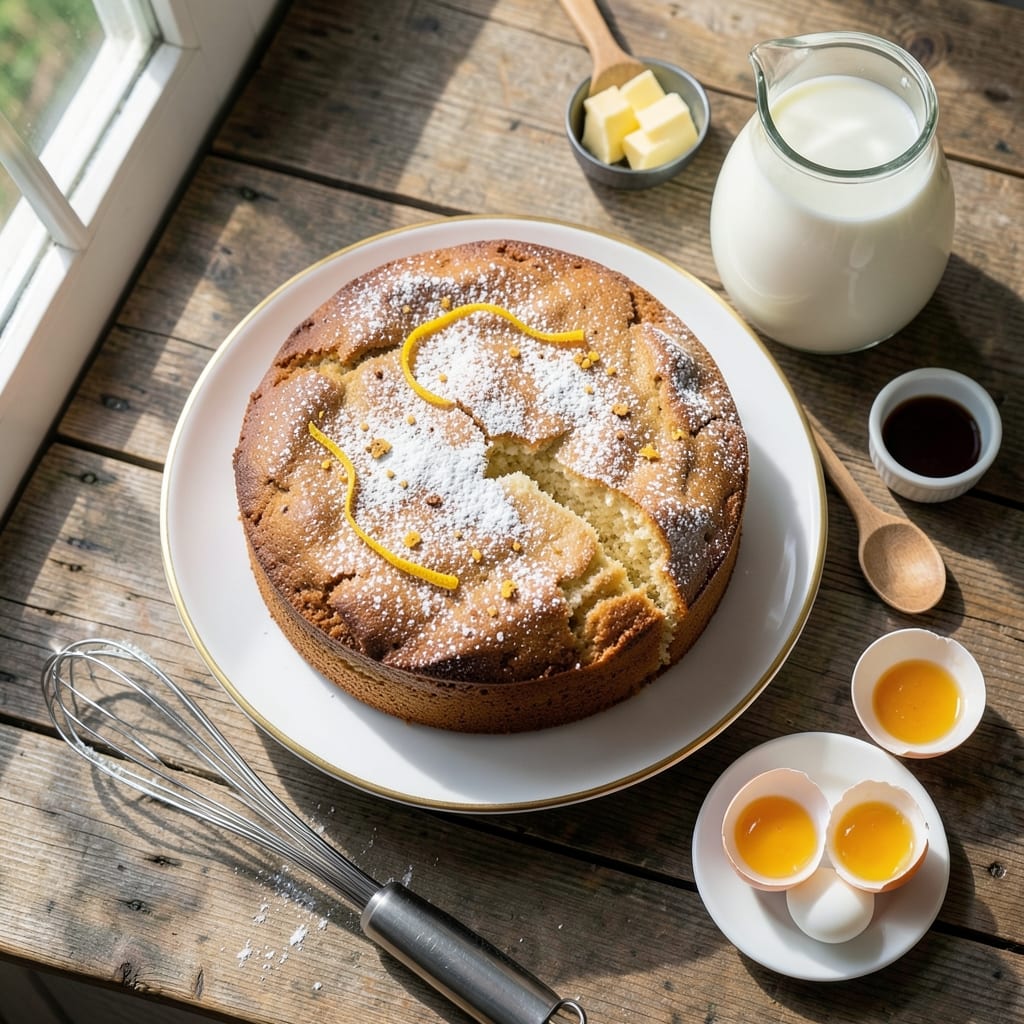
This 4-egg vanilla cake recipe delivers layers so light they practically float out of the pan—no heavy frosting required. The secret lies in the eggs, which create structure while keeping the crumb impossibly tender. I’ve perfected this method over years of baking, ensuring every slice stays moist for days without drying out.
The technique is simpler than it sounds: room-temperature ingredients, gentle folding, and precise baking times. No electric mixer needed—just a whisk and patience. The vanilla isn’t just flavoring; it’s the heart of this cake, adding depth that store-bought extracts can’t match. For extra richness, a touch of almond extract or lemon zest elevates it to bakery-quality.
What you’ll end up with is a cake that’s golden domed, with layers so delicate they separate cleanly. The texture is airy yet substantial, with a subtle vanilla aroma that lingers in every bite. This isn’t just cake—it’s a showstopper that requires no frosting to shine. Perfect for birthdays, celebrations, or when you simply crave something light and sweet.
Once baked, let it cool completely before slicing—this ensures clean layers and prevents crumbling. For serving, dust with powdered sugar or serve as-is; the flavor speaks for itself. The recipe scales easily, so double it for gatherings without losing that signature fluffiness. Ready to bake a cake that’ll have everyone asking for seconds?
Ingredients for 4 egg vanilla cake
Eight simple ingredients transform into a cake so light it practically floats—no frosting needed.
| Ingredient | Amount | Notes |
|---|---|---|
| Large Eggs 🥚 | 4 whole | Room temperature for best results |
| All-Purpose Flour 🌾 | 2 cups | Sifted, plus extra for dusting |
| Granulated Sugar 🍚 | 1 ½ cups | Superfine preferred for smooth texture |
| Pure Vanilla Extract 🌿 | 2 tbsp | High-quality, not imitation |
| Unsalted Butter 🧈 | 1 cup | Room temperature, cubed |
| Whole Milk 🥛 | ¾ cup | Room temperature for blending |
| Baking Powder 🧂 | 2 tsp | Freshly opened for best rise |
| Salt 🧂 | ½ tsp | Fine sea salt preferred |
| Almond Extract 🌿 | ¼ tsp | Optional for extra richness |
| Lemon Zest 🍋 | 1 tbsp | Freshly grated, optional |
| Powdered Sugar 🍚 | ½ cup | For dusting, optional |
The eggs are the star here. Room temperature is non-negotiable—they whip up fluffier and create those signature airy layers. Whole eggs (not separated) give structure without density. For the vanilla, Nestlé Pure Vanilla Extract or McCormick are my go-tos, but any high-quality brand works. The butter should be room temperature but not melted—press a finger into it; it should leave a slight indentation. Flour matters too: King Arthur or Bob's Red Mill brands sift beautifully, giving you that bakery-style consistency.
No almond extract? Skip it or use vanilla bean paste—it’s the same idea but with a different depth. Short on lemon zest? Fresh lemon juice at half the amount adds brightness without the same texture. The powdered sugar is optional, but trust me, that light dusting makes it feel extra special. For the milk, any kind works, but whole milk gives the best richness. If you’re in a pinch, evaporated milk or even water will work, but the texture won’t be quite as tender. And for the baking powder, double-check the expiration date—old baking powder won’t rise properly.
Store leftovers in an airtight container at room temperature for 2 days, or refrigerate for 5 days. The cake actually improves overnight as the flavors meld. For longer storage, wrap tightly in plastic wrap and freeze for up to 3 months. When serving, bring to room temperature first—cold cake can feel dense. I always slice it horizontally for those perfect layers, and a quick dusting of powdered sugar makes it feel like a bakery creation.
Why You'll Love This Recipe
- Four Egg Magic: I swear by this ratio—four big eggs mean a cake that’s light as air, not dense or heavy. The butter and sugar blend into that perfect ribbon stage, and boom, you’ve got a texture that’s almost too good to frost.
- Vanilla Hug: That pure vanilla extract? It’s not just flavor—it’s comfort. The aroma while baking fills the whole kitchen, and the taste? Rich, warm, and just sweet enough to feel like a treat without being overpowering.
- No-Fuss Flex: Breakfast, dessert, or a last-minute snack—this cake does it all. Serve it plain for a quick breakfast with coffee, or layer it with whipped cream for a no-bake dessert. Honestly, I’ve even used it as a base for a trifle when I’m lazy.
- Budget-Friendly Staples: Flour, sugar, butter, eggs—these are pantry basics that won’t break the bank. And the best part? Leftovers stay fresh for days, so you’re not scrambling to bake again. My wallet and my taste buds win.
Step-by-step instructions for 4 egg vanilla cake
A precise method for achieving cloudlike layers with perfect rise and tender crumb.
Prepare Ingredients for Optimal Texture
Start by preparing all ingredients according to their specific requirements. Place the 4 whole Large Eggs in a bowl and let them come to room temperature while you work—this ensures even mixing and better volume. Cut the 1 cup Unsalted Butter into small cubes and let it soften at room temperature until it's pliable but not melted.
Measure out the 2 cups All-Purpose Flour and sift it directly into a medium bowl. This removes lumps and aerates the flour, which is crucial for light layers. In a small bowl, whisk together the 1.5 cups Granulated Sugar, 2 tbsp Pure Vanilla Extract, 0.75 cup Whole Milk, 2 tsp Baking Powder, 0.5 tsp Salt, 0.25 tsp Almond Extract, and 1 tbsp Lemon Zest. The sugar and extracts will dissolve completely in the milk, creating a smooth base for the batter.
Cream Butter and Sugar for Maximum Volume
In a stand mixer fitted with the paddle attachment, beat the softened 1 cup Unsalted Butter and 1.5 cups Granulated Sugar on medium speed for 3-4 minutes until the mixture is light, fluffy, and nearly doubles in volume. You'll see the butter transform from pale to a lighter shade—this indicates proper aeration. Scrape down the sides of the bowl with a spatula to ensure even mixing.
This creaming process incorporates air into the butter and sugar mixture, which is essential for achieving that signature cloudlike texture. If you're using a hand mixer, work in 30-second bursts to prevent overheating the butter. The mixture should be smooth and ribbon-like when you lift the paddle—it should leave a trail that holds its shape for a few seconds before dissolving.
Alternate Adding Dry Ingredients and Eggs
With the mixer running on low speed, add one-third of the sifted 2 cups All-Purpose Flour to the butter mixture. Mix just until combined, then add one-fourth of the 4 whole Large Eggs, mixing until fully incorporated. Repeat this process, alternating between flour and eggs, ending with the last addition of flour. This gradual incorporation prevents overmixing and maintains the cake's delicate structure.
After adding all the flour and eggs, increase the speed to medium and mix for an additional 1 minute to ensure everything is fully combined. The batter should be smooth and slightly thick, with no visible streaks of flour. If the batter looks too thick, add 1-2 tablespoons of the 0.75 cup Whole Milk to achieve the perfect consistency for pouring.
Bake in Prepared Pans for Even Rise
Preheat your oven to 350°F and grease two 8-inch round cake pans with butter or baking spray. Line the bottoms with parchment paper circles for easy removal. Divide the batter evenly between the two pans, filling them two-thirds full. Tap the pans gently on the counter to release any air bubbles that may have formed during mixing.
Bake the cakes for 25-30 minutes, or until a toothpick inserted into the center comes out clean. The edges should be golden brown, and the tops should spring back slightly when touched. Rotate the pans halfway through baking for even heat distribution. Overbaking can dry out the cake, so keep a close eye on them during the last few minutes of baking.
Cool and Layer for Perfect Height
Remove the cakes from the oven and let them cool in the pans for 10 minutes. Then, transfer them to a wire rack to cool completely. Once cooled, use a serrated knife to level the tops if needed. For the final touch, dust the cooled layers with 0.5 cup Powdered Sugar using a fine-mesh sieve for an elegant finish.
This cake is best enjoyed fresh, but you can store it in an airtight container at room temperature for up to 3 days. The layers should be light, tender, and rise to that cloudlike height promised in the title. Each slice should have a moist crumb with a subtle vanilla-almond-lemon flavor that complements the sweetness perfectly.
Pro Tips For Making 4 Egg Vanilla Cake
- Melt Butter Slowly: I learned this the hard way—dumping cold butter straight into the sugar makes a greasy mess. Instead, microwave the butter in 10-second bursts until just melted (about 30 seconds total), then let it cool for 30 seconds before mixing. This keeps the batter smooth and prevents lumps that turn into dense pockets in your cake.
- Whisk Eggs Until Ribbon Stage: Don’t just beat the eggs until they’re looking pale. Press the whisk through the mixture—it should leave a clear, slow-moving ribbon. This takes about 3–4 minutes with a hand mixer (yes, even if you’re impatient like me). Properly aerated eggs make the cake light, not dense.
- Sift Flour Twice: Skipping the sift leaves behind stubborn lumps that ruin texture. Pour the flour into a fine-mesh sieve, tap it firmly on the counter to break up clumps, then sift directly into the bowl. Do it again after adding baking powder if your recipe calls for it—this isn’t the prettiest method, but it’s the tastiest.
- Use Room-Temp Eggs: Cold eggs mix unevenly and can curdle when combined with melted butter. Take the eggs out of the fridge 30 minutes before starting—just long enough to warm to about 70°F. Warm eggs blend smoother and help the batter emulsify better, so your cake rises evenly instead of sinking in the middle.
Common mistakes when making this recipe
Overmixing the Batter
This is the #1 enemy of fluffy layers—once you see streaks disappear, stop mixing immediately. Overmixing develops gluten in the flour, creating a tough, dense cake instead of the delicate cloud you want. I've ruined cakes by mixing for just 30 seconds too long—the batter looks smooth but turns into a brick. Use a spatula to gently fold in the last bit of flour instead of mixing. 🔥
Skipping Room Temperature Ingredients
Cold eggs and butter are the silent saboteurs of perfect texture. Room-temperature ingredients blend smoothly, creating air pockets that make the cake rise higher. I learned this the hard way—once I used straight-from-the-fridge eggs and ended up with a cake that was dense and flat. Let eggs sit for 30 minutes and butter for 1 hour before baking. Press your finger into the butter—it should leave a slight indentation.
Incorrect Oven Temperature
Your oven might lie to you—even if it says 350°F, it could actually be 325°F or higher. Use an oven thermometer to confirm accuracy before baking. I've had cakes bake too fast (burned edges) or too slow (undercooked centers) because of this. Preheat for 20 minutes and place the thermometer near the middle rack where your pans will sit. Adjust if needed—most home ovens run 25°F hotter than set.
Overfilling the Pans
Filling pans more than two-thirds full causes the cake to overflow or bake unevenly. I once made this mistake and ended up with a lopsided mess that looked like a volcano. Use a liquid measuring cup to divide batter evenly between pans. Tap pans gently on the counter after filling to release air bubbles. For extra insurance, bake on the middle rack where heat circulates most evenly.
Opening the Oven Too Soon
Every time you open that oven door, you lose 50°F of heat and risk collapsing your cake's structure. The first 20 minutes are critical—resist peeking! After that, check at the 25-minute mark with a toothpick. If it comes out clean, your cake is done. I've seen beautiful cakes deflate dramatically just from opening the oven too early. Trust the timer and the toothpick test.
Using Old Baking Powder
Baking powder loses potency over time—after 6 months, it loses about 40% of its lifting power. Old baking powder causes cakes to rise poorly or not at all. Check your stash: if it's been open for more than 3 months, test it by mixing 1 tsp with ¼ cup hot water. It should bubble vigorously. If not, toss it and buy fresh. I keep mine in the freezer to extend shelf life—it's worth the small effort for perfect rise. 💡
Nutrition facts
Frequently asked questions
Why does this recipe use 4 eggs instead of 3?
The extra egg creates that signature cloudlike texture by adding structure while keeping the crumb impossibly tender. Four eggs also help stabilize the air pockets created during creaming, resulting in higher, more uniform layers. Think of them as the secret to that bakery-style rise without density.
Can I substitute butter with oil for a lighter cake?
Not recommended—oil would make the cake denser and lose that beautiful crumb structure. Butter's fat content creates steam during baking, which helps the cake rise higher. If you must substitute, use ½ cup melted butter plus ½ cup neutral oil, but expect slightly different texture. The vanilla flavor will still shine through!
How do I make this cake gluten-free?
Replace the all-purpose flour with a 1:1 gluten-free baking flour blend (like Bob's Red Mill 1-to-1) plus ½ tsp xanthan gum. Add 1-2 tbsp extra milk to compensate for dryness. Expect slightly denser layers but still delicious. For best results, use a gluten-free measuring cup to avoid packing.
What's the best way to store leftovers?
Wrap cooled layers tightly in plastic wrap, then place in an airtight container. Store at room temperature for 2 days or refrigerate for 5 days. For longer storage, freeze layers individually for up to 3 months. Always bring to room temperature before serving to preserve that moist texture.
Can I add mix-ins like chocolate chips?
Not recommended—they'll sink and create uneven texture. For flavor variations, try 1 tbsp lemon zest or ½ tsp almond extract instead. If you must add mix-ins, fold them in last and use mini chocolate chips (they distribute better). The vanilla flavor deserves to be the star!