
Desserts
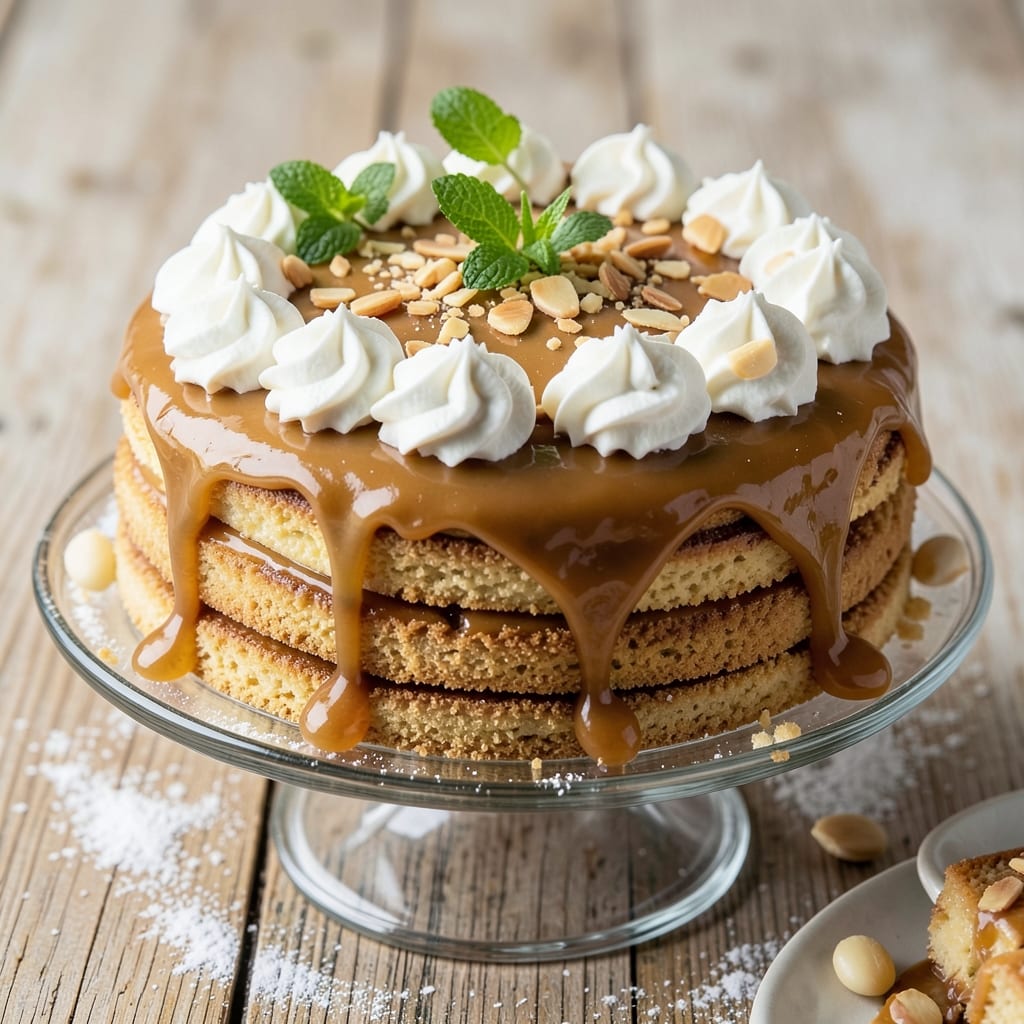
This alfajor cake recipe brings the beloved South American treat to your kitchen with layers of tender cake, nutty filling, and caramelized magic on top. 🌟 The combination of vanilla sponge, dulce de leche-infused cookie crumbs, and cream cheese frosting creates a dessert that's both nostalgic and impressive. I developed this version after years of perfecting the balance between crispy, chewy, and creamy textures that make alfajors irresistible.
The secret to success lies in the layers—each bite should deliver that perfect contrast of moist cake, crunchy cookie filling, and velvety frosting. This recipe uses simple ingredients you can find at any grocery store, but the technique ensures restaurant-quality results. The cake layers are light yet sturdy enough to hold the filling, while the cookie crumbs add that signature alfajor texture without being too sweet.
What makes this alfajor cake truly special is the caramelized top that forms during baking, creating a golden crust that cracks beautifully when sliced. The filling combines crushed alfajor cookies with dulce de leche and cream cheese for a flavor that's rich, nutty, and perfectly balanced. Whether you're celebrating a special occasion or just craving something indulgent, this dessert delivers every time.
Ready in about 2 hours (including cooling time), this alfajor cake is perfect for gatherings, holidays, or when you want to treat yourself to something extraordinary. The recipe includes tips for variations like adding chocolate chips or making a gluten-free version, so you can customize it to your preferences. Let's get baking!
Ingredients for alfajor cake
Simple ingredients transform into layers of cake, cookie crumbs, and caramelized magic.
| Ingredient | Amount | Notes |
|---|---|---|
| All-Purpose Flour 🌾 | 2 ½ cups | Sifted for light texture |
| Granulated Sugar 🍚 | 1 ½ cups | White or light brown |
| Unsalted Butter 🧈 | 1 cup | Room temperature, full-fat |
| Large Eggs 🥚 | 4 whole | Room temperature preferred |
| Vanilla Extract 🌿 | 2 tsp | Pure, high-quality |
| Baking Powder 🧂 | 2 tsp | Aluminum-free preferred |
| Salt 🧂 | ½ tsp | Fine sea salt |
| Milk 🥛 | ½ cup | Whole milk preferred |
| Alfajor Cookies 🍪 | 1 ½ cups | Crushed, store-bought or homemade |
| Dulce de Leche 🍯 | 1 cup | Store-bought or homemade |
| Cream Cheese 🧀 | 8 oz | Room temperature, full-fat |
| Powdered Sugar 🍚 | 3 cups | For frosting |
| Heavy Whipping Cream 🥛 | 1 cup | Cold for whipping |
| Ground Cinnamon 🌿 | ½ tsp | Optional for filling |
The alfajor cookies are the heart of this cake, so buy or make them fresh—stale cookies make for a dry filling. Trader Joe's or Latin markets often carry pre-packaged alfajors, but I usually grab a box of Dulce de Leche alfajors from Argentina online when I can. The dulce de leche? San Miguel or La Salamandra brands are my go-tos—they’re thick and rich, not runny. If you’re making this from scratch, simmer sweetened condensed milk for 2-3 hours until it caramelizes. The cream cheese needs to be full-fat and room temperature—don’t skip this, or your frosting will be grainy. For the cake layers, sift the flour to avoid dense texture, and let your butter sit out for at least 30 minutes before creaming.
No alfajor cookies? Crushed vanilla wafers or shortbread cookies work in a pinch, but the flavor won’t be the same. Running short on dulce de leche? Caramel sauce or Nutella can substitute, though the texture will be slightly different. The frosting can be made a day ahead—just whip the cream fresh before assembling. For a gluten-free version, swap the all-purpose flour for a 1:1 gluten-free baking flour blend. The cake layers should be baked just until a toothpick comes out clean but still has crumbs on it—overbaking makes them dry. If your filling seems too thick, add a splash of heavy cream to loosen it up. And trust me, the caramelized top? That’s all about baking the cake at 350°F (175°C) and not opening the oven for the first 20 minutes.
This cake keeps beautifully—3 days at room temperature covered loosely with plastic, or 1 week refrigerated in an airtight container. The frosting can be made up to 2 days ahead and stored in the fridge, just re-whip the cream before using. To reheat slices, pop them in the oven at 300°F (150°C) for 5-10 minutes—the caramelized top gets extra gooey. I always make a double batch because it disappears fast. Leftovers freeze well for 3 months if you wrap each layer tightly in plastic wrap. The secret to serving? Let the cake sit at room temp for 30 minutes before slicing—it’s less crumbly that way.
Why You'll Love This Recipe
- No Mixer Needed: I swear by this recipe when I’m too tired for food processors—just creaming butter and sugar by hand gives it that perfect tender crumb. The eggs and vanilla do the heavy lifting, so even if your arms are done, the cake still comes out rich and moist.
- Butter-Sugar Crunch Magic: That first bite? The crispy sugar shell from the caramelized topping cracks open to reveal a buttery, vanilla-kissed cake underneath. It’s like an alfajor’s best friend—same cozy sweetness, but in cake form.
- Weeknight Crowd Pleaser: Between us, this is my go-to for book club nights or when my partner’s friends drop by unannounced. Slice it thick, add a dusting of powdered sugar, and suddenly you’re the host who actually baked something. No one questions the simplicity.
- Fridge-Friendly Leftovers: Honestly, I make a double batch because it lasts. The cake stays fresh for days, and the flavor only deepens—perfect for breakfast the next morning or a quick dessert when you’re too lazy to bake. Just reheat a slice for 10 seconds, and it’s like it was just out of the oven.
Step-by-step instructions for alfajor cake
Here's how to create layers of nutty alfajor cookie magic with caramelized magic on top.
👨🍳 Step 1: Prepare the Cookie Crumbs and Filling
First, crush the 1.5 cups alfajor cookies into fine crumbs using a food processor or rolling pin. You want them to resemble coarse sand—this texture will give your cake that signature alfajor bite. In a small bowl, mix these crumbs with ½ tsp ground cinnamon (if using) and set aside.
Next, prepare the filling by combining 1 cup dulce de leche with 8 oz cream cheese in a microwave-safe bowl. Microwave in 20-second bursts, stirring between each, until the cream cheese melts completely and the mixture becomes smooth and creamy. Let it cool to room temperature—this will be the luscious filling between your cake layers.
🍳 Step 2: Bake the Cake Layers
Preheat your oven to 350°F and grease three 8-inch round cake pans (or line them with parchment paper). In a large mixing bowl, cream together the 1 cup unsalted butter and 1.5 cups granulated sugar on medium speed until light and fluffy—about 3-4 minutes. This step is crucial for a tender cake texture.
Add the 4 whole large eggs, one at a time, mixing well after each addition. Stir in the 2 tsp vanilla extract, then sift in the 2.5 cups all-purpose flour, 2 tsp baking powder, and ½ tsp salt. Finally, pour in the ½ cup milk and mix until just combined—don't overmix or your cake will be dense. Divide the batter evenly among the prepared pans.
Bake for 25-30 minutes or until a toothpick inserted comes out clean. Let the layers cool in the pans for 10 minutes, then transfer to a wire rack to cool completely. This cooling step is essential—warm layers will make your filling run.
🥘 Step 3: Assemble the Cake
Once your cake layers are completely cool, place the first layer on a serving plate. Spread ⅓ of the dulce de leche-cream cheese filling evenly over the top, then sprinkle ⅓ of the cookie crumbs on top. Repeat this layering process with the remaining two layers and filling.
For the final touch, spread the remaining filling over the top layer, then press the remaining cookie crumbs firmly into the surface. This creates that signature alfajor crunch you're craving. Chill the assembled cake in the refrigerator for at least 2 hours—this allows the filling to set and the flavors to meld beautifully.
🔥 Step 4: Create the Caramelized Top
Just before serving, prepare the caramelized topping. In a small saucepan, combine ½ cup granulated sugar and 2 tablespoons water. Cook over medium heat without stirring until it turns a deep amber color—about 5-7 minutes. Immediately pour this hot caramel over the chilled cake.
Let the caramel set for 10 minutes before slicing. The contrast between the warm caramel, cool filling, and crunchy cookie crumbs makes every bite unforgettable. Serve at room temperature for the best experience—this cake tastes even better the next day!
Pro Tips For Making Alfajor Cake
- Weigh Your Butter: Skip measuring cups for butter—packing it changes volume. Use a kitchen scale for 225g (1 cup) and scoop it straight from the fridge into the bowl. Cold butter creates flakier layers, and this recipe needs that texture to hold up to the dulce de leche filling.
- Stop Overmixing the Batter: After folding in the flour, mix just until combined—maybe 10-12 strokes max. I learned this the hard way: overmixing develops gluten, and your cake turns dense instead of tender. The batter should look like thick, streaky dough, not smooth.
- Use Room-Temp Eggs: Cold eggs curdle when mixed with melted butter, leaving streaks in the batter. Let them sit in warm water for 5 minutes before cracking—just enough to soften the yolks. This ensures a silky texture, not a lumpy one.
- Bake Until Golden, Not Dry: Pull the cake out when the top springs back lightly when pressed, but before the edges pull away from the pan. Overbaking dries it out, making it crumbly instead of moist. If unsure, check at 2-3 minutes early—it’ll finish cooking while cooling.
Common mistakes when making your alfajor cake
Overbaking Cake Layers
Your cake layers are the foundation, so overbaking them is a cardinal sin—it turns them dry and crumbly. Test for doneness with a toothpick that comes out with a few moist crumbs, not completely clean. I’ve ruined many a cake by checking too late; set a timer for 25 minutes and check at 22 minutes to avoid this. 🔥
Skipping the Cooling Step
Rushing to assemble the cake while layers are still warm is a recipe for disaster—the filling will melt and create a soggy mess. Let each layer cool completely on a wire rack before layering. I once tried to assemble mine after only 15 minutes of cooling, and the filling oozed everywhere. Patience here is key.
Incorrect Cookie Crumb Texture
The cookie crumbs need to be fine and even, not coarse or powdery. If they’re too fine, they’ll blend into the filling instead of providing that signature crunch. Pulse them in a food processor for 10-15 seconds or crush them by hand with a rolling pin. I’ve used pre-ground cookie crumbs from a bag, and they always lack that perfect texture.
Underestimating Chill Time
Skipping the 2-hour chill before adding the caramelized top is a mistake. Without this step, the filling won’t set properly, and the caramel will just pool on top. I’ve learned this the hard way—once, I served the cake immediately, and the caramel slid right off. Let it chill in the fridge to ensure everything holds together beautifully.
Using Cold Cream Cheese
Cold cream cheese is a no-go—it won’t mix smoothly with the dulce de leche, and your frosting will turn grainy. Always let it sit at room temperature for 30-60 minutes before mixing. I keep a bowl of cream cheese on the counter while I prep everything else to ensure it’s ready when I need it.
Overmixing the Batter
Overmixing develops gluten, leading to a dense, chewy cake instead of the light, tender texture you want. Mix the batter just until combined—about 20-30 seconds after adding the flour. I’ve seen home bakers whip the batter for minutes, and the result is always disappointing. Stop mixing as soon as the dry ingredients disappear.
Nutrition facts
Frequently asked questions
Can I make this alfajor cake without dulce de leche?
If you can't find dulce de leche, try caramel sauce or Nutella as substitutes. For a closer flavor, mix ½ cup brown sugar with ¼ cup heavy cream and simmer until thickened. The texture will be slightly different but still delicious. Just reduce any additional sugar in the recipe by ¼ cup to balance flavors.
How do I store leftovers to keep them fresh?
Store your alfajor cake in an airtight container at room temperature for up to 3 days or refrigerate for 1 week. For longer storage, freeze individual layers wrapped tightly in plastic for 3 months. To reheat slices, warm at 300°F (150°C) for 5-10 minutes—this makes the caramelized top extra gooey!
Can I make this cake gluten-free?
Yes! Replace the all-purpose flour with a 1:1 gluten-free baking flour blend like Bob's Red Mill. Use 1 teaspoon extra baking powder to ensure proper rise. For the cookie crumbs, choose gluten-free alfajor cookies or use gluten-free vanilla wafers. The texture will be slightly different but still delicious.
Why did my caramelized top crack unevenly?
Uneven cracking usually happens when the cake isn't fully chilled before adding caramel. Always let it set in the fridge for 2 hours first. Also, make sure your caramel is at a deep amber color—lighter caramel won't crack as dramatically. If cracks are too deep, gently press them down with a warm spatula before serving.
What's the best way to transport this cake?
For short trips, wrap the cake tightly in plastic wrap and place it in a sturdy box. For longer distances, transport it unfrosted and add the caramelized top just before serving. Keep it in a cool place (like a car trunk) until ready to decorate. The filling stays stable even without frosting, so this prevents messes during transport.