
Desserts
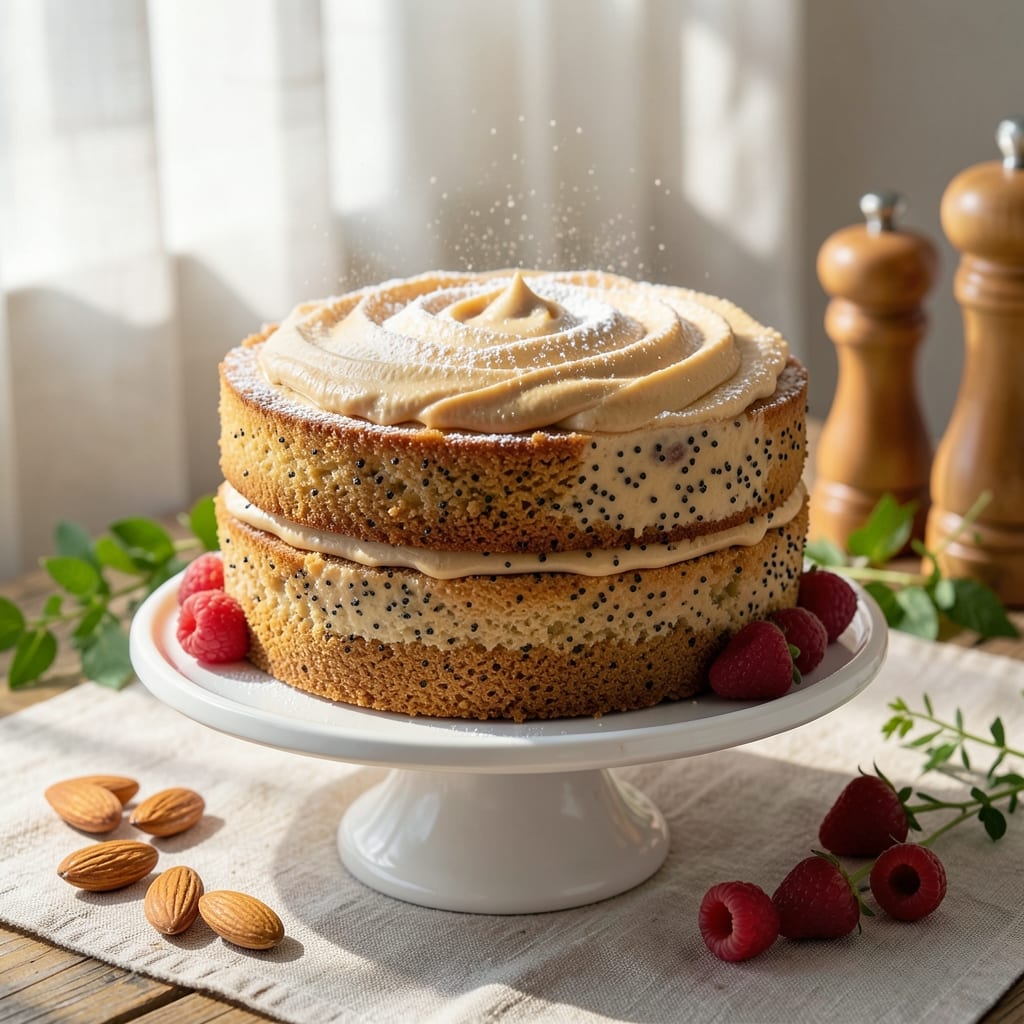
This almond poppyseed cake delivers the perfect balance of nutty richness and tender vanilla swirls, crowned with a crispy, golden top that begs to be sliced. 💛 The secret lies in a moist crumb achieved through precise ingredient ratios and a vanilla-infused batter that swirls beautifully with almond and poppyseed filling. After years of perfecting this recipe, I've developed a foolproof method that ensures every bite is tender yet sturdy enough to hold its shape.
The cake's magic begins with a simple yet effective combination of almond flour and poppyseeds, which add subtle texture and depth without overpowering the delicate vanilla flavor. A light dusting of powdered sugar and a sprinkle of crushed almonds on top elevate the presentation, making it look as impressive as it tastes. The crispy crown is achieved through careful baking techniques that create a caramelized top while keeping the interior perfectly moist.
What sets this recipe apart is its versatility—serve it plain for a sophisticated dessert, or enhance it with whipped cream, fresh berries, or a drizzle of warm caramel. The cake's flavor profile makes it ideal for brunch gatherings, afternoon tea, or a special dessert after dinner. Each slice offers a harmonious blend of textures and flavors that will leave your guests asking for seconds.
Whether you're a seasoned baker or just starting out, this recipe is designed to be your go-to for almond poppyseed cakes. With clear instructions and helpful tips, you'll achieve professional results every time. Let's get started on creating a dessert that's sure to impress.
Ingredients for almond poppyseed cake
Gather these nutty, vanilla-kissed ingredients for a cake with crispy crown perfection.
| Ingredient | Amount | Notes |
|---|---|---|
| Almond Flour 🥜 | 2 ½ cups | Finely ground, unsweetened |
| All-Purpose Flour 🌾 | 1 ½ cups | Sifted for light texture |
| Granulated Sugar 🍚 | 1 ½ cups | White or light brown |
| Poppyseeds 🌱 | ½ cup | Unsalted, toasted lightly |
| Unsalted Butter 🧈 | 1 cup | Room temperature, full-fat |
| Large Eggs 🥚 | 3 whole | Room temperature, separated |
| Pure Vanilla Extract 🍯 | 1 tbsp | High-quality, 100% pure |
| Baking Powder 🧂 | 2 tsp | Aluminum-free preferred |
| Salt 🧂 | ½ tsp | Fine sea salt |
| Powdered Sugar 🍚 | 1 cup | For dusting, sifted |
| Sliced Almonds 🥜 | ½ cup | Toasted, for topping |
| Heavy Cream 🥛 | ½ cup | Cold, for swirls |
| Vanilla Bean Paste 🍯 | 1 tsp | For extra vanilla flavor |
Almond flour is the star here—Bob's Red Mill or Anthony's Goods are my go-tos for consistent texture. Toast the poppyseeds in a dry pan for 2 minutes to deepen their flavor (don't burn them!). The butter needs to be room temperature—press it to test; it should dent but not spread. Eggs should be separated carefully (save the yolks for another use). For the vanilla, Madagascar bourbon or Tahitian extract adds depth beyond regular vanilla. If you can't find sliced almonds, pulse whole almonds in a food processor for 10 seconds—they'll still toast beautifully.
No almond flour? Substitute with 2 cups finely ground almonds (pulse in a food processor), but sift it well to avoid grittiness. Swap poppyseeds for sesame seeds or sunflower seeds if needed—just toast them first. The heavy cream swirl can be replaced with Greek yogurt or sour cream for a lighter texture. For the vanilla bean paste, double the vanilla extract if that's all you have. The cake's crispy crown comes from baking it at 375°F for the first 15 minutes—don't skip this step!
Store the cake in an airtight container at room temperature for 2 days or in the fridge for up to 1 week. The crispy crown softens over time, so slice it within 24 hours for that perfect texture. Freeze slices on a tray, then transfer to a bag for up to 3 months. Reheat in the oven at 300°F for 5 minutes to restore crispiness. The filling stays fresh for 3 days in the fridge—make extra for toast or pancakes!
Why You'll Love This Recipe
- No Mixer Needed: I swear by this—just creaming butter and sugar by hand, then folding in the almond flour and poppyseeds. The texture comes out perfectly tender without overmixing, and honestly? My stand mixer gets a break for once.
- Nutty-Sweet Magic: That combo of toasted poppyseeds and almond flour? It’s like a warm hug in cake form. The butter keeps it rich but not heavy, and the crumb is so fine it melts in your mouth—no dryness here.
- Weeknight or Wows: Between us, this cake is my go-to for anything: a quick breakfast with coffee, a last-minute dessert for guests, or even sliced into squares for lunchboxes. The poppyseeds add a little crunch that kids (and adults) actually eat.
- Budget-Friendly Luxury: Almond flour might sound fancy, but a little goes a long way—this recipe uses just enough to upgrade the flavor without breaking the bank. Plus, leftovers? They last forever in the fridge, and the butter keeps them moist for days.
Step-by-step instructions for almond poppyseed cake
Here's how to bake this showstopper with that signature crispy crown and nutty swirls.
👨🍳 Step 1: Prep the Dry Ingredients and Cream the Butter
First, let's get organized. In a medium bowl, whisk together the 2.5 cups almond flour, 1.5 cups all-purpose flour, 2 tsp baking powder, and 0.5 tsp salt. Set aside—this is your dry mix. I like to sift it lightly for a fluffier texture, but it's not mandatory.
In a separate large bowl, beat the 1 cup room-temperature unsalted butter with the 1.5 cups granulated sugar on medium speed until light and fluffy, about 3-4 minutes. You'll know it's ready when the mixture nearly doubles in volume and looks pale. This step is crucial for that tender crumb—don't rush it!
👨🍳 Step 2: Add Eggs and Vanilla for the Cake Batter
Add the 3 whole room-temperature eggs one at a time, mixing well after each addition. Then stir in the 1 tbsp pure vanilla extract and 1 tsp vanilla bean paste—this extra vanilla really makes the flavor pop. Scrape down the sides of the bowl with a spatula to ensure everything's evenly incorporated.
Now gradually add the dry ingredients mixture to the wet ingredients, mixing on low speed just until combined. Be careful not to overmix—you want to see a few flour streaks. Fold in the 0.5 cup poppyseeds and 0.5 cup sliced almonds by hand using a rubber spatula. This keeps those nutty bits evenly distributed throughout the cake.
🥘 Step 3: Prepare the Vanilla Cream Swirls
In a small bowl, whip the 0.5 cup cold heavy cream until soft peaks form—about 2-3 minutes with a hand mixer. Then gently fold in ½ cup powdered sugar and 1 tsp vanilla bean paste until just combined. Don't overmix or you'll deflate the cream. Set aside—this will be our showstopping swirl.
I like to divide this cream mixture into two portions. One portion will go in the center of the cake, and the other will be spread on top after baking. This creates those beautiful marbleized swirls you see in the finished cake.
🔥 Step 4: Bake the Cake to Golden Perfection
Preheat your oven to 350°F and grease two 9-inch round cake pans (I use butter and flour for easy release). Divide the cake batter evenly between the pans. For the swirl effect, drop spoonfuls of the vanilla cream mixture onto the batter in each pan, then swirl gently with a knife.
Bake for 25-30 minutes or until a toothpick inserted in the center comes out clean. Here's the thing about this cake—it needs that crispy crown! In the last 5 minutes of baking, increase the oven temperature to 375°F and broil for 1-2 minutes to get that golden, crackly top. Watch it closely—you want it golden, not burnt!
⏰ Step 5: Cool and Dust with Powdered Sugar
Let the cakes cool in their pans for 10 minutes, then transfer to a wire rack to cool completely. While they're cooling, dust the top of one cake layer with ½ cup powdered sugar sifted through a fine-mesh sieve. This creates that classic cake dusting you see on bakery cakes.
Once completely cool, spread the remaining vanilla cream mixture over the sugar-dusted layer. Then carefully place the second cake layer on top. Dust the entire cake with the remaining ½ cup powdered sugar and garnish with extra sliced almonds for that final touch. Serve at room temperature—this cake tastes even better the next day!
Pro Tips For Making Almond Poppyseed Cake
- STIR THE DRY INGREDIENTS WELL: Mix the almond flour and all-purpose flour together before adding wet ingredients—this prevents lumps in the batter, especially with almond flour’s tendency to clump. I used to skip this, and the cake turned out dense in spots. Two minutes with a whisk makes all the difference.
- TOAST THE POPPYSEEDS FIRST: Lightly toast the poppyseeds in a dry pan over medium heat for 2–3 minutes until fragrant. This deepens their flavor and prevents that raw, bitter aftertaste. (Yes, even if you’re impatient—just don’t burn them.)
- DON’T OVERMIX THE BATTER: Once you add the butter and sugar, stop mixing after they’re just combined. Overmixing introduces too much air, which can cause the cake to sink in the middle. Think "smooth, not whipped"—your arms will thank you later.
- CHILL THE BATTER 30 MINUTES: Let the batter sit at room temperature for at least 30 minutes before baking. This helps the almond flour hydrate evenly, so the cake rises consistently instead of cracking. (I know, waiting feels pointless—but trust me, it works.)
Common mistakes when making this recipe
Overmixing the Batter
The single biggest mistake I see is overmixing after adding the dry ingredients. When you combine the wet and dry components, stop mixing as soon as the batter comes together—you should still see small streaks of flour. Overmixing develops gluten, which creates a tough, dense cake instead of the tender crumb we want. I've ruined many batches by letting my mixer run too long—trust me, the cake will still bake evenly with just a few streaks remaining. 💛
Skipping the Butter Test
Room-temperature butter is non-negotiable for this recipe, but many people skip testing it properly. Press your butter with your finger—it should dent slightly but not spread completely. If it's too soft, chill it for 20 minutes before creaming. Cold butter won't emulsify properly with the sugar, leading to a cake with poor texture and uneven crumb. I keep my butter in the fridge until just before using it to maintain the right temperature.
Uneven Swirl Distribution
When adding the vanilla cream swirls, many people either don't distribute them evenly or press too hard, which can cause the batter to break. Drop spoonfuls of the cream mixture onto the batter in each pan, then use the back of a knife to gently swirl them—don't press down. This creates those beautiful marbleized patterns while keeping the layers intact. I like to work quickly so the cream doesn't sink too much before baking.
Broiling Too Long
The crispy crown comes from that final broil step, but it's easy to overdo it. Increase the oven to 375°F and broil for just 1-2 minutes—watch it closely! A burnt crown is inedible, while the perfect one should be golden and crackly but not dark. I set a timer and keep the oven door slightly ajar to prevent temperature spikes. This step makes all the difference for that bakery-style finish.
Not Cooling Properly
Rushing the cooling process is a common mistake that affects texture. Let the cakes cool in their pans for 10 full minutes before transferring to a wire rack. This gradual cooling prevents cracking and helps set the layers properly. I've seen many cakes develop cracks or collapse when removed too soon. Patience here ensures clean slices and that perfect structure we're aiming for.
Using Old Ingredients
Old baking powder, stale flour, or rancid butter can completely ruin this cake. Check your baking powder's expiration date—it loses potency over time. Store flour in the freezer to preserve freshness, and always use fresh butter. I keep a small jar of baking powder in my pantry and replace it every 6 months to ensure reliable results. The difference in texture and flavor is night and day when using fresh ingredients. ✨
Nutrition facts
Frequently asked questions
Can I make this cake without almond flour?
Yes, but the texture will differ slightly. Replace the 2.5 cups almond flour with 2 cups finely ground almonds (pulse whole almonds in a food processor) and add 0.5 cup all-purpose flour to maintain structure. Toast the ground almonds first for deeper flavor. The cake will still be delicious but may be denser.
How do I store leftovers to keep the crispy crown?
Store the cake in an airtight container at room temperature for 1-2 days—the crown softens after that. For longer storage (up to 1 week), refrigerate. To revive the crispiness, slice and reheat at 300°F for 5 minutes. Freeze slices for up to 3 months on a tray before transferring to a bag.
What's the best way to serve this cake?
This cake shines with classic pairings: dust with powdered sugar and serve with whipped cream, fresh berries, or a drizzle of warm caramel. For a brunch twist, pair it with coffee or chai tea. The nutty flavors also complement citrus—try a lemon glaze or orange zest garnish.
Why did my cake sink in the middle? This usually happens from overmixing (developing too much gluten) or opening the oven door too early.
Can I make this cake gluten-free?
Replace the 1.5 cups all-purpose flour with a 1:1 gluten-free flour blend (like Bob's Red Mill 1-to-1). Add 0.5 tsp xanthan gum to improve texture. The almond flour already makes this naturally gluten-free, so the substitution is straightforward. Test your blend first in small batches.